User Panel



Work in Netherlands
Search

Arek
Forklift & IPAF Instructor
How much can you really earn in the Netherlands in 2026 working in construction, on scaffolding or operating machinery? This is one of the most common questions asked by people who are thinking of moving abroad, changing jobs or entering a better-paid technical profession, and who are considering investing in new qualifications.
First, a quick update: from 1 July 2026, the minimum hourly rate in the Netherlands for workers aged 21 and over is €14.99 per hour. This is an important benchmark, but in practice, many roles in construction, industry and working at height offer the opportunity to earn significantly more. This is particularly true if you have experience, know the basics of the language, hold the relevant qualifications and can work safely.
In the Netherlands, a simple principle is very clearly evident: the greater the responsibility, the greater the earning potential. A person just starting out as an assistant is valued differently from a scaffolder, a telescopic loader operator or a specialist working at height in industry, shipbuilding or the petrochemical sector. Another category altogether comprises those working as ZZP, or self-employed specialists. In this case, rates can be much higher, but so too do the requirements, administrative burdens and responsibility for one’s own work.
In this article, we look at realistic salary ranges, differences between sectors, and why, in the Netherlands, simply being willing to work is increasingly not enough.
The Dutch construction sector is not just about houses, offices and renovations. A large part of the market is also made up of ports, shipyards, the petrochemical industry, refineries, warehouses and industrial facilities – particularly in the Rotterdam and Amsterdam areas. Consequently, the demand is not limited to traditional construction workers, but also includes scaffolders, lift operators, telescopic handler operators, electricians and technical staff.
A large proportion of the workforce in the Netherlands is currently made up of foreign nationals: Poles, Romanians, Lithuanians, Bulgarians, Ukrainians and people from many other countries. This is for one simple reason – companies are short of workers, particularly in technical and manual trades. One advantage of the construction sector in the Netherlands is the wide range of specialisms on offer. You can start with simpler support roles and later move into scaffolding, operating hoists, telescopic handlers, electrical work, shipyards, ports or the petrochemical industry. It is an industry where you can gradually work your way up if you are willing to learn and obtain the relevant qualifications – because much of the work here continues throughout the year. Scaffolding, aerial work platforms and telehandlers are needed not only on traditional construction sites, but also for renovation work, industrial projects, in shipyards, ports and petrochemical plants.
That is why the Netherlands continues to attract both experienced professionals and people looking to change careers. To get started, a good attitude, punctuality, safety and a willingness to learn are often what count. But if you want to earn more, simply turning up for work won’t be enough in the long run.
On a Dutch building site, it quickly becomes clear who’s just there to ‘get through the day’ and who genuinely wants to progress. To start with, a good attitude, punctuality and a willingness to learn are often enough, but to get onto better projects, you’ll need language skills, qualifications and practical experience.
It is here that many people start with simpler jobs and then – as they gain experience, language skills and qualifications – move up the ladder. An assistant can become a fitter. A fitter can become a senior fitter. An operator with basic qualifications can, over time, move into more challenging projects, the industrial sector or the petrochemical industry.
So what do you need to have to start with to avoid being turned away? The VCA is usually the foundation. This is a certificate covering health, safety and the working environment, required by many employers and clients in construction, industry, engineering and the petrochemical sector. Formally, the VCA is not always a statutory requirement, but in practice, many companies will not allow an employee to work on a project without it. The SSVV describes the VCA as confirmation of basic knowledge of safety, health and the environment, as well as the ability to apply this knowledge in practice.
The situation is similar with other qualifications. When it comes to scaffolding, aerial work platforms, telescopic handlers or working at height, a certificate is increasingly seen not as an added bonus, but as a prerequisite. Companies do not want to take risks, as the responsibility for safety on site is considerable.
In the Netherlands, safe working practices are regulated by the Arbowet, or Arbeidsomstandighedenwet. It sets out the obligations of employers and employees regarding safe and healthy working conditions, and the Nederlandse Arbeidsinspectie monitors whether companies are complying with these rules. That is why, on construction sites, in industry or in the petrochemical sector, a ‘it’ll be fine’ attitude quickly puts an end to the conversation.
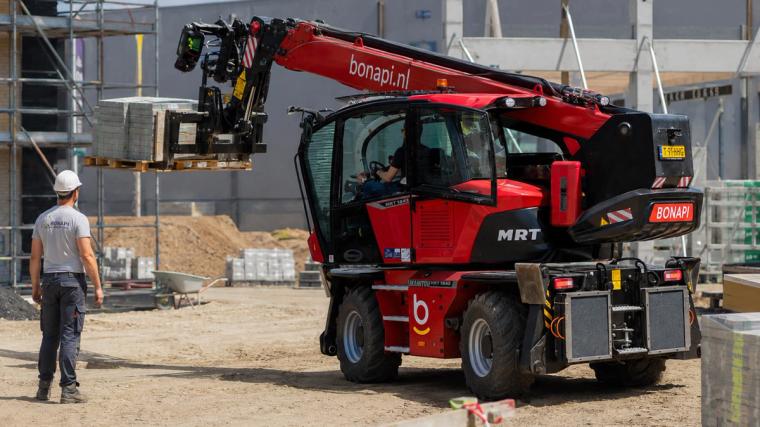
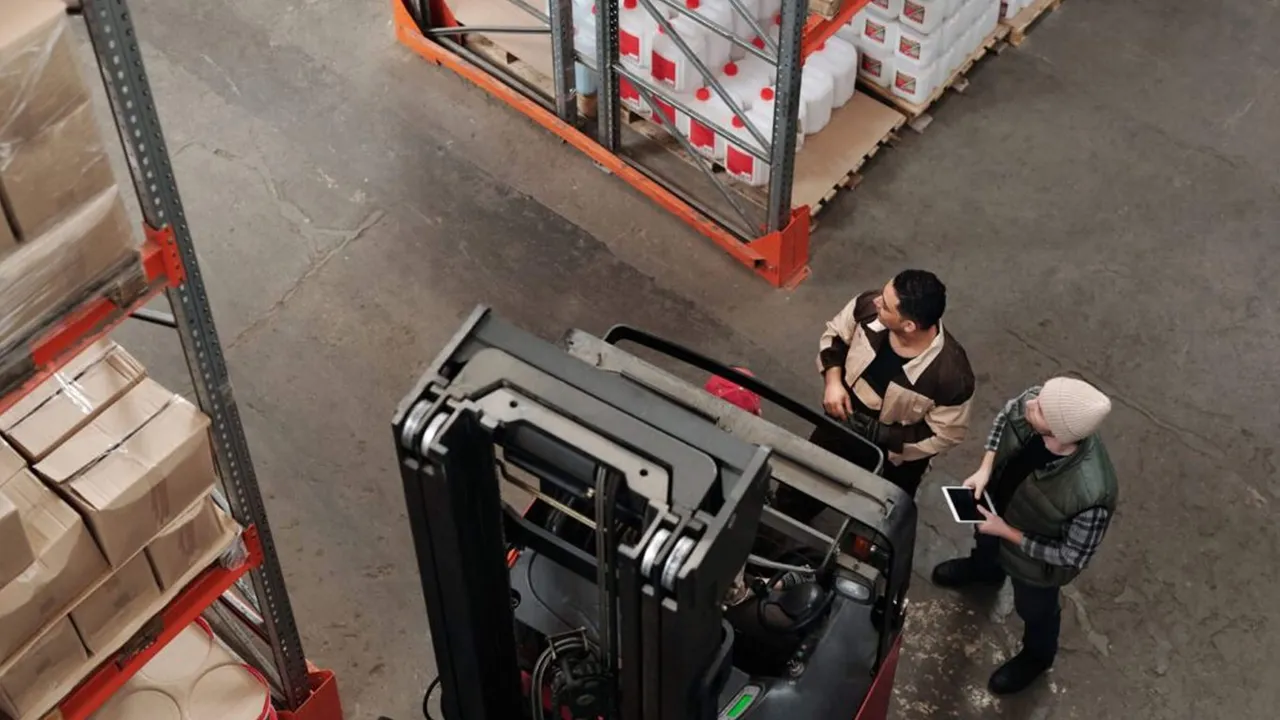
A telescopic handler operator, or ‘verreiker machinist’, is a job with good prospects in the Netherlands. The work itself is not particularly physically demanding, as most of the day is spent inside the machine. However, this does not mean it is easy. The operator has to manage heavy loads, work at height, be aware of the movements of other people on site, and often work under time pressure.
In a typical construction site role, a telescopic loader operator can expect to earn an average of around €18–22 gross per hour. In practice, salaries often start at around €2,900 gross per month and, with more experience, can reach around €4,500 gross per month. The upper limit depends on the project, the company, overtime, shifts, language skills and the scope of responsibilities.
Greater opportunities arise when working in industry and the petrochemical sector. The requirements are higher there, but the pay rates can also be much better. SOG qualifications are often required for such projects, as they involve working in high-risk environments. SSVV describes SOG-P as the qualification needed to carry out high-risk tasks in the petrochemical industry, and the training and examinations focus on working safely in accordance with procedures.
In practice, language is also very important. On a standard construction site, English and good communication with the team are sometimes sufficient, but in the petrochemical industry, a very good understanding of instructions, orders and procedures is usually required. Dutch is a huge advantage and often even opens the door to better projects.
The highest rates are found in industrial projects, shift work and self-employment. Rates above €50/h are possible, but tend to be reserved for those with experience, good language skills and a strong reputation in the industry – not for someone who has only just completed a course.
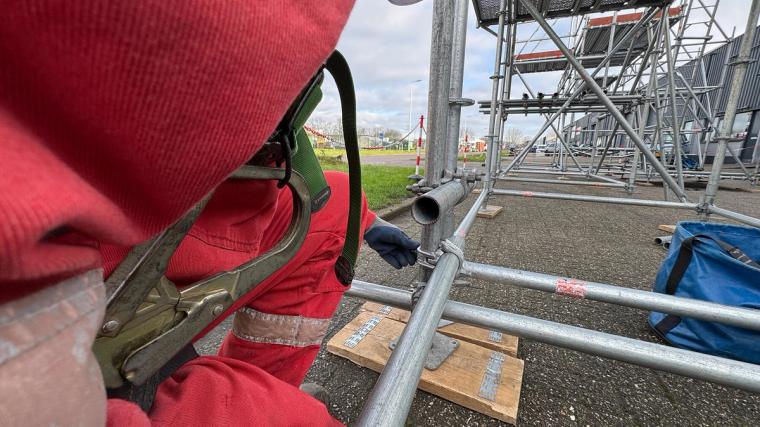
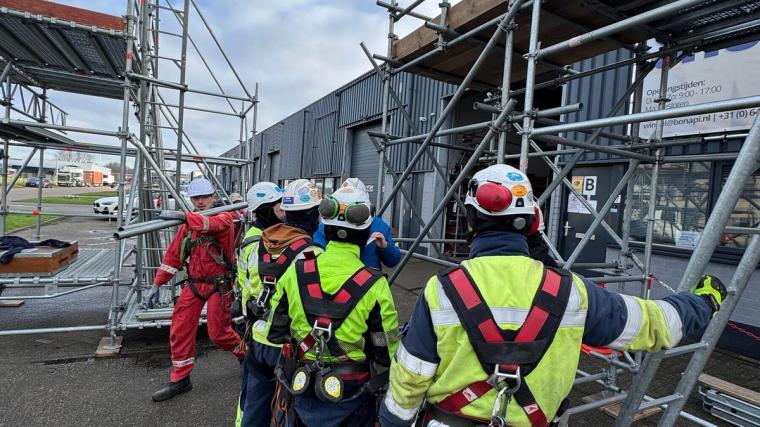
Scaffolding is one of those industries where you can immediately see the difference between ‘I’m here to work’ and ‘I know what I’m doing’. It is physical, team-based work that carries a great deal of responsibility, because the safety of many people – fitters, construction workers, industrial workers, electricians and those working at height – depends on the structure being erected correctly.
To begin with, you can start as an assistant scaffolder. Rates usually start at around the minimum wage, which is approximately €14.99 gross per hour for those aged 21 and over. An independent scaffolder typically earns around €18–25 gross per hour. With more experience, or when working in industry, ports, the petrochemical sector or on large technical projects, rates may be higher.
What sets the scaffolding trade apart is a clear career path. An assistant can become a fitter, a fitter can become a senior fitter or a foreman, and later – after gaining experience and the relevant qualifications – also a scaffolding inspector. This is the top level in the industry, because an inspector does not just ‘look at the scaffolding’, but is responsible for assessing, inspecting and approving the structure for use.
In the scaffolding trade, ZZP takes on an extra dimension, as experienced fitters can, over time, form their own installation teams. At that point, you’re no longer just selling your own hours, but taking on larger jobs as a team. This brings in more money, but also entails greater responsibility for people, deadlines and safety.
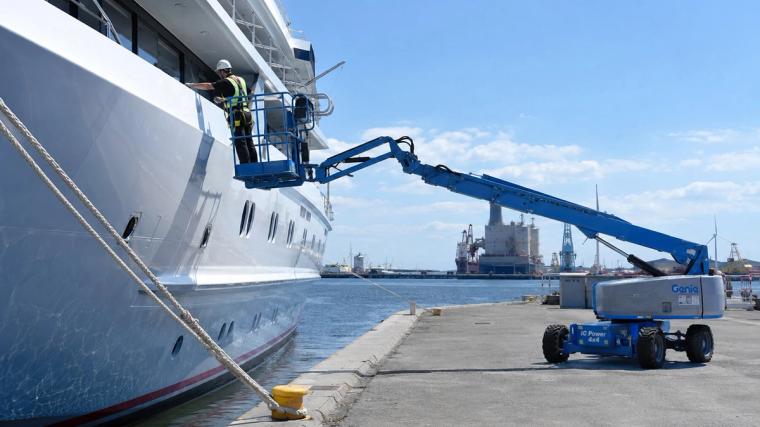
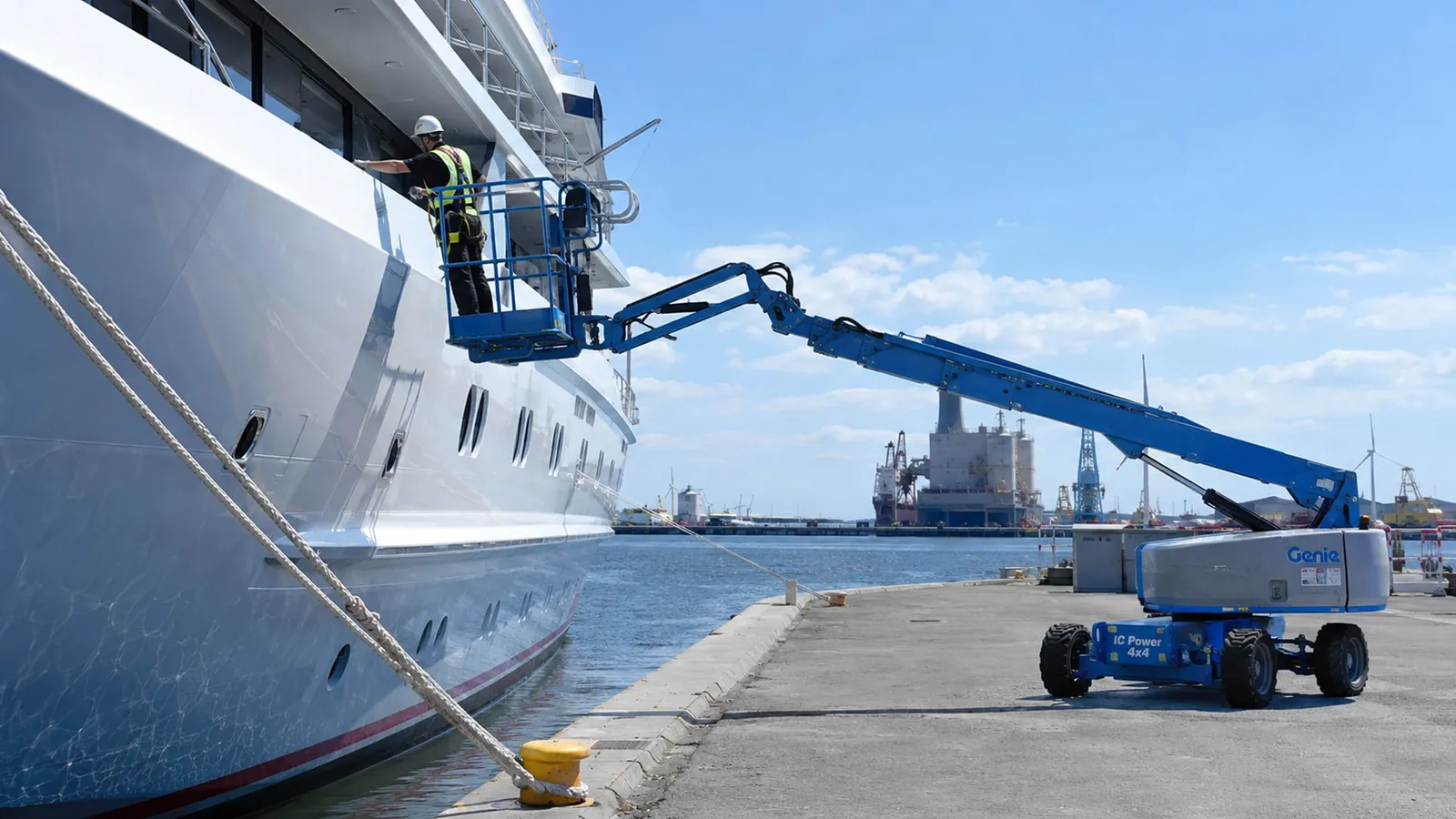
Working on aerial work platforms offers an interesting career path, as it does not limit you to a single sector. Such a certificate can complement the work of an electrician, fitter, shipyard worker, installer, service technician, technical staff member or building maintenance worker.
Lifts are used for the installation of systems, lighting, cameras, steel structures, solar panels, advertising hoardings, ventilation systems, façades and industrial installations. They are also used in industrial halls, warehouses, ports, on ships, at refineries, in production plants and at large technical facilities. In short: wherever you need to reach a height safely that is beyond the reach of a ladder.
The IPAF – the international standard for mobile elevating work platform certification – offers a significant advantage. For those looking beyond a single construction site in the Netherlands, this is a very promising career path. With this certification, you can work on international projects, in industry, shipyards, logistics and engineering, and often on assignments outside the Netherlands as well.
Earnings from working on aerial work platforms vary greatly, as the certificate itself does not always constitute a separate profession. For one worker, an aerial work platform will be their primary tool of the trade; for another, it will be a supplementary skill to their main profession: electrician, fitter, maintenance technician, shipyard worker or industrial technician.
In practice, a crane operator in the Netherlands often earns around €19–22 gross per hour. Fitters, installers and technical staff with qualifications to work at height can usually expect to earn around €20–28 gross per hour. Industrial electricians, technicians and those working on larger technical projects often earn around €25–35 gross per hour.
If you set up as a self-employed contractor, rates can be as high as around €40–60+ per hour, but the requirements are much higher. What counts is experience, language skills, safety, qualifications and the ability to work in a challenging environment.
With a contract, an employee usually enjoys greater security: fixed hours, insurance, and sometimes accommodation and transport, as well as less red tape.
As a self-employed person (ZZP), you are largely in control of your own destiny. You can earn more, choose your assignments and build your own brand within the industry. But with greater freedom comes greater responsibility. You have to take care of your own taxes, social security contributions, bookkeeping, insurance, equipment, travel and downtime between assignments.
The biggest difference becomes apparent when things don’t go to plan. If you fall ill, have no assignments, or fail to put in place a solid financial and administrative foundation beforehand, you’re left to deal with the problem on your own. A permanent job usually offers a greater sense of security: a steady salary, less paperwork, sometimes accommodation and transport, and greater predictability.
There’s no one-size-fits-all answer. For some, the best route will be a stable job on a contract and steadily building up experience; for others, it’ll be self-employment. It all depends on your ambitions, your life situation, your experience and how well you can manage not only the work itself but also all the organisational aspects.
The simplest answer: training, training and more training. In the Netherlands, experience matters, but increasingly it is qualifications that open the door to better projects.
VCA, scaffolding, aerial work platforms, IPAF, telescopic handlers, SOG and other technical qualifications allow you to progress from simpler jobs to more responsible roles. A single course won’t change your life overnight, but every additional qualification expands your opportunities.
In 2026, career progression in the construction industry is straightforward: you gain practical experience, obtain your qualifications and move up the ladder. Those who invest in their qualifications have a better chance of securing a better rate, a better project and greater independence.
Do you want to improve your chances of finding a good job in the Netherlands? Bonapi helps employees and companies prepare for safe working practices across various sectors. We organise training courses for employees, including VCA, SOG, forklift trucks, working at height and many other courses required in the Dutch labour market.
We can train individual employees or entire company groups, tailoring the content to the team’s needs and the nature of the work they carry out. Check out Bonapi’s training programme and choose a course that will help you work more safely, with greater confidence and better prepared to meet the requirements of employers in the Netherlands.
Follow Bonapi’s social media profiles or sign up for the newsletter to receive practical information about training courses, working in the Netherlands and market requirements.



Author:

Cezary
Dział IPAF / SOG
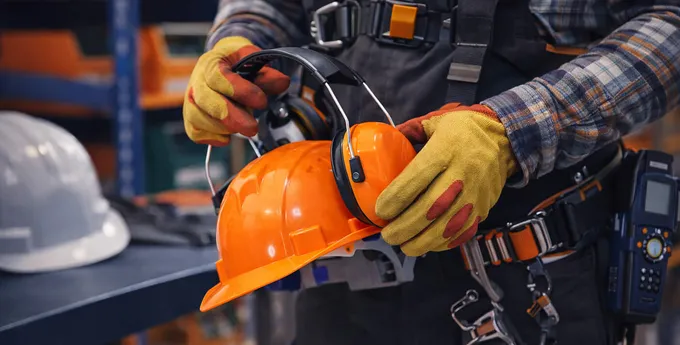
In our shop you will find trusted workwear, PPE and accessories you need for safe work. We offer products chosen by professionals from construction, logistics and industry.