User Panel


VCA
Search

Arina
VCA / SCC / BHV Department
If you are looking for work in the Netherlands in construction, industry, engineering or logistics, sooner or later you will come across the abbreviation VCA. For many people it is the first Dutch certificate that a staffing agency, client or project manager asks about. Things get confusing as soon as three names appear: VCA Basic, VOL-VCA and VIL-VCU. They sound similar, but they are meant for different people and different responsibilities.
VCA is the Dutch system for safety, health and the environment at work, used mainly for higher-risk activities. In English you will come across the abbreviation SCC: Safety, Health and Environment Checklist Contractors. The official portal Business.gov.nl explains that a VCA certificate is not required by law, but clients can demand it, especially when they themselves have to be able to show that the work can be carried out safely. This applies, among others, to construction, electrical engineering, road and hydraulic works, transport and the petrochemical industry.
In practice, you may have plenty of experience, but without VCA some companies will not let you onto the site. For an employer, the certificate is a signal that you know the basic rules of safe work, recognise hazards and understand the procedures that apply on site.
It is worth distinguishing the company VCA certificate from the personal diploma. A company can be certified as an organisation, while you can hold a diploma as an employee or self-employed worker. Business.gov.nl states that the company VCA certificate is valid for 3 years and is subject to annual checks, whereas the personal diplomas B-VCA, VOL-VCA and VIL-VCU are registered in the SSVV system and remain valid for 10 years as standard.
VCA Basic, officially B-VCA, is the basic diploma for people doing operational work. According to SSVV, it is intended for anyone who performs risky work or works in a higher-risk environment. It covers permanent staff, temporary workers, self-employed workers (zzp’ers) and trainees; SSVV also indicates that if you work at a VCA-certified company, this diploma is required.
Most often, VCA Basic is useful for construction workers, fitters, electricians, mechanics, welders, machine operators, service technicians and people working on scaffolding, at height, in technical warehouses and in industrial plants.
B-VCA focuses on everyday safety. It is about whether you can recognise risk, choose the right protective equipment, understand signage, respond to emergencies and work in line with instructions. It does not automatically give you the right to carry out every specialist task. SSVV treats B-VCA as a starting qualification and stresses that you should not assume that, on the basis of the diploma alone, you can independently perform every risky task without the support of someone more experienced.
VOL-VCA, or Veiligheid voor Operationeel Leidinggevenden VCA, is intended for people who direct the work of others or are responsible for organising safe work at operational level. SSVV describes this diploma as confirmation that you know the rules for safety, health and the environment and can apply that knowledge both to yourself and to the people you lead. Such a person is the point of contact for clients, management and employees.
VOL-VCA is the right choice if you are a foreman, team leader, shift supervisor, works coordinator or supervisor, or a self-employed worker (zzp’er) working as a subcontractor for a VCA-certified company.

The difference between VCA Basic and VOL-VCA is about responsibility. An employee with B-VCA has to carry out their own tasks safely. Someone with VOL-VCA must also understand the work organisation, risk assessment, briefing the team, communication with the client and stepping in when someone is working unsafely.
There is also an important exception. SSVV indicates that if you are a self-employed worker (zzp’er) and hire yourself out as a temporary worker within a best-efforts obligation, B-VCA can in principle be sufficient. If, however, you work as an intercedent or a manager at a staffing agency, you do not choose VOL-VCA but VIL-VCU.
VIL-VCU is often confused with VOL-VCA, because both certificates involve more responsibility than the basic B-VCA. The difference, however, is fundamental. VIL-VCU, or Veiligheid voor Intercedenten en Leidinggevenden VCU, is intended for intercedents and managers at staffing agencies, especially those that are VCU-certified or that send workers to VCA-certified companies.
This certificate is not for the fitter, operator or electrician doing the work on site. It is for the person responsible for selecting, informing and directing temporary workers. The aim is that an agency does not send a worker to a task they do not understand, are not qualified for, or whose hazards they do not know.
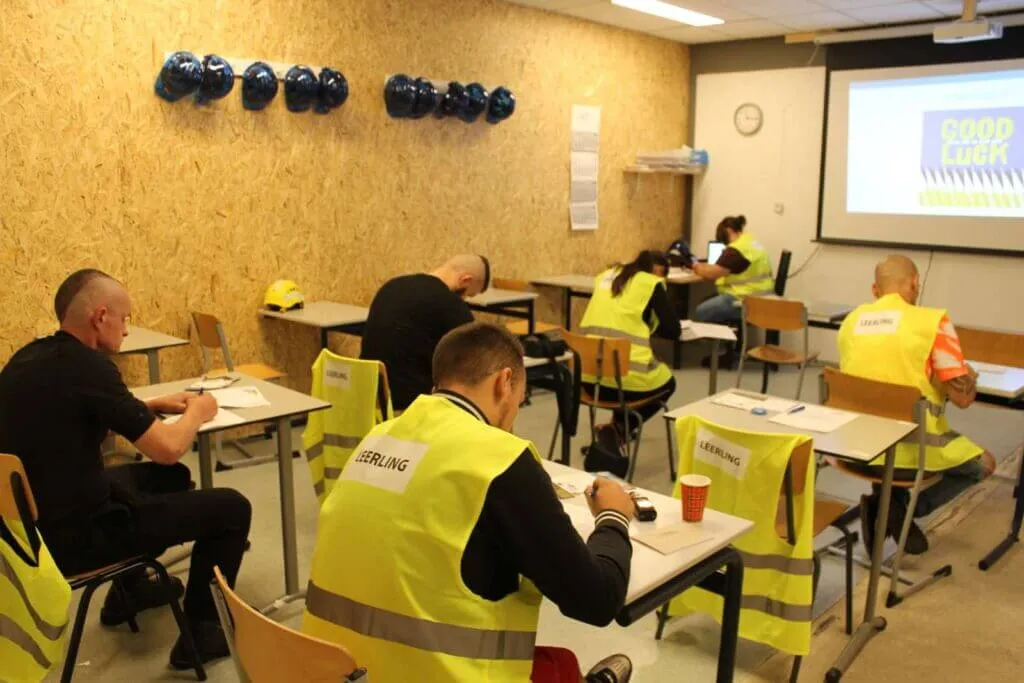
The VCA exams are administered by SSVV-recognised examination centres. The B-VCA exam lasts 60 minutes and consists of 40 multiple-choice questions. The VOL-VCA and VIL-VCU exams also last 60 minutes and have 60 questions each. You get the result immediately after finishing, and once you pass, the diploma is entered into the Centraal Diploma Register (CDR).
Language also matters. SSVV states that the B-VCA exam is at language level A2, and the VOL-VCA and VIL-VCU exams at level B1. Even if you know the safety rules, the exam requires you to understand the instructions, concepts and situation descriptions.
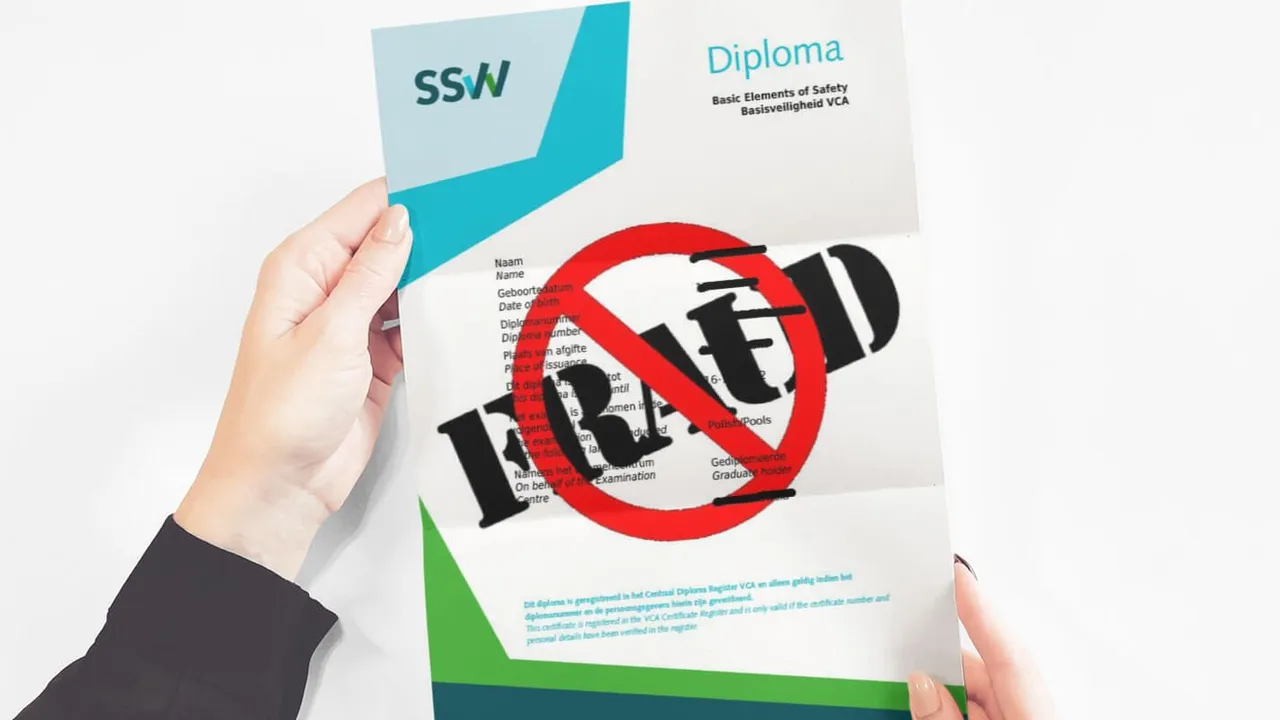
After you pass, the diploma is recorded in the CDR, where an employer or client can check its validity. The B-VCA, VOL-VCA and VIL-VCU diplomas are valid for 10 years; after that you have to take the exam again.
SSVV states that the training itself is not mandatory, but is strongly recommended. This applies to B-VCA, VOL-VCA and VIL-VCU. You can take the exam without a course, but in practice many people still choose training, because it helps to organise your knowledge, get familiar with the vocabulary and practise the type of exam questions.
For international workers, a course has one more advantage: the instructor can explain the rules in plain language and link them to real situations on the building site, in the warehouse, the workshop or the industrial plant.
If you are a manual worker and are just starting out in the Netherlands, it is usually best to begin with VCA Basic. If you already have experience and are moving into a leadership role, choose VOL-VCA. If you work at a staffing agency and are responsible for sending people to VCA companies, the right path is VIL-VCU.

VCA shows up everywhere work carries more risk than a typical office job. Business.gov.nl lists the sectors in which clients often require VCA: scaffolding and general construction, electrical engineering, civil engineering, transport and the petrochemical industry.
In practice, this includes building homes, halls, bridges and roads, refineries, chemical plants, terminals, production halls, high-bay warehouses and shipyards, as well as projects involving electrics, ventilation, insulation, assembly and service.
For you, the certificate can mean a faster start, fewer problems getting onto site and more credibility with an agency or client. For the company, it is a way to reduce risk, keep the documentation in order and meet contractual requirements.
Start from the role, not from the name of the course. If you do manual or technical work, you most often choose VCA Basic. If you give instructions, supervise people, plan tasks and are responsible for the team’s safety, you need VOL-VCA. If you work on the staffing-agency side and send temporary workers to technical, construction or industrial companies, look at VIL-VCU.
Companies should approach this by group. A team of fitters needs different training from the foremen, and the coordinators in the agency office need something different again. A good training plan saves time, because employees do not end up taking the wrong exam and obtain the document the client requires more quickly.
A good addition to this topic is our text on VCA and SCC: Certificate VCA and SCC – courses and exams. For a larger team, check the language of the training, the level of the group, the exam dates and any additional qualifications.
A well-chosen VCA certificate increases your chances of work and helps a company carry out its jobs safely. VCA Basic suits operational staff, VOL-VCA suits those who supervise teams, and VIL-VCU suits coordinators and managers on the staffing-agency side.
If you want to train employees individually or as a company group, check out the VCA training courses. Bonapi runs VCA training for employees and companies, and for groups the date, language and exam format can be tailored to the team’s needs.
Follow Bonapi on social media or subscribe to the newsletter to stay up to date with course dates, changes in requirements and practical tips for working in the Netherlands.
In our shop you will find trusted workwear, PPE and accessories you need for safe work. We offer products chosen by professionals from construction, logistics and industry.