User Panel


Safety at Work
Search

Arina
Dział VCA / SCC / BHV

If you work in the Netherlands in a warehouse, a production plant, a technical company, industrial cleaning or on a building site, you may come across a marking known in Dutch as the gevarendiamant or NFPA ruit. It is a coloured diamond with numbers that tells you about the hazards linked to a given substance. At first glance it looks simple, but misreading a single number can lead to a real risk.
The gevarendiamant is a system for marking chemical hazards in the form of a diamond divided into four fields. The name NFPA ruit refers to the NFPA 704 standard, used mainly in the United States but also found in international companies, industrial plants, chemical warehouses and technical documentation.
In the Netherlands, the basic system for labelling chemical substances is the CLP/GHS system, that is, labels with pictograms in red diamonds, H and P statements and safety data sheets. Even so, the NFPA ruit may still appear on tanks, on the doors of rooms, on drums, on installations or in company instructions. That is why it is worth understanding its meaning, especially if you work in an environment with paints, solvents, gases, cleaning agents, adhesives, oils, fuels or other technical substances.
The NFPA ruit does not replace safety training or the safety data sheet. But it gives you a quick signal: what you are dealing with, how big the risk is and what to watch out for before you start work.
The NFPA ruit is shaped like a diamond and consists of four fields:
The three coloured fields usually contain numbers from 0 to 4. The higher the number, the greater the hazard. This is important, because many people wrongly assume that “1” means something serious and “4” something moderate. In this system it is the other way round: 0 means the lowest risk and 4 the highest.
The white field works differently. Instead of a numerical scale, it may contain symbols or abbreviations that indicate special properties of the substance, for example a reaction with water.
The most important part of the NFPA ruit is precisely the cijfers, the numbers. They indicate the level of hazard in a given category. You need to know this scale before you enter a room, open a container or begin technical work.
The general rule looks like this:
The same number can mean something different depending on the colour of the field. A “3” in the red field concerns flammability, while a “3” in the blue field concerns the substance's effect on health. That is why you must not read the number alone without checking the colour.
The blue field tells you how a substance may affect a person's health. This concerns contact with the skin, inhaling fumes, contact with the eyes or accidental swallowing. This field is especially important for people working with cleaning agents, paints, resins, technical chemicals and substances used in manufacturing.
The meaning of the numbers in the blue field can be understood in practical terms:
At work this means a simple rule: if you see 2, 3 or 4 in the blue field, do not act “on instinct”. Check the instructions, use the required protective equipment and make sure you understand how to work safely with the substance.
The red field tells you how easily a substance can catch fire. This is crucial in warehouses, workshops, paint shops, production plants, and in welding, brazing, cutting, grinding and anywhere sparks or high temperatures may occur.
The meaning of the numbers in the red field is as follows:
For the worker this means that a red 3 or 4 requires particular caution. Near such a substance there should be no open flame, sparks, uncontrolled heat source or hot work without the appropriate permit and without securing the work area.
The yellow field shows whether a substance may react violently, decompose, explode or create a hazard under certain conditions. This field is sometimes underestimated, but in practice it matters a great deal in transport, storage and mixing of substances.
The meaning of the numbers in the yellow field:
In everyday work, the yellow field reminds you that you must not mix substances without instructions. This also applies to cleaning agents. Substances that seem “normal” on their own can, when combined, produce toxic fumes, heat or a reaction that is hard to stop.
The white field contains additional warnings. It is not always filled in, but if you see a symbol in it, take it seriously. It may point to a risk that cannot be clearly described by a number alone.
The most common markings are:
If the white field contains an abbreviation you don't understand, don't guess. Ask your supervisor, the person responsible for safety, or check the safety data sheet. In the Netherlands, employers expect a worker to stop and clarify a doubt rather than act without certainty.

Although the NFPA ruit is not the main European labelling system, you can come across it in many workplaces. This is especially true of companies that work with international clients, use technical documentation from the US or have internal safety standards based on several marking systems.
The NFPA ruit may appear in places such as:
If you work through an employment agency, in a manufacturing company or as a technical worker, you may come across several marking systems at once. On one product there may be a CLP/GHS label, the documentation will include a safety data sheet, and on a warehouse door or tank you will see the NFPA ruit. A well-trained worker can combine this information and understand how to act safely.
Knowing the gevarendiamant cijfers is useful not only for chemists. In the Netherlands, many people work with substances that can be flammable, irritant, toxic or reactive, even if the job title has nothing directly to do with chemistry.
These markings should be known by, among others:
For a manual worker this knowledge means a lower risk of accidents. For someone leading a team it means better work organisation and fewer mistakes. For a self-employed person in the Netherlands it is part of a professional approach to the client and to their own safety.
In the Netherlands, on the labels of chemical products you will most often see CLP/GHS pictograms. These are red diamonds with symbols, for example a flame, an exclamation mark, a skull or the environmental hazard sign. Such labels tell you about the type of hazard, the warning statements and the precautionary measures.
The NFPA ruit works differently. It does not show a detailed description of the hazard, only a quick risk level in four categories. You could say that CLP/GHS tells you in more detail what hazard you are dealing with, while the NFPA ruit helps you quickly assess the scale of the hazard.
You don't choose one system instead of the other. If you see both, treat them as complementary. The NFPA ruit gives you quick information, while the label and safety data sheet show which protective measures are required and what to do in the event of contact, a spill or a fire.

Simply recognising the colours and numbers is only the beginning. The most important thing is to apply this knowledge at work. Before contact with a substance, check that you understand the marking, that you have the right protective equipment and that your workstation is prepared.
Good practice looks like this:
In Dutch companies one rule is very important: if you are not sure, stop work and ask. This is not a sign of inexperience. It is responsible behaviour that protects you, the team and the company.
If your workers come into contact with chemicals, work in a warehouse, manufacturing, technical work, industrial cleaning or construction, take care of their practical preparation. Markings such as the gevarendiamant cijfers and NFPA ruit are only simple when the team knows how to read them and turn them into safe action.
Bonapi runs training for workers and can train both individuals and whole groups. It is a good solution for companies that want to organise their team's knowledge, improve safety and prepare workers for real situations in the Dutch working environment.
Contact Bonapi and ask about training tailored to your company, positions and sector. Also follow Bonapi's social media profiles or sign up for the newsletter to receive practical information about work, safety and training in the Netherlands.

Author:

Arina
Dział VCA / SCC / BHV

Author:
Arina
Dział VCA / SCC / BHV
Author:
Arina
Dział VCA / SCC / BHV
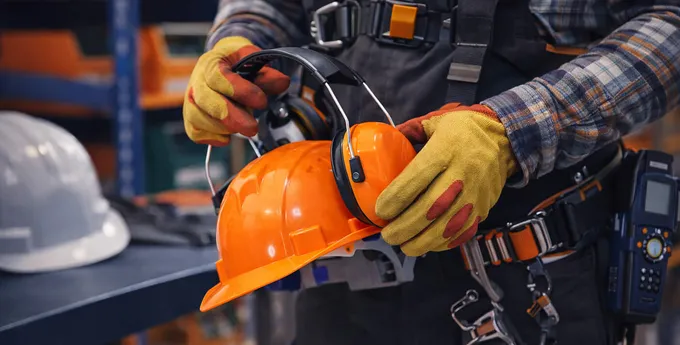
In our shop you will find trusted workwear, PPE and accessories you need for safe work. We offer products chosen by professionals from construction, logistics and industry.