User Panel


Safety at Work

Author:
Amanda
Marketingspecialist
Search

Hubert
General & Sales Manager
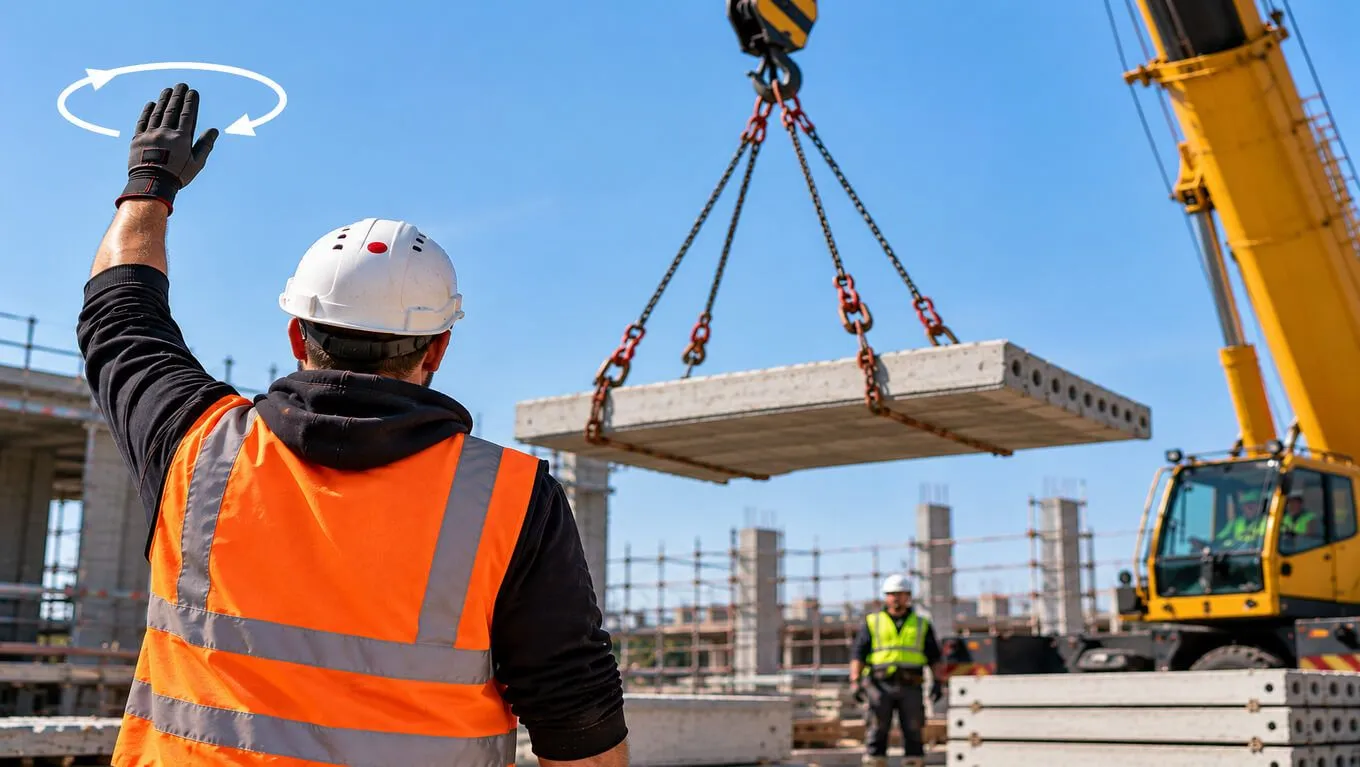
Lifting and moving heavy loads requires precise coordination between the machine operator and workers in the operating area. On noisy construction sites, in production facilities and in warehouses, verbal communication can be difficult. This is why hand signals play such an important role in lifting operations. Using standardised gestures, crane, overhead crane and telehandler operators can receive clear instructions about the direction and movement of a load.
When moving heavy materials, operators cannot always see the entire working area. The load itself may obstruct their view, while building structures, scaffolding or other machinery can restrict their field of vision and manoeuvring space. In these situations, operators rely on a designated signaller who monitors the load and provides the necessary instructions.
Hand signals allow workers to communicate without speaking. However, both parties must understand exactly what each signal means. A misinterpreted gesture can cause a load to strike an obstacle, damage equipment, compromise machine stability or result in an accident involving workers.
Hand signals are particularly important during operations requiring high precision, such as positioning precast concrete elements, assembling steel structures or moving components of industrial installations.
However, hand signals do not replace proper lifting plans, risk assessments or lifting equipment inspections. They are one component of a safe and well-organised lifting operation.
Hand signals are used wherever heavy or awkward loads are moved using cranes, lifting equipment and material-handling machinery. In the Netherlands, this applies to numerous industries.
On construction sites, hand signals are used during operations involving tower cranes, mobile cranes and telehandlers. Operators move materials such as steel beams, formwork, precast concrete elements and other construction materials.
A signaller may be positioned at the load’s destination, where the operator has no direct line of sight. Their responsibility is to communicate instructions for raising, lowering and positioning the load.
Production facilities frequently use overhead travelling cranes, known in the Netherlands as bovenloopkraan. These machines are used to move heavy machine components, industrial moulds, steel structures and production materials.
Workers handling these loads must coordinate closely with the operator, particularly when moving large or bulky components. Hand signals help maintain control over movements and reduce the risk of collisions.
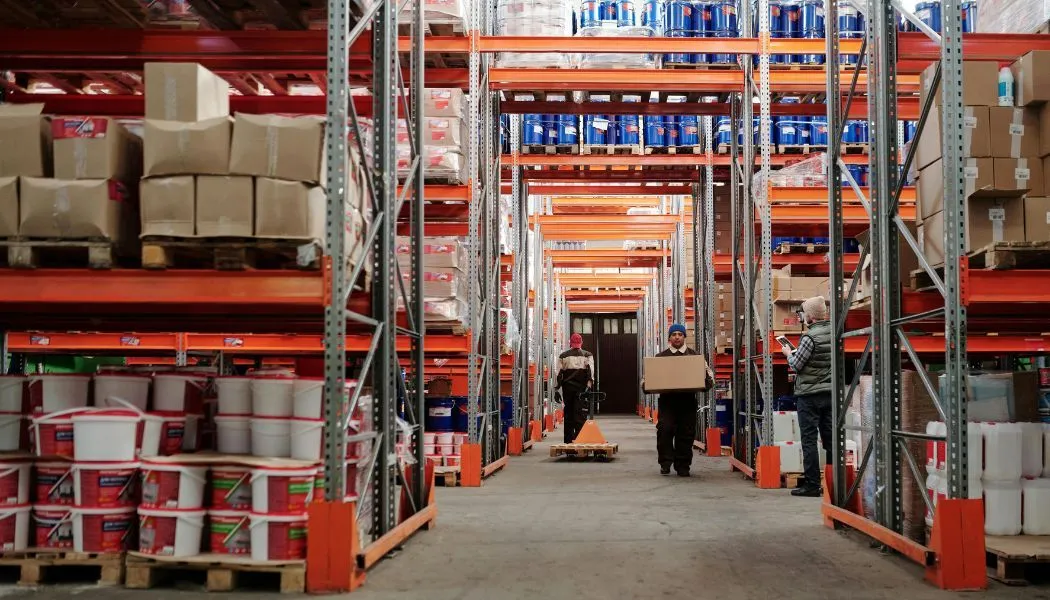
In logistics centres, cargo terminals and warehouses, hand signals are useful when moving large components that require supervision by an additional worker.
This includes loading and unloading operations, container handling, heavy structures and machinery components. The communication method depends on the equipment being used and how the work is organised.
Installing energy infrastructure, technical equipment and industrial structures often involves moving components through confined spaces. The operator may not be able to see the final positioning area and must therefore rely on instructions from a designated signaller.
In these conditions, precise movements, controlled lifting speeds and the ability to stop operations immediately are particularly important.
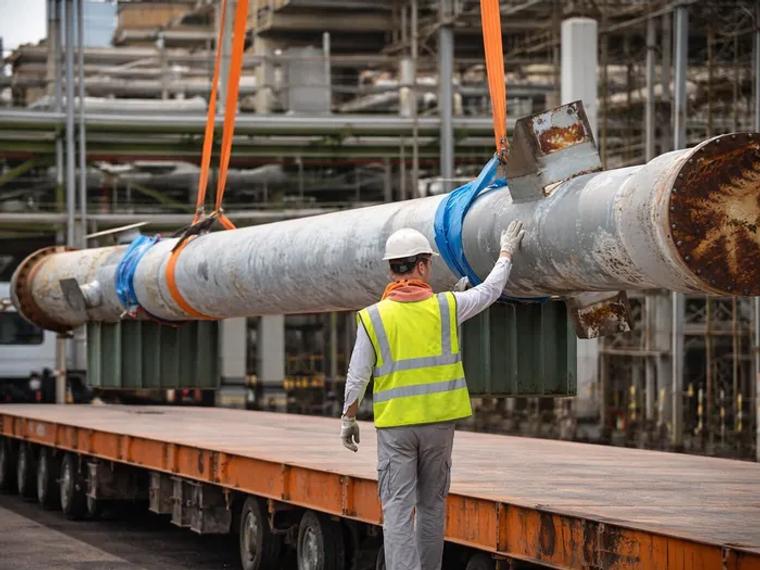
In the Netherlands, the rules governing hand signals are set out in the Arbeidsomstandighedenregeling (Working Conditions Regulation), particularly Articles 8.22 to 8.26 and Annex XIX. These regulations specify the requirements for hand signals and their meanings.
Signals must be simple, clear, easy to perform and unambiguous. The person giving instructions must ensure that the operator can recognise and interpret them correctly.
The basic hand signals include:
The regulations also provide signals for moving forward and backward, indicating distances, and performing slow or rapid movements.
Before starting a lifting operation, the operator and signaller should confirm that they understand the agreed set of gestures. This is particularly important in international teams where employees come from different countries.
The person responsible for communicating hand signals is known as a signaller. In Dutch workplaces, you may also encounter the terms seingever or aanwijzer.
This role should not be assigned to just any worker standing near the machine. A signaller must understand the meaning of each gesture, recognise the hazards associated with lifting operations and know how to respond to dangerous situations.
Their main responsibilities include monitoring the lifting operation, communicating clear instructions, checking the area surrounding the load and responding to emerging hazards.
Under Dutch requirements for safety signalling, the person giving signals must be able to observe the manoeuvres safely. If they cannot see the entire operation, additional signallers may be required.
The signaller should also be easily identifiable, for example by wearing a distinctive high-visibility vest, helmet or another form of identification that distinguishes them from other workers.
In Dutch industrial and construction companies, you may encounter the term aanslaan van lasten, which refers to preparing loads for safe lifting and attaching them to lifting equipment.
In training, the abbreviation VVL is also commonly used. It stands for Veilig Verplaatsen van Lasten, meaning the safe movement of loads.
A slinger is primarily responsible for preparing a load correctly before lifting. They must know how to select suitable lifting slings, inspect their condition and account for the weight and centre of gravity of the load.
A signaller, on the other hand, is responsible for communicating instructions to the operator during lifting manoeuvres.
One person may perform both roles if they have the necessary competencies and the work is organised in a way that allows them to carry out both tasks safely. However, it should never be assumed that someone who knows how to attach a load is automatically qualified to direct a lifting operation.
Effective communication begins before the machine is started. The operator and signaller should agree on the scope of the operation, the method of communication and the procedure to follow in an emergency.
Several important rules should be observed.
The operator must know who is responsible for giving instructions. However, anyone who notices an immediate danger should be able to initiate a stop to an unsafe operation.
The signaller should position themselves where they can monitor the load while remaining clearly visible to the operator.
Every gesture must have an agreed meaning. Standard signals must not be replaced with random or improvised hand movements.
Before starting a manoeuvre, workers must ensure that unauthorised personnel are outside the danger zone.
If the operator loses sight of the signaller or cannot understand an instruction, they should stop the movement safely and clarify the situation before continuing.
On larger construction sites, two-way radios are also commonly used. Radio communication may supplement hand signals or serve as the primary communication method, depending on the established procedure.
When radios are used, instructions must be brief and unambiguous. Confirming messages that could affect the safety of the load is particularly important.
The legal framework consists of the Dutch Working Conditions Act (Arbeidsomstandighedenwet), the Working Conditions Decree (Arbeidsomstandighedenbesluit) and the more detailed Working Conditions Regulation (Arbeidsomstandighedenregeling).
The most important provisions include:
Article 7.18a(5) is particularly important. If the operator cannot observe the entire path of the load, either directly or with the assistance of suitable devices, a worker must be designated to direct the operation and remain in communication with the operator.
Dutch regulations do not require one universal signaller certificate for every position. However, they do require appropriate competence, safe working arrangements and compliance with communication procedures.
Additional requirements may apply depending on the equipment, industry and conditions of a particular project.
One of the most serious mistakes is allowing several people to give conflicting instructions to the operator. The operator may then be unsure which signal to follow, particularly when manoeuvring a heavy component in a confined space.
Another dangerous mistake is positioning the signaller between the load and a fixed obstacle. Even a small movement of the load can result in a worker being crushed.
Other common mistakes include:
For example, during the assembly of a steel structure inside an industrial facility, an overhead crane operator may receive an instruction to lower a beam. If the signaller fails to notice a worker standing near the installation point, even a correctly executed hand signal can lead to a dangerous situation.
This is why every lifting manoeuvre should begin with checking that the load is properly secured, the transport route is clear and everyone involved understands their responsibilities.
Understanding hand signals is one of the essential skills for people working with cranes and lifting equipment. However, the specific competencies required depend on the position.
If you are planning to work as a slinger or load handler, VVL training is a valuable option. It covers safe load-handling procedures, selecting suitable lifting accessories and working effectively with equipment operators.
Those interested in operating overhead cranes can choose a bovenloopkraan course. Training covers equipment operation, load control and safe manoeuvring procedures.
A telehandler operator course is designed for people working in construction, logistics and industrial environments. It is important to remember that lifting suspended loads using a hook may require additional training and an appropriate machine configuration.
Choosing the right training allows you to understand the hazards associated with a particular position and practise performing everyday tasks safely.
Would you like to gain the qualifications needed to work with heavy loads or arrange training for your team? Bonapi offers training courses for individuals and companies operating in the Dutch market.
Explore the available telehandler operator courses, VVL slinger and load-handling training, and bovenloopkraan overhead crane operator courses.
Whether you want to prepare for a new position, improve your existing skills or organise training for a group of employees, you can find a course suited to your needs.
Contact Bonapi to choose a training programme that matches your company’s requirements or your specific job responsibilities.
You can also follow Bonapi on social media for updates about training opportunities and practical advice on working safely in the Netherlands.
Author:
Amanda
Marketingspecialist

Author:

Arina
Dział VCA / SCC / BHV
Author:
Arina
Dział VCA / SCC / BHV

Author:
Arina
Dział VCA / SCC / BHV
Author:
Arina
Dział VCA / SCC / BHV
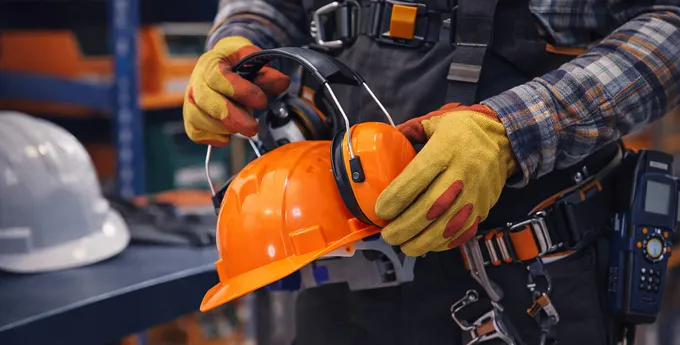
In our shop you will find trusted workwear, PPE and accessories you need for safe work. We offer products chosen by professionals from construction, logistics and industry.