


User Panel


Safety at Work

Author:
Arina
Dział VCA / SCC / BHV
Search

Wojciech
IT Specialist / Process Automation
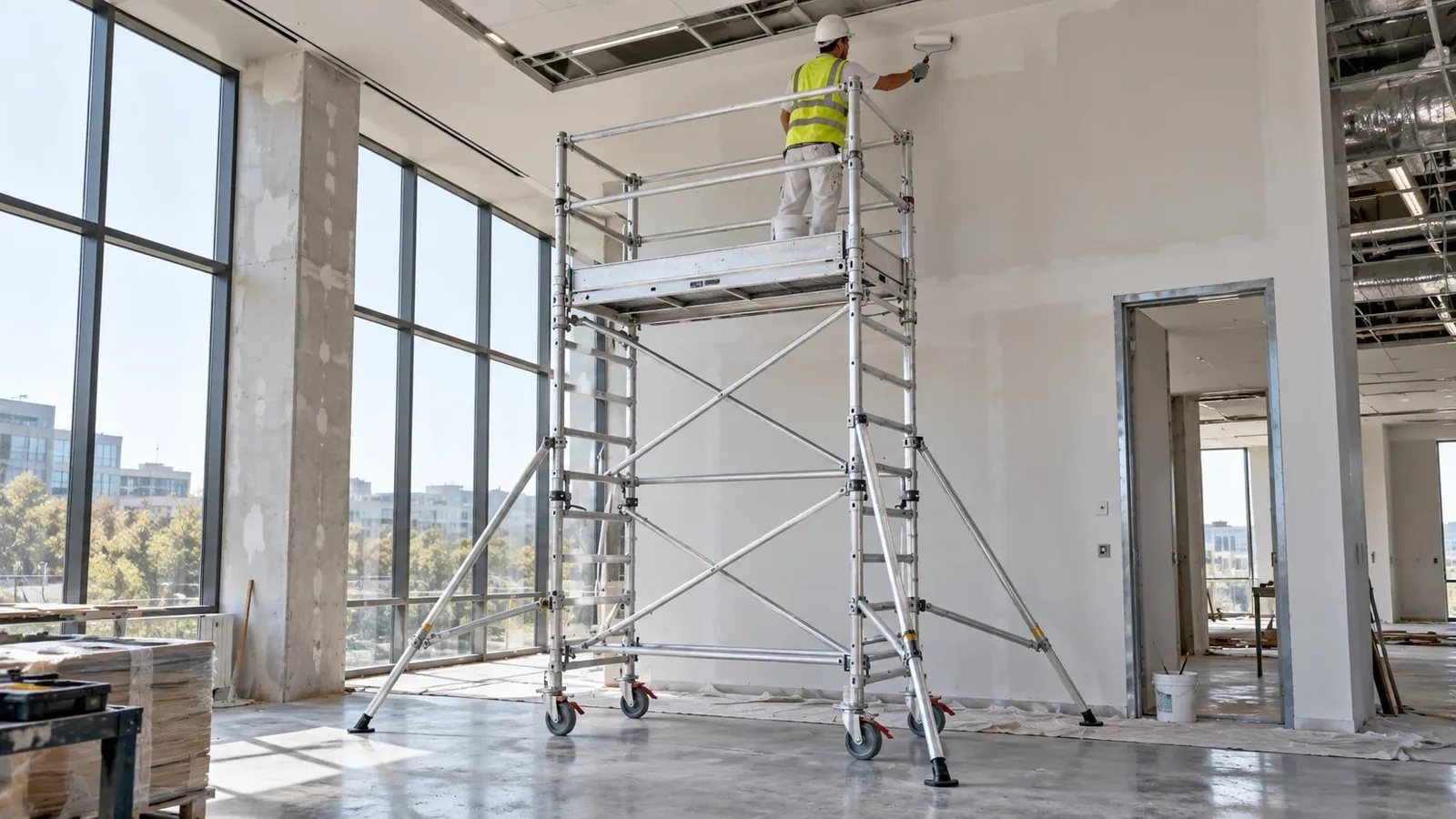
Mobile scaffolding, known as a rolsteiger in Dutch, is commonly used across the Netherlands on construction sites, during installation and renovation work, painting, and building maintenance. Because mobile towers can be moved easily and are often used for relatively short jobs, they may seem like simple equipment that only needs to be assembled and positioned in the right place. But does every worker need to complete mobile scaffold training and hold a certificate? Dutch regulations take a slightly different approach.
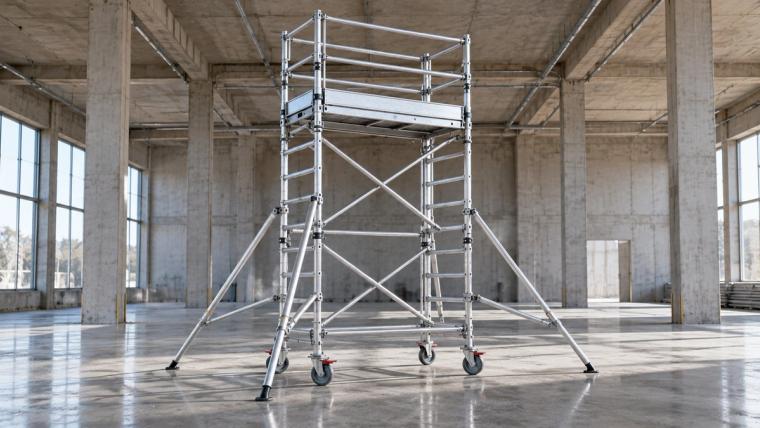
A rolsteiger is a mobile scaffold tower fitted with wheels, allowing the entire structure to be moved between work areas. Unlike large façade scaffolding systems, it is primarily intended for temporary work at height and can be assembled, dismantled and relocated relatively quickly.
In the Netherlands, mobile scaffold towers are commonly used by:
Mobile scaffolding is used both indoors and outdoors. Typical applications include painting façades, installing cables beneath the ceiling of an industrial building, fitting lighting, carrying out installation work and performing building maintenance.
Mobility is one of the main advantages of this type of scaffold, but it also means that specific safety rules must be followed. A structure standing on wheels must be correctly positioned and secured against unintended movement. The condition of the ground, the scaffold configuration, the completeness of all components and the method used to access the working platform are also important.
Dutch legislation does not impose a general requirement for every person using a mobile scaffold tower to hold one specific government-issued certificate called a ‘rolsteiger certificate’.
However, this does not mean that an employer can simply send an untrained worker to use a mobile scaffold and tell them to be careful.
The legal basis is the Dutch Working Conditions Act (Arbeidsomstandighedenwet, or Arbowet). Under Article 8 of the Arbowet, employers must provide employees with effective information and instruction regarding their work, the associated hazards and the measures taken to prevent or reduce those risks. The instruction provided must be appropriate to the tasks being carried out and the risks present in the workplace.
It is therefore important to distinguish between two separate issues: a statutory requirement to hold a specific certificate and the employer's obligation to ensure that workers are properly prepared for their work.
There is no general statutory requirement to hold a standard ‘rolsteiger certificate’. There is, however, a clear obligation to ensure that employees receive appropriate instruction and are properly prepared to work safely.
Employers must therefore assess the risks, provide suitable instructions and ensure that employees are capable of carrying out their assigned tasks safely. Training in the safe assembly and use of mobile scaffolding is a practical way to provide workers with the necessary knowledge and allow them to practise their skills under controlled conditions.
The main requirements for working at height are set out in the Dutch Working Conditions Decree (Arbeidsomstandighedenbesluit, or Arbobesluit).
Article 3.16 of the Arbobesluit concerns the prevention of fall hazards. In the Netherlands, appropriate measures must be taken to prevent falls where work involves a risk of falling and there is a height difference of 2.5 metres or more. Importantly, the 2.5-metre threshold does not mean that fall hazards below this height can simply be ignored. Protective measures may also be required at lower heights if the circumstances create additional risks, for example where a worker could fall onto protruding objects, into water or into an area with moving vehicles.
The use of work equipment for temporary work at height is also regulated by Article 7.23 of the Arbobesluit. Article 7.23b is particularly relevant to scaffolding.
Among other requirements, the regulations state that scaffolding must be stable. Supporting components must be secured against slipping or movement, and support points must be positioned on stable ground with sufficient load-bearing capacity. Working-platform components must be installed in such a way that they cannot move dangerously during normal use. There must also be no dangerous gaps between platform components and vertical fall-protection measures.
Safe working practices begin before anyone steps onto the first platform. Workers should understand which configurations are permitted for the scaffold being used and what conditions must be met before work begins.
Before starting work, particular attention should be paid to:
A mobile scaffold tower should not be treated as a mobile work platform that can simply be moved at any time without preparation. The structure must be moved in accordance with the manufacturer's instructions and the safety requirements applicable to the particular scaffold system.
No. A safety harness and personal fall-protection system are not automatically required for everyone working on a correctly assembled mobile scaffold tower.
Under the Dutch approach to occupational safety, priority is given to measures that control hazards at source and to collective protective measures. In the case of scaffolding, this primarily means correctly installed working platforms and adequate edge protection.
Personal protective equipment should be used where required by the risk assessment, the nature of the specific work or the chosen assembly method. A safety harness should therefore never be regarded as a way to compensate for an incorrectly or incompletely assembled scaffold.
This is an important principle for workers as well. If required structural or safety components are missing, putting on a harness does not make it acceptable to climb onto the scaffold and continue working.
Dutch employers are required to carry out a Risico-Inventarisatie en -Evaluatie (RI&E), or Risk Inventory and Evaluation. This process identifies and assesses hazards within the company and those associated with the work being carried out. The requirement is set out in Article 5 of the Arbowet.
Fall hazards must be included in the risk assessment. As a result, the way work with a mobile scaffold tower is organised may vary depending on the specific workplace and task.
For example, a mobile scaffold tower set up inside an empty industrial building may involve different risks from the same tower positioned outside a building next to a road, close to machinery or in an area where several teams are working at the same time.
Before starting a task, workers should therefore be familiar with the rules that apply at the specific site. Experience gained on a previous construction site does not remove the obligation to follow the instructions and safety procedures in force at a new workplace.
The absence of a general legal requirement to hold one specific ‘rolsteiger certificate’ does not mean that there are no legal obligations. Dutch regulations require employers to assess risks, provide safe work equipment and give employees effective instruction. When working with mobile scaffolding, this knowledge must also translate into safe behaviour in the workplace.
If your employees use mobile scaffolding or you want to prepare your team for working at height in the Netherlands, Bonapi can train individual employees or entire groups. The training provides a structured overview of the rules for assembling, using and inspecting mobile scaffolds and prepares workers to carry out their everyday tasks safely.
Explore our scaffold safety training courses and ask about training options for your team. Additional qualifications can improve a worker's opportunities on the Dutch labour market, while employers benefit from having a team that is better prepared to carry out work at height safely.
Follow Bonapi on social media or subscribe to the newsletter to receive information about training courses and practical guidance on working safely in the Netherlands.
Author:
Arina
Dział VCA / SCC / BHV
Author:
Arina
Dział VCA / SCC / BHV

Author:
Arina
Dział VCA / SCC / BHV
Author:
Arina
Dział VCA / SCC / BHV
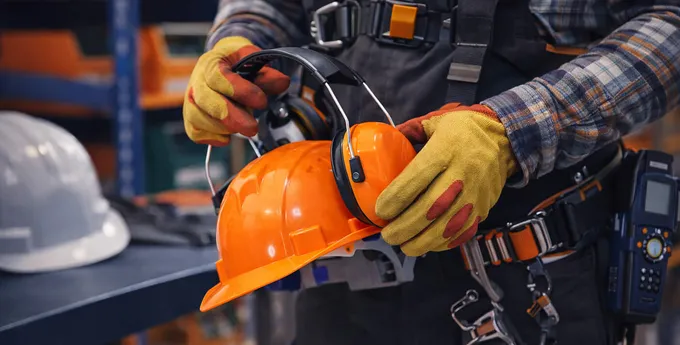
In our shop you will find trusted workwear, PPE and accessories you need for safe work. We offer products chosen by professionals from construction, logistics and industry.