User Panel


Safety at Work
Search

Amanda
Marketingspecialist
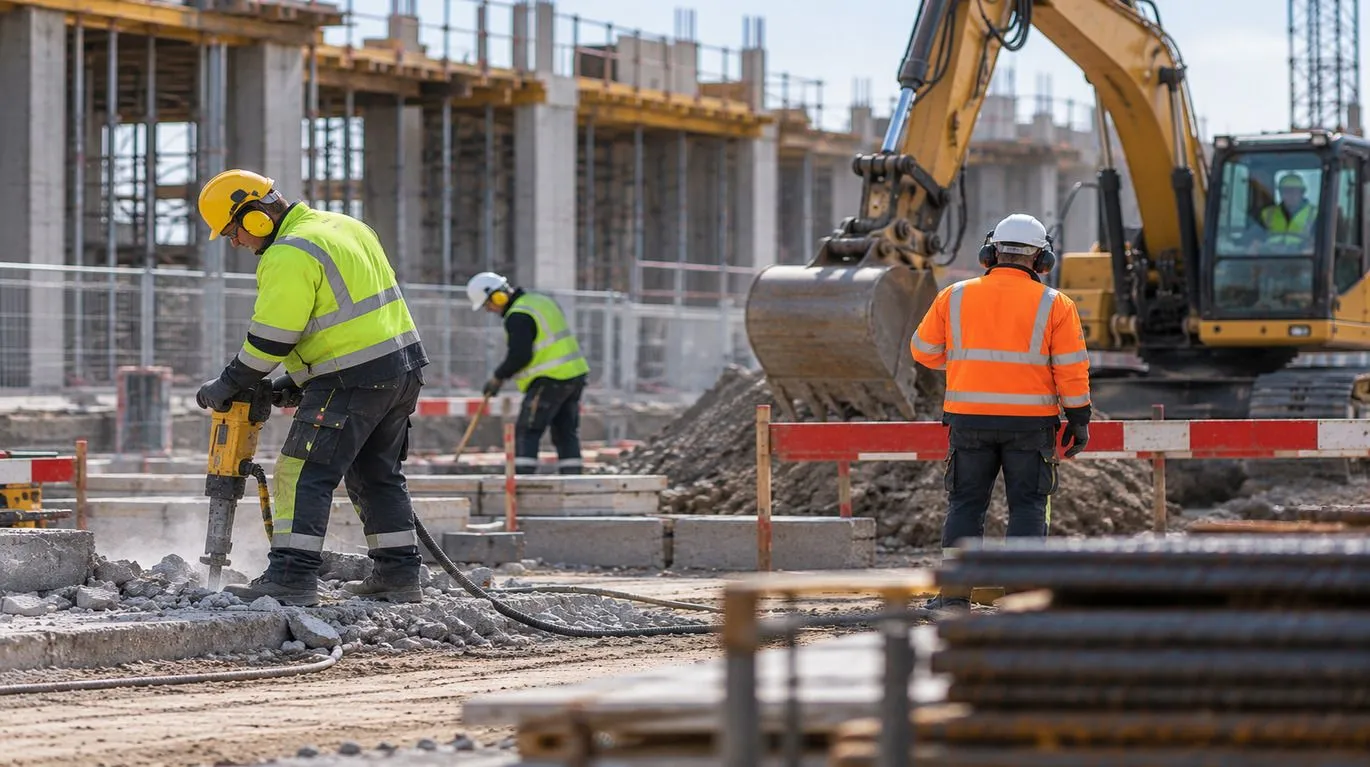
An angle grinder on a construction site, a press in a metalworking factory or a production line running throughout an entire shift can expose your hearing to permanent damage. In the Netherlands, regulations clearly define when employers must provide hearing protection and when employees are required to wear it.
Workplace noise regulations in the Netherlands are set out in the Dutch Working Conditions Decree (Arbeidsomstandighedenbesluit, also known as Arbobesluit), Chapter 6, Section 3. These regulations distinguish between the obligation to provide hearing protection, the requirement to wear it and the maximum exposure limit that must not be exceeded.
The 80 and 85 dB(A) thresholds refer to noise exposure without accounting for the attenuation provided by hearing protectors. The 87 dB(A) limit, however, applies after hearing protection has been taken into account.
Employers may also require hearing protection in designated areas even when the average daily exposure is lower, depending on workplace safety requirements.
Decibels expressed as dB(A) account for how the human ear perceives different sound frequencies. Under workplace safety regulations, the key measurement is daily noise exposure normalised to an eight-hour working day, rather than a single reading from a sound level meter.
For example, working with an angle grinder for one hour and spending the remaining seven hours in a quiet environment creates a different level of exposure than working next to a running machine for eight consecutive hours.
The decibel scale is logarithmic. An increase of 3 dB represents approximately twice the sound energy. In terms of noise exposure, eight hours at 80 dB(A) is roughly equivalent to four hours at 83 dB(A) or two hours at 86 dB(A), provided the rest of the working day is considerably quieter.
In addition to continuous noise, regulations also cover extremely loud, short-duration sounds. Peak sound pressure levels are measured in dB(C):
Even a brief, extremely loud sound should never be ignored simply because the rest of the shift is relatively quiet.

Noise exposure is not limited to a single industry. In the Netherlands, workers in the following sectors should pay particular attention to hearing protection:
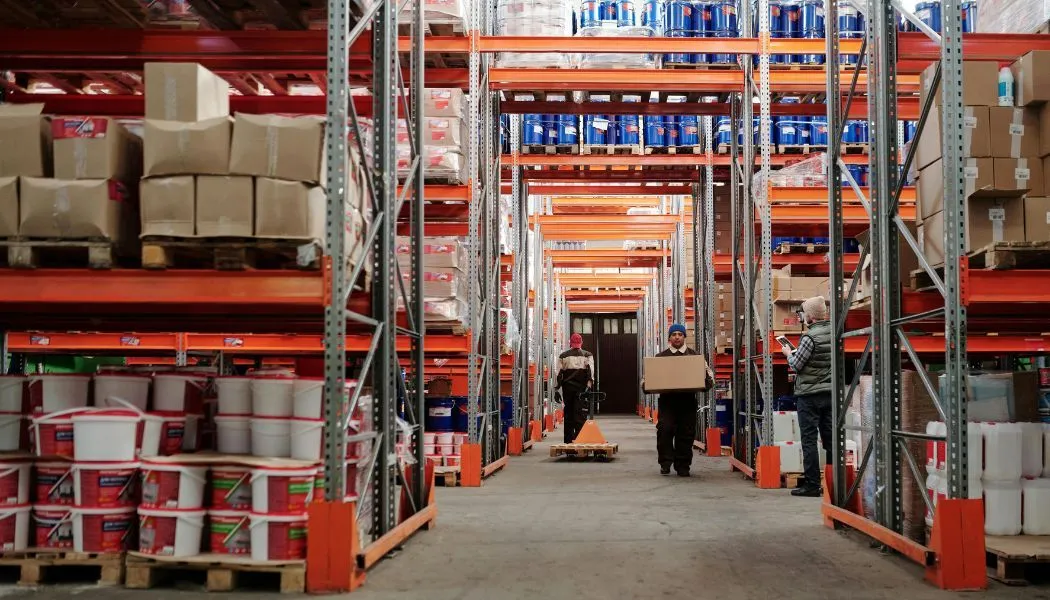
A warehouse worker in a quiet storage facility may experience completely different noise exposure from someone working next to a baling press.
Legal obligations depend on an assessment of actual working conditions, not on general assumptions about a particular industry.
Long-term exposure to excessive noise can cause permanent, gradual hearing loss. Another common warning sign is ringing, buzzing or whistling in the ears, a condition known as tinnitus.
Pay attention if sounds seem muffled after your shift, you find yourself turning up the television volume or you increasingly struggle to understand conversations in noisy environments.
These symptoms require medical attention, even if they partially disappear by the following day. Sudden hearing loss after exposure to an extremely loud sound requires urgent medical assessment.
Noise also affects concentration and communication within a team. If you cannot hear a warning signal, instructions from a crane operator or a machine alarm, the risk of other workplace accidents increases.
In the Netherlands, employers are required to identify workplace hazards through the RI&E (Risico-Inventarisatie en -Evaluatie), the Dutch risk inventory and evaluation process.
When harmful noise is present, employers must assess employee exposure and plan appropriate protective measures. These obligations arise from the Dutch Working Conditions Act (Arbowet) and the noise-related provisions of the Arbobesluit, particularly Articles 6.7 to 6.10.
The fundamental principle is straightforward: noise must first be reduced at its source before relying on personal protective equipment (PPE).
In practice, employers should consider:
Simply handing out earplugs does not replace these preventive measures.
Employees must receive clear, understandable instructions about noise-related risks, how to wear hearing protection correctly and the rules for working in designated noise zones.
Where exposure levels require it, employers must also provide access to hearing examinations, including audiometric testing, to help detect hearing problems at an early stage.
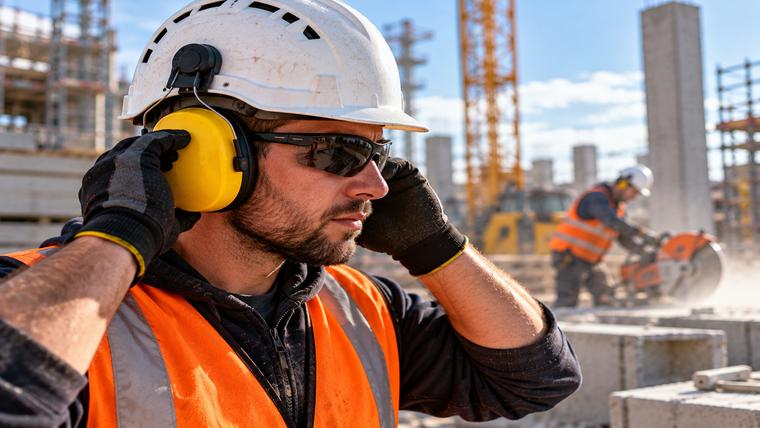
Effective hearing protection must be suitable for both the noise hazard and the person wearing it.
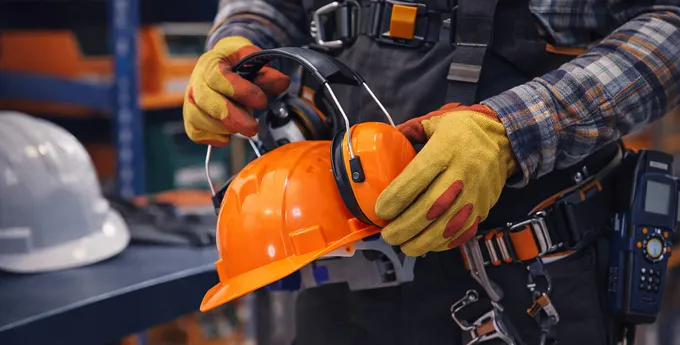
Earmuffs are particularly useful in workplaces where hearing protection needs to be put on and removed frequently. Earplugs may be more comfortable when working in confined spaces.
Custom-moulded earplugs, also known as otoplastics, can make hearing protection more comfortable during long shifts, provided their fit is checked regularly.
However, excessive noise reduction can make it difficult to hear instructions and warning signals. It is also important to consider how earmuffs fit alongside safety helmets, protective glasses and other equipment.
Earplugs must be inserted according to the manufacturer’s instructions, and dirty or worn components should be replaced.
Earmuffs with damaged cushions or an improper seal around the ears may provide significantly less protection than their stated attenuation rating suggests.
If your hearing protection causes discomfort, falls out or interferes with safe working practices, ask for a different, properly fitted option.
You can also explore our range of personal protective equipment and workplace safety products at the Bonapi Safety Shop.
If you need to raise your voice to speak to someone standing approximately one metre away, consider it a warning sign.
This is not an accurate noise measurement, but it is a good reason to ask about the results of your workplace noise assessment.
The best approach is to start by speaking with your supervisor, the person responsible for occupational health and safety or your employment agency representative.
Ask what protective measures have been introduced for your position and how to use them correctly.
Never remove your hearing protection in a designated noise zone simply to hear someone speaking.
It is safer to move outside the noisy area or use an agreed communication method.
If you experience ringing in your ears, pain or reduced hearing, seek medical advice without delay and inform the person responsible for workplace safety.
VCA is a widely recognised workplace safety certification system in the Netherlands, particularly in construction, industry and technical services.
It covers hazard identification, risk assessment, personal protective equipment and safe working practices.
This knowledge helps employees understand why hearing protection is an essential part of a broader occupational health and safety system.
For employees carrying out operational tasks, Basic VCA is usually the appropriate certification level. For team leaders, supervisors and employees responsible for managing teams, VOL-VCA is generally more suitable.
However, VCA certification does not replace workplace noise measurements, job-specific safety instructions or properly selected hearing protection.
If you want to understand the certification requirements, read our article What Is a VCA Course and How Can You Obtain a VCA Certificate?
Do you work in the Netherlands, or are you responsible for a team on a construction site, in a factory or at an industrial facility?
Explore the VCA courses available at Bonapi and choose training that matches your job role and level of responsibility.
At Bonapi, we train individual employees and organise group training sessions for companies, including courses delivered in Polish.
Proper workplace training helps employees identify hazards more quickly, follow occupational health and safety procedures and work more effectively as a team.
Follow Bonapi on social media to discover more practical advice about workplace safety and professional training in the Netherlands.

Author:

Arina
Dział VCA / SCC / BHV
Author:
Arina
Dział VCA / SCC / BHV

Author:
Arina
Dział VCA / SCC / BHV
Author:
Arina
Dział VCA / SCC / BHV
In our shop you will find trusted workwear, PPE and accessories you need for safe work. We offer products chosen by professionals from construction, logistics and industry.