User Panel



News
Search
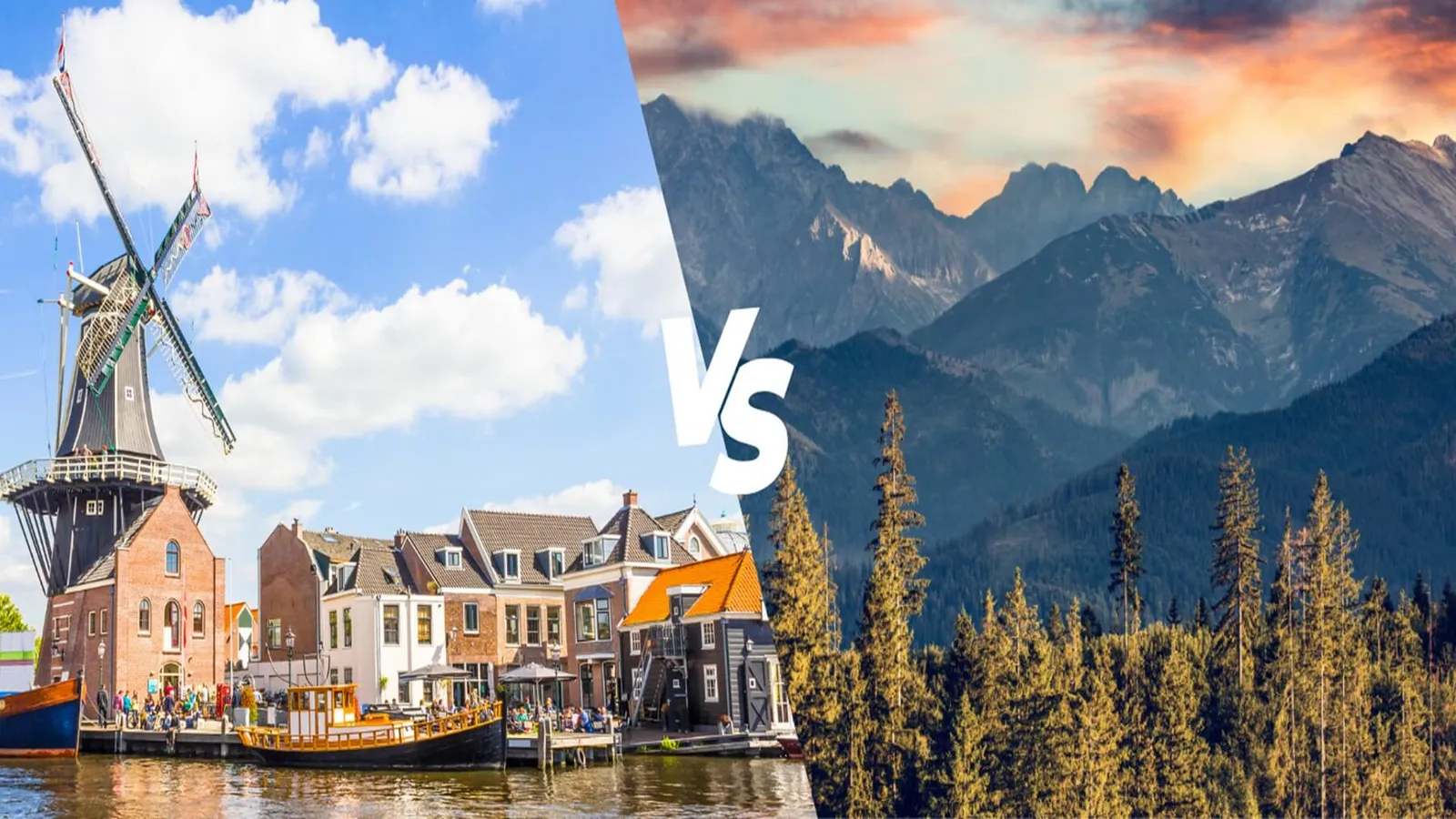
Today we’ll tackle a difficult yet intriguing topic for many people who are already living abroad or are only considering taking that step. Is it really true that in the Netherlands you can earn as well as your friends claim? And is it even worth leaving Poland in these times?
First, an important clarification – today we’re not talking about entrepreneurs, self-employed individuals (ZZP), or people running their own businesses. We’re also not talking about those with exceptionally favorable working conditions or specialist positions with high pay rates. Our focus will be solely on typical salaried employees earning around the minimum or average national wage in Poland and the Netherlands.
In the age of the internet, the web is full of stories – some smell of success (“I bought a house after 2 years of working in the Netherlands!”), others… well, of disappointment (“I work in a warehouse, and after expenses I’m left with less than in Poland”). As is usually the case, the truth lies somewhere in between.
That’s why today I’ll share a bit from my own experience, but I’ll also back it up with hard numbers. Let’s start with a few facts to set our frame of reference. As of January 2025, the minimum wage in Poland is 4,666 PLN gross, which comes to about 3,510.92 PLN net. In the Netherlands, on the other hand, the minimum hourly rate for people over 21 is €14.40 gross, which for a full-time job (40 hours a week) amounts to about €2,496 gross per month – and with holiday allowance, even €2,695.68 gross.
Poland’s minimum wage: ~3,511 PLN net ≈ €799 net.
Netherlands’ minimum wage: depending on taxes and allowances – most often around €1,900–2,000 net.
On paper, it looks like a huge gap. But that’s just the beginning of the story, because the size of your paycheck is one thing – and what life is actually like on that money is a completely different tale.
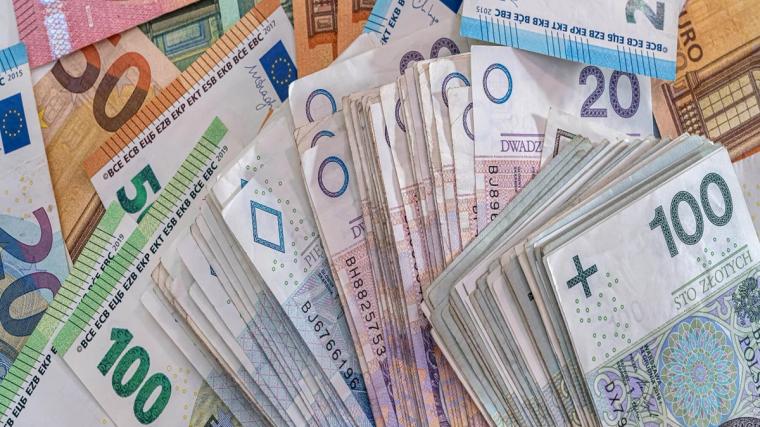
How much are the euro and the Polish złoty really worth these days? What do they leave in your wallet after paying for housing, insurance, transport, and food? Does the Dutch minimum wage allow you to live better than the Polish one? Or maybe it all comes down to the fact that in one country you earn more, but also spend more – and in the end… it almost evens out?
In the following paragraphs, we’ll break this topic down to its core. We’ll take a look inside the wallet of an average Pole in Poland and in the Netherlands, compare the cost of living, and see what’s left in the account after a month of work. And along the way, I’ll share why in the Netherlands you can sometimes climb to a higher career level without a diploma, while in Poland, without that “piece of paper,” doors often remain closed.
What can you buy on minimum wage?
It’s a topic that’s hard to analyze in absolute terms… because life in any country – beyond the bills and receipts – depends on who you are and what lifestyle you lead. Some people spend quickly and live “for today,” while others can squirrel away every penny. But to avoid drifting into abstractions, let’s look at a simple comparison of a few everyday expenses.
Netherlands (approx. €1,950 net on minimum wage)
Poland (approx. €799 net on minimum wage)
At first glance, it’s clear that the cost of living in the Netherlands is higher, but in proportion to earnings, you can still afford more than in Poland on the minimum wage.
There’s also a difference that doesn’t show up in the statistics. In the Netherlands, if you’ve got your head screwed on straight, you can “squeeze” some extra benefits out of the system.
In Poland? Such systemic benefits for people earning the minimum wage are practically non-existent. Yes, there are holiday vouchers in some companies, occasional 13th-month salaries, or subsidies from the Company Social Benefits Fund, but these are more the exception than the rule.
That’s why when comparing minimum wages, you need to look not only at the net amount but also at what the country “adds” for the employee in the form of benefits and allowances. In this category, the Netherlands is the clear winner.

Pay is not just the “rate in the job ad.” It’s the sum of many factors – from certificates and diplomas to the location of the office or warehouse, and sometimes even… the right connections. But if we look at it objectively, we can point out a few key elements that work completely differently in Poland and in the Netherlands.
Poland – diploma and experience above all!
In Poland, the belief still strongly persists that without a “piece of paper” – preferably a master’s degree – it’s hard to climb the career ladder or start a well-paid job. Of course, there are exceptions, but in many companies, especially office-based ones, a diploma opens doors, while the lack of formal education can slam them shut. The second pillar is experience and industry. IT specialists, engineers, or skilled construction workers can expect rates well above the average. In smaller towns, the problem is often the limited number of well-paid job offers – sometimes even an excellent professional simply has nowhere to get hired.
Another factor is the type of contract. In Poland, a permanent employment contract offers stability, paid leave, sick pay, and full social security contributions. A fixed-term contract means less certainty about the future. A contract of mandate provides even less protection, and in the case of a contract for specific work – virtually none. This form of employment has a huge impact on real security.
The Netherlands – language, qualifications, and willingness to work
In the Netherlands, a diploma can be an advantage, but it’s not a prerequisite for moving up to higher earnings. If you speak English (and preferably Dutch) and have the right attitude, many companies will give you a chance even without a university degree. Practical experience and… technical certifications are much more important. A forklift operator, scaffolder, or someone with SOG certificates can immediately jump to rates several, and sometimes even a dozen or so, percent higher than a worker without qualifications.
You can’t overlook the CAO – the collective labor agreements in force in a given industry. They define not only minimum pay rates but also bonuses for overtime, night work, holiday allowances, and festive season bonuses. For employees, this means clear employment conditions and tangible financial benefits.
The common denominator?
In both countries, your earnings depend on how much value you can bring to the company – whether through knowledge or practical skills. But while in Poland it’s more often about “what’s on paper” and the type of contract, in the Netherlands it’s more about “what you can do here and now” – preferably backed up by a certificate or qualification.

Poland – rising prices and a reality check
In theory, Poland in 2025 has a record supply of apartments. Developers are building a lot, and interest rates have dropped from their pandemic peaks. In practice, however, for young people, entering the housing market is still like climbing Mount Everest without oxygen.
The Netherlands – higher wages, but even higher barriers
Paradoxically, even though wages are higher in the Netherlands, owning your own home is often an even greater luxury than in Poland.

Poland – steady growth, but with a few question marks
Economists look to the future with cautious optimism. Poland’s economy is growing at around 3.3% in 2025, with 3.0% expected in 2026. Inflation is falling – from 3.7% in 2024 to 3.6% in 2025, and down to 2.8% in 2026.
The labor market, however, could be a problem. In Poland, over 1 million foreigners are already working, mainly from Ukraine – about 6.8% of all employees. The economy needs them, but political tensions and potential immigration restrictions could upset this balance. On top of that comes the need to invest in workforce skills and the green transition if we want to maintain the pace of productivity growth.
On the plus side – Poland has an entrepreneurial spirit. Around 350,000 new businesses are created each year, and there are plans for major infrastructure and export investments. If this potential can be combined with sensible policy, there’s a chance for several really good years ahead.
The Netherlands – higher wages, but higher demands
In the Netherlands, forecasts are also positive – rising wages, strong consumption, and a stable economy create good living conditions. But there are challenges as well. The government plans to raise income thresholds for skilled immigrants, which could make it harder for people without experience or language skills to enter the job market. Another risk is the possible escalation of global trade tensions – the Dutch economy is highly export-oriented, so tariffs and barriers could have a significant impact.
On the other hand, the country still needs workers, especially in technical sectors, logistics, and healthcare. And with rising wages and a benefits system (from insurance to commuting allowances), the Netherlands remains an attractive destination for foreign workers.

The choice is always yours. Exchange rates, figures, and cost-of-living comparisons can be helpful, but they’re only one side of the coin. Beyond just looking at the money, it’s worth considering your mental well-being – and that means something different for everyone.
For some, it’s a stable job close to family; for others, the chance to travel the world; and for someone else, simply the feeling of security and no stress about tomorrow. Whatever path you choose, remember: no chart will tell you how you truly feel in a place. And it’s this part of the puzzle – invisible in the statistics – that ultimately decides whether life somewhere is truly good.

Author:

Arina
Dział VCA / SCC / BHV


Author:
Arina
Dział VCA / SCC / BHV

In our shop you will find trusted workwear, PPE and accessories you need for safe work. We offer products chosen by professionals from construction, logistics and industry.