User Panel


News
Search
Logistics has been one of the fastest-growing sectors in the Netherlands for years. Distribution centres, warehouses and transport companies are constantly looking for new employees - both people without experience and specialists with certificates. For many jobseekers, including EU migrants, it is a first step towards stable work in the Netherlands, regular hours and opportunities for professional development.
At the same time, the logistics labour market has changed in recent years. Simply being willing to work is often no longer enough. Knowledge of safety rules, certificates and readiness to work in a modern warehouse environment are becoming increasingly important. If you are planning to move to the Netherlands or want to switch to a better-paid job, read on to find out how to prepare for entering the logistics sector.
The Netherlands is one of the most important logistics hubs in Europe. The Port of Rotterdam, Schiphol Airport and the extensive network of warehouses and distribution centres serving the entire European market all play a major role. In practice, this means thousands of jobs in warehouses, sorting centres, courier companies and production plants.
E-commerce also has a major impact on the growth of the sector. Logistics companies process orders around the clock, which means workers are needed both for simple warehouse tasks and for more technical roles related to internal transport or process coordination.
For people coming to the Netherlands for work, it is important that many companies hire employees without requiring Dutch language skills. At the same time, employers increasingly expect basic communication in English and readiness to work according to Dutch safety standards.
Contrary to stereotypes, logistics is not only about manually moving parcels. The sector includes many roles with different levels of responsibility and pay.
The most common job offers include:
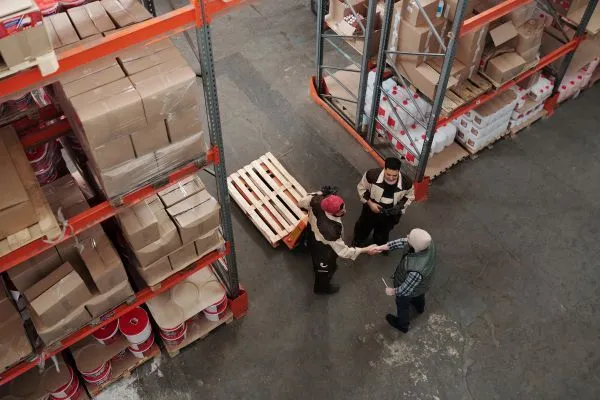
In large logistics centres, work is usually highly structured. Each employee is responsible for a specific stage of the process - order picking, moving goods, loading or quality control. As a result, even people without previous experience can usually be trained fairly quickly.
One way to increase the number of logistics jobs you can apply for is to obtain a forklift qualification. If you are interested in working as an operator, check the forklift course and find out how to gain the required skills and qualifications.
Working conditions depend on the company and the type of warehouse. Work in a supermarket distribution centre looks different from work in an electronics warehouse or in the automotive sector. In most cases, employees use scanning systems, mobile terminals and automated warehouse systems.
In practice, a working day often follows a similar pattern:
Many warehouses have productivity targets, but companies also place strong emphasis on workplace safety. This is especially important when it comes to forklift traffic, work on loading docks and handling heavier loads.
Working as a forklift operator is one of the employment options available in Dutch warehouses and logistics centres. If you are considering this career path, read more about working as a forklift operator in the Netherlands and find out what requirements employers may have.
If you want to work as a forklift operator, knowing how to drive the machine is not enough. You also need to understand how to lift loads safely. Learn how to read a forklift load chart and what determines the forklift’s actual lifting capacity.
If you are an EU citizen, you do not need a work permit to work legally in the Netherlands. However, you will still need to arrange several basic formalities.
The most important ones are:
Some employment agencies help organise these formalities, but it is worth checking the cooperation terms in advance. Pay particular attention to accommodation, transport to work and the provisions relating to pay.
Not always. Many companies hire people without experience and train them on the job. This mainly applies to basic warehouse work and order picking. The situation is different for technical roles or positions involving the operation of equipment.
If you want to find better-paid work more quickly, it is worth gaining additional qualifications, such as:
In practice, people with additional training have a wider choice of job offers and are more likely to end up in companies offering more stable employment conditions.
Many people associate VCA only with construction or industry. In reality, the certificate also appears very often in logistics, especially in large distribution centres and technical warehouses.
VCA confirms knowledge of occupational health and safety rules. For an employer, it is a signal that the employee:
In practice, many logistics companies require VCA from technical workers, warehouse equipment operators, foremen and people working in industrial warehouses.
Most job offers appear in regions strongly connected with transport and distribution:
You can look for work:
Be cautious with job offers that do not give specific employment conditions or promise unrealistically high earnings without experience. A good agency clearly states:
The biggest mistake is postponing training “until later”. In logistics, professional development often starts with simple certificates that genuinely increase the number of available job offers.
Employers are more likely to hire people who:
A willingness to work shifts and flexibility are also valuable advantages. In many companies, commitment and responsibility are what determine promotion to coordinating roles.
Definitely. For many people, warehouse work is the beginning of a longer career in the Netherlands. After gaining experience, you can develop towards roles such as:
In Dutch companies, competence and workplace safety are what matter most. That is why people who invest in courses and certificates usually move into better-paid roles more quickly.
A well-prepared employee adapts to the job faster, understands safety procedures better and finds it easier to work in a modern warehouse environment. This applies both to individual candidates and to entire teams working in logistics, warehouses and industry.
👉 Check the VCA courses and prepare your employees to work in line with Dutch safety standards. Bonapi organises training for individuals, companies and groups of employees coming to the Netherlands for work.
Do you already have some experience or are you preparing for your forklift operator exam? Take the forklift practice test to check your knowledge of safe forklift operation and prepare for the theoretical part of the exam.
If you want to stay up to date with advice on working in the Netherlands, training and certificates, follow Bonapi on social media or subscribe to the newsletter.

Author:

Arina
Dział VCA / SCC / BHV


Author:
Arina
Dział VCA / SCC / BHV
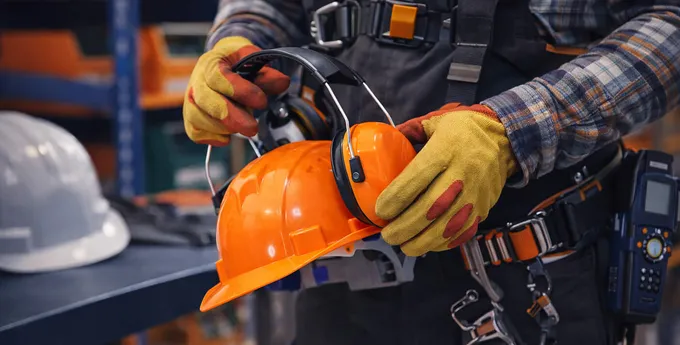
In our shop you will find trusted workwear, PPE and accessories you need for safe work. We offer products chosen by professionals from construction, logistics and industry.