User Panel


Trainings / Courses
Search

Arina
Dział VCA / SCC / BHV
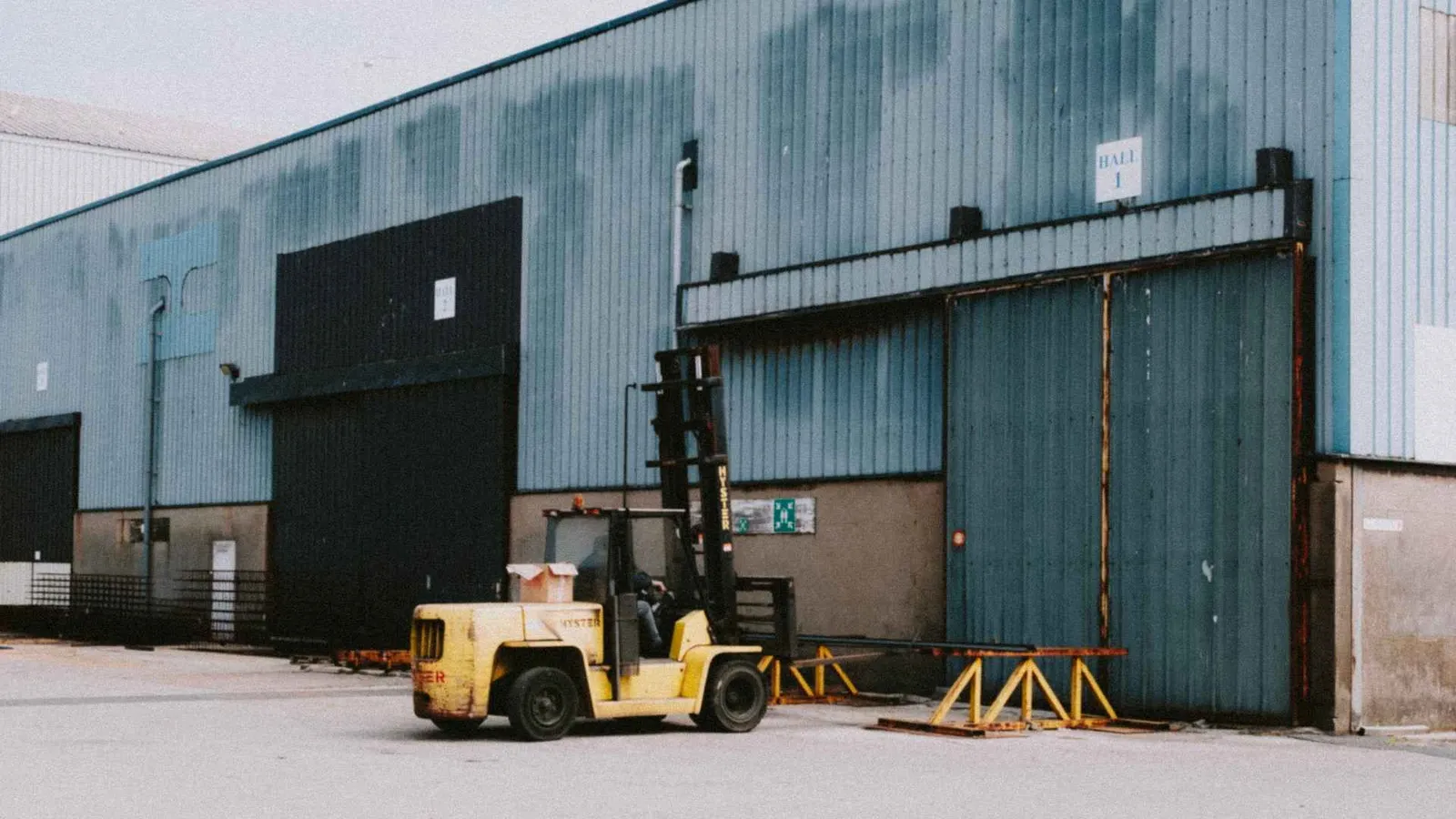
On a forklift, you see the information “2,000 kg capacity,” so a pallet weighing 1,800 kg should be safe to lift, right? Not necessarily. A forklift’s actual lifting capacity depends on several factors, including the lift height, the position of the load centre, and the attachments fitted to the truck. That is why an operator should know how to read a forklift load capacity chart and use it to determine whether a specific load can be lifted safely.
A forklift load capacity chart, also referred to as a load chart or capacity chart, shows the relationship between the key parameters that determine whether a load can be lifted safely. These primarily include the weight of the load, the lift height, and the horizontal distance of the load centre from the vertical face of the forks.
In Dutch training materials and on forklifts, you may come across terms such as:
The load capacity chart is specific to a particular forklift and its configuration. Therefore, you should not assume that two similar-looking forklifts with a rated capacity of 2,000 kg will have identical lifting capabilities at every height.
For an operator, the load capacity chart is not technical information intended solely for service technicians. It is an essential tool for determining whether a particular lifting operation can be carried out safely.
Being able to read a forklift load chart correctly is one of the practical skills an operator needs to handle loads safely. If you want to gain the right skills and qualifications, check the forklift course, which combines theoretical knowledge with practical forklift operation.
One of the most common mistakes made by inexperienced operators is looking only at the forklift’s rated capacity.
If a forklift is marked with a capacity of 2,000 kg, this does not automatically mean that you can lift any load weighing up to 2,000 kg to any height. Rated capacity is specified under defined conditions, including a particular load centre distance and lift height.
In practice, you also need to consider the residual capacity, which is the maximum permissible load weight for a specific forklift configuration, lift height, and load centre distance.
The following example illustrates this clearly: a forklift has a rated capacity of 1,600 kg. With a load centre distance of 500 mm, it retains a capacity of 1,600 kg up to a lift height of 5,000 mm. At the same height, but with a load centre distance of 1,000 mm, its capacity drops to 930 kg. At a lift height of 7,000 mm and a load centre distance of 1,000 mm, the remaining capacity is just 460 kg.
This shows why the largest capacity figure displayed on the forklift alone is not enough to make a safe lifting decision.
The centre of gravity is the point at which the weight of a load can be considered to be concentrated. When reading a load capacity chart, the relevant parameter is its horizontal distance from the vertical face of the forks.
For a regular, evenly distributed load, this is relatively easy to determine. If a load measures 1,000 mm in the direction of the forks, its load centre will be approximately halfway along that length, or 500 mm from the fork face.
What matters here is the dimension of the load in the direction of the forks, rather than simply its width as seen from the operator’s position. This is particularly important for pallets and loads that can be picked up from different sides.
If an evenly distributed load measures 1,200 mm in the direction of the forks, its load centre will be approximately 600 mm. If it measures 1,600 mm, the load centre will be approximately 800 mm.
The farther the load centre is from the forklift, the greater the effect of the load on the truck’s stability. As a result, the maximum permissible load weight may be lower.
The ability to assess load capacity and the load centre is useful every day when working in a warehouse. If you are considering this profession, read more about working as a forklift operator in the Netherlands and find out what requirements you need to meet.
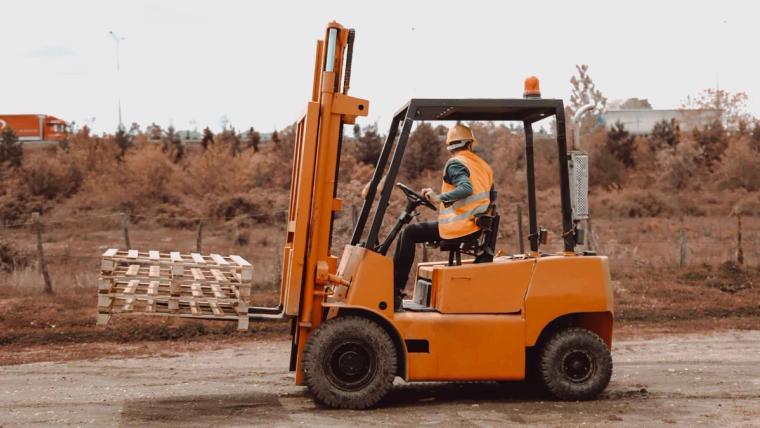
Another important parameter is hefhoogte, or lift height.
As the lift height increases, the forklift’s permissible lifting capacity may change. This is why a load capacity chart may show different capacity values for specific lift heights and load centre distances.
The operator therefore needs to check not only the weight of the pallet but also the height at which it is to be placed.
This is particularly important when working with high-level racking. A load that a forklift can safely raise a few dozen centimetres above the floor may exceed its permissible capacity when lifted several metres.
That is why the question, “Can this forklift lift this pallet?” is incomplete. You also need to know how high the pallet needs to be lifted and where its load centre is located.
The layout of a load capacity chart may vary depending on the manufacturer, forklift model, and configuration. Do not try to memorise a single chart. Instead, learn how to identify the relevant parameters and understand the relationships between them.
Before lifting a load, determine three things:
How much does the entire load weigh? What matters is the actual weight of everything being carried on the forks. Do not estimate it based on the appearance of the pallet. The weight may be stated on a label, in the product documentation, or in the warehouse management system. Some forklifts may also be equipped with an integrated weighing system.
Where is the load centre of gravity? Check the dimensions of the load and how its weight is distributed. For a regular, evenly distributed load, the load centre can generally be assumed to be halfway along its length in the direction of the forks. For irregular loads, however, this assumption may be incorrect.
How high do you need to lift the load? It is not enough to know that the pallet is going “onto the racking.” You need to know the lift height corresponding to the position where the load will be placed.
Only once you have this information can you use the chart to determine the permissible lifting capacity under those specific conditions. If the load weight exceeds the capacity shown for the relevant load centre distance and lift height, do not perform the operation with that forklift.
Suppose you are working in a warehouse and need to lift a long load weighing 1,400 kg. The forklift has a rated capacity of 1,600 kg. At first glance, everything appears to be fine: 1,400 kg is less than 1,600 kg.
The problem arises if the 1,600 kg rating applies to a load centre distance of 500 mm, while the length of your load means that its actual load centre is much farther away from the fork face.
In that situation, you cannot rely on the forklift’s rated capacity alone. You need to check the load capacity chart for that specific forklift and find the permissible capacity for the actual load centre distance and intended lift height.
If the chart shows a maximum permissible capacity of 1,200 kg under those conditions, a 1,400 kg load exceeds the limit. The fact that the forklift has a rated capacity of 1,600 kg does not change this.
A counterbalance forklift operates as a system of opposing forces. The load positioned in front of the front axle creates an overturning moment that tends to tip the forklift forward, while the truck’s structure and counterweight help maintain stability.
As the load centre moves farther away from the fork face, the load has a greater effect on the forklift’s stability.
You can compare this to holding a heavy object. It is easier to hold it close to your body than with your arms fully extended. The weight of the object remains the same, but the distance has changed.
A similar principle applies to a forklift. This is why long items, non-standard pallets, construction materials, or loads extending far beyond the forks require particular attention.
Using half the load length works for regular loads with evenly distributed weight. In practice, however, operators may need to transport machinery, metal components, equipment, crates, or other goods where the heaviest part is positioned on one side.
In such cases, the geometric centre of the load and its actual centre of gravity may not be in the same place.
Therefore, do not automatically assume that the centre of gravity is always exactly halfway along the pallet. If you do not know the load weight, weight distribution, or other parameters of an unusual load, stop the operation and obtain the necessary information first.
An operator should never test a forklift’s capacity by attempting to lift an unknown load.
Forklifts can be fitted with various attachments, such as fork positioners, clamps, rotators, and other equipment designed for handling specific types of loads.
Attachments can affect the forklift’s residual capacity. They have their own weight, and their design may also move the load farther away from the forklift. Manufacturers take these factors into account when determining the truck’s actual lifting capacity.
Therefore, after changing the forklift configuration, you cannot simply continue using capacity values that apply to the truck without the attachment. The capacity information must correspond to the machine’s actual configuration.
If you are unsure whether the available load capacity chart takes the fitted attachment into account, clarify this before starting work.
The first mistake is assuming that rated capacity is always available under all operating conditions. A forklift rated at 2,500 kg may not be capable of safely lifting every 2,500 kg load to its maximum lift height.
The second mistake is ignoring the load centre. The operator may know the weight of the pallet but fail to consider its length and the distribution of the goods.
The third mistake is ignoring lift height. The fact that a forklift can raise a load from the floor does not mean that it can safely place the same load several metres higher.
The fourth mistake is using the wrong capacity chart or failing to account for the forklift’s configuration and fitted attachments.
The fifth mistake is guessing. If you do not know the weight of the load or cannot clearly interpret the capacity chart, the correct response is not, “I’ll try lifting it slowly.” Determine the missing information first.
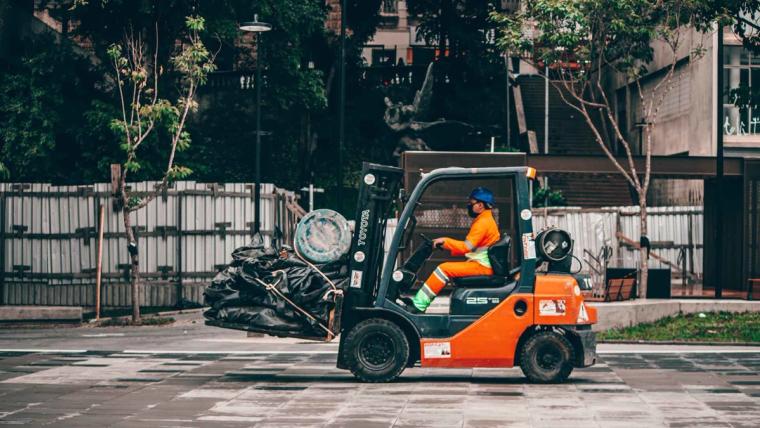
Operating a forklift involves much more than driving, steering, and controlling the mast. During every shift, the operator makes decisions that affect the safety of other people, the goods being handled, and the equipment itself.
You need to assess whether the load is stable, whether the forks are positioned correctly, whether you know the load weight and centre of gravity, and whether the forklift has sufficient capacity at the required lift height.
That is why proper forklift operator training covers load handling, not just driving the machine around a training area.
If you are planning to work as a heftruckchauffeur in the Netherlands, knowing how to read a load capacity chart will be useful in warehouses, distribution centres, manufacturing facilities, industrial environments, port logistics, and anywhere else where goods are transported and stored using forklifts.
Additional operator qualifications may be required when working in the petrochemical industry or at certain industrial sites. Find out what SOG forklift certification is and when you may need it to work in the Netherlands.
Before lifting a heavy or unusual load, answer three questions: How much does it weigh? Where is its centre of gravity? How high does it need to be lifted?
Then compare this information with the load capacity chart for that specific forklift.
Do not transfer capacity values from one machine to another, and do not rely solely on rated capacity. Changes in lift height, load centre distance, or attachment configuration can change the forklift’s actual permissible lifting capacity.
Knowing how to correctly interpret a load capacity chart is what separates simply driving a forklift from operating one competently and safely. An operator should know not only how to lift a load, but above all whether it can and may be lifted safely under the given conditions.
If you want to work as a forklift operator in the Netherlands, knowing how to drive the machine is not enough. You also need to understand lifting capacity, load centres, forklift stability, load handling and storage, and safe working procedures.
Training gives you the opportunity to practise these situations and prepare for a job in which you need to make safety-critical decisions independently. Additional qualifications can also increase the number of positions available to you in the Dutch logistics, manufacturing, and industrial sectors.
Check out Bonapi’s forklift operator training and prepare for safe work with a heftruck, reachtruck, or EPT.
Understanding the rules for lifting and handling loads safely is an important part of an operator’s preparation. Before the exam, you can take the forklift practice test to check your knowledge and see which topics you still need to review.



Author:

Arina
Dział VCA / SCC / BHV
Author:
Arina
Dział VCA / SCC / BHV
Author:
Arina
Dział VCA / SCC / BHV


Author:

Cezary
Dział IPAF / SOG
In our shop you will find trusted workwear, PPE and accessories you need for safe work. We offer products chosen by professionals from construction, logistics and industry.