User Panel


Trainings / Courses
Search

Arina
VCA / SCC / BHV Department
The F-Gas certificate is one of the most important documents for anyone who wants to work in the Netherlands on air conditioning, heat pumps, refrigeration or technical installations with a refrigerant. If you are thinking about working as a fitter, service technician or self-employed specialist in the installation sector, sooner or later you will come across this requirement. The certificate is not an add-on to your CV, but confirmation that you may legally carry out certain work on equipment containing fluorinated greenhouse gases.
F-gases, or fluorinated greenhouse gases, are substances used, among other things, as refrigerants in air conditioning, heat pumps, cold stores and industrial installations. They work well technically, but if they are released into the atmosphere, they can have a strong impact on the climate. That is precisely why the European Union is gradually limiting their use and introducing detailed rules on installation, service, leak checks and recovery of the refrigerant.
The idea is that people working on such installations should know how to prevent leaks, how to recover the refrigerant correctly and how to document the work carried out. Even a small leak can mean financial loss, the risk of failure and legal consequences for the company. That is why, in the Netherlands, only people and companies with the appropriate authorisations are allowed to work with F-gases.
Since 2024, a new EU regulation on fluorinated greenhouse gases has been in force. It introduces further restrictions for F-gases and reinforces the importance of the correct handling of refrigeration, air-conditioning and heat-pump equipment. For the worker, this means one thing: knowledge of the regulations and holding the right qualifications are becoming increasingly important.
The F-Gas certificate confirms the qualification to carry out certain work on equipment containing F-gases. In the Netherlands you will most often come across the term persoonscertificaat, that is, the personal certificate for the fitter. Such a document confirms that the person has passed the exam and has the knowledge and skills required to work with a refrigerant.
A second important term is the bedrijfscertificaat, or company certificate. It concerns the business that carries out work on F-gas installations. It matters especially when you operate as a self-employed worker (zzp’er) or work for a company that provides installation, service or maintenance for clients.
In simple terms:
This distinction is very important. You may have technical experience, know the installations and have worked in the sector for years, but without the right certificate you will not be able to legally carry out every operation on a refrigeration system.
The F-Gas certificate serves to confirm that you can work safely and in line with the regulations on the refrigerant circuit. So it is not about simply mounting a casing, positioning a unit or connecting auxiliary components. What matters most is contact with the part of the installation where the refrigerant is located.
The certificate may be required for activities such as:
If your work does not affect the refrigerant circuit, an F-Gas certificate may not be required for the activity itself. Examples include transporting a unit, preparing the installation site, construction work around the installation or simple auxiliary tasks. Care is needed, though, because in practice many employers and clients require a certificate from people who regularly work on such equipment, even if not every activity directly concerns the refrigerant.
The F-Gas certificate is particularly important in sectors that use air conditioning, refrigeration and heat pumps. In the Netherlands there are many such workplaces, because the country invests heavily in energy efficiency, building technology, logistics cold storage and modern heating systems.
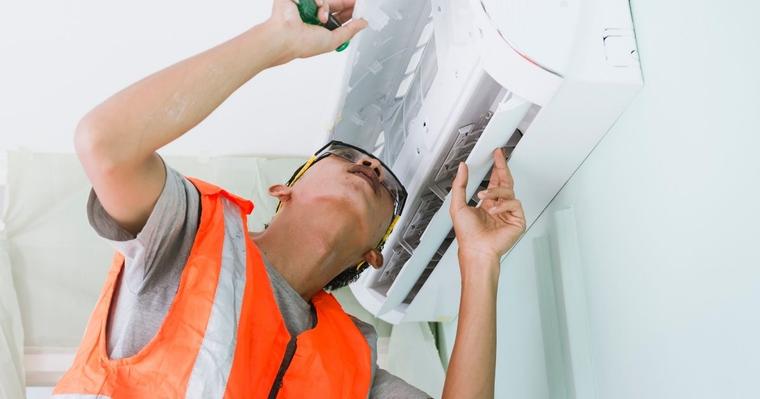
The certificate is most often needed in the HVAC sector, that is, heating, ventilation and air conditioning. This applies both to private homes and to offices, schools, hotels, shops and public buildings. Air-conditioning and heat-pump fitters work on split units, multi-split systems, larger VRF systems and technical installations in commercial buildings.
The second large area is refrigeration. This includes supermarkets, food warehouses, distribution centres, cold and freezer stores and food-processing plants. There, a breakdown of the installation can mean major losses, so service technicians must act quickly, precisely and by the book.
The F-Gas certificate is also useful in logistics, agriculture and greenhouse horticulture, the pharmaceutical industry, hospitality and the maintenance of technical buildings. It increasingly appears in job ads for data centres, where stable cooling is crucial for the operation of the server rooms.
The F-Gas certificate mainly concerns technical occupations, but the range of positions is fairly broad. Not every employee in an installation company needs such a document, but people who work on the refrigeration system usually cannot do without it.
The F-Gas certificate most often comes up in positions such as:
If you are planning to develop in building technology, air conditioning or heat pumps, the F-Gas certificate may be one of the documents that set you apart from people who do only auxiliary work. For an employer, it is a signal that you can take responsibility for more specialist tasks.
You need an F-Gas certificate when you carry out work on equipment containing fluorinated greenhouse gases and intervene in a circuit that contains a refrigerant. This applies both to the installation of new equipment and to service, repair, leak checks or refrigerant recovery.
The certificate may be needed if you:
Do not assume that a “helper” never needs authorisations. If your range of duties widens over time and you start working directly on the installation, the certificate may become necessary. The safest approach is always to check which activities you carry out and whether they relate to the refrigerant circuit.
For self-employed people, this topic is especially important. If you work as a zzp’er and offer services on F-gas installations on your own, professional experience alone is not enough. You must make sure your activity complies with the requirements applying both to the person carrying out the work and to the business providing the service.
In practice, this means more responsibility than working under an employment contract. As an employee, you can rely on the procedures, documentation and certification of the company you work for. As a zzp’er, you are responsible yourself for whether you have the right documents, tools and procedures and for how you record the work carried out.
This also matters during inspections and in dealings with clients. More and more clients check whether the contractor has the required certificates. Missing documents can mean losing a job, a problem with sign-off, or the risk of a fine.
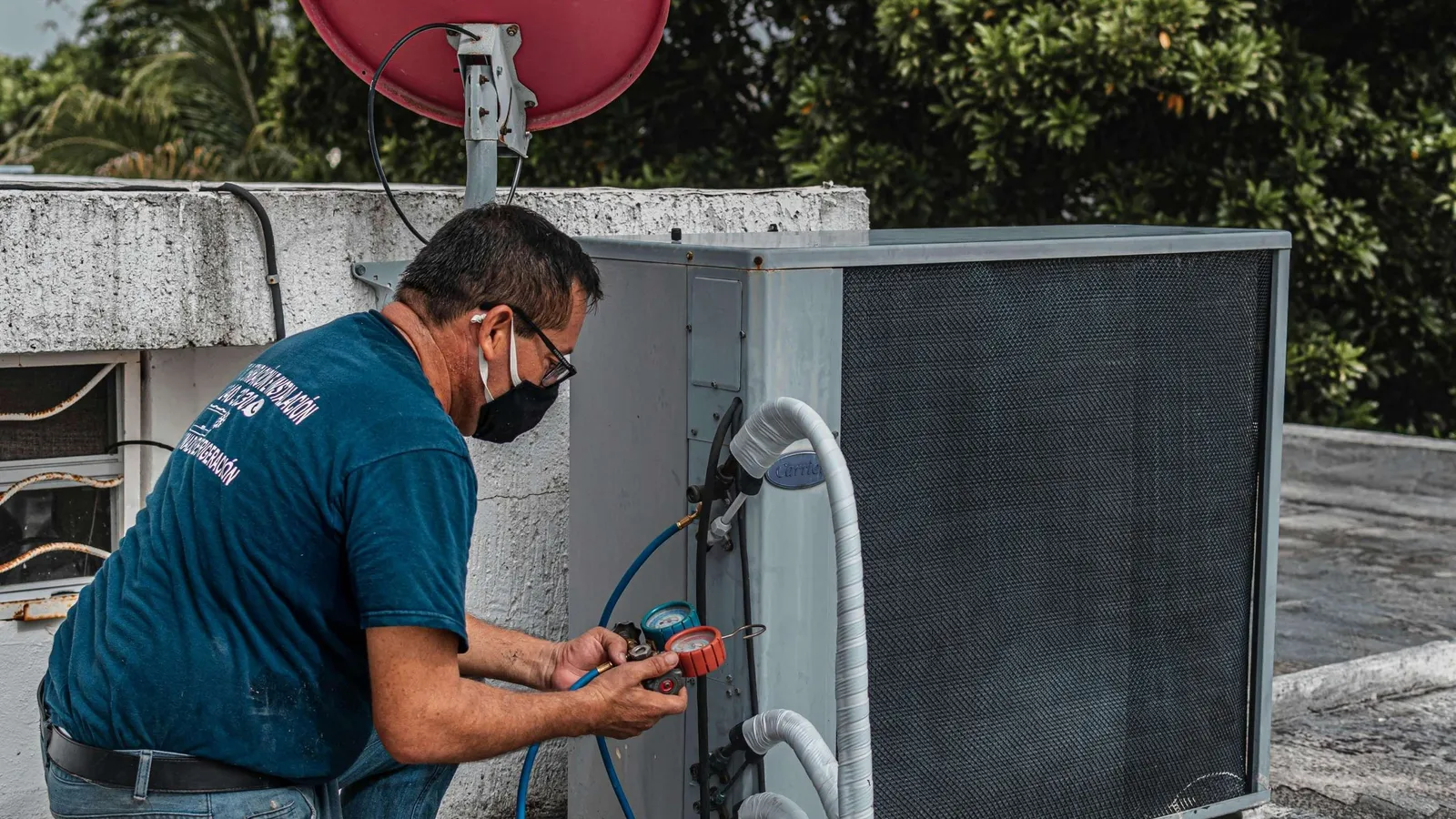
Working with F-gases requires precision and a calm approach. It is not just “connecting a unit”. A fitter or service technician has to assess the installation, check for leaks, choose the right tools and use suitable pressure gauges, vacuum pumps, scales and recovery equipment.
A large part of the work is documentation. In many situations you have to record which refrigerant was used, how much was recovered, whether a leak check was carried out and what work was done. For the employer or client, that documentation is proof that the work was done in line with the regulations.
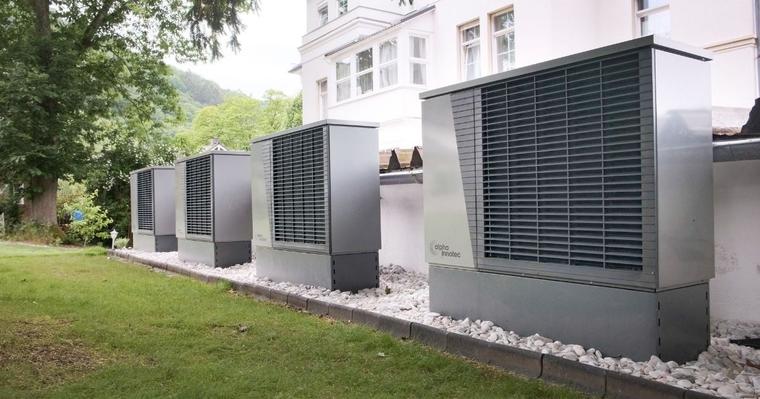
Working conditions vary. With air conditioning you often work in homes, offices or commercial premises. With industrial refrigeration you may work at low temperatures, in warehouses, on roofs, in machine rooms or in places where the installation has to run almost non-stop. With heat pumps there is outdoor work at the outdoor units, sometimes in changing weather.
The F-Gas certificate alone does not make anyone a good specialist. It is the formal basis, but technical knowledge, practice and responsibility also count on the job. Employers notice people who can read technical manuals, understand installation diagrams and diagnose faults without guessing.
Especially useful are:
Communication also matters in teamwork. On larger installations, a service technician works with electricians, control engineers, building technicians, the project manager and the client. One person’s mistake can affect the whole installation, so procedures and a clear division of tasks count.
The F-Gas certificate concerns a specific technical area: working with fluorinated greenhouse gases and installations containing a refrigerant. VCA is something else. It is training and an exam on occupational safety, often required in the Netherlands on building sites and in industry, engineering and logistics.
So you may need both documents, but each serves a different purpose. F-Gas confirms the authorisation for certain technical activities. VCA shows that you know the basic rules of safe work in a higher-risk environment. On top of that, other training may be added, for example working at height, operating an aerial work platform, first aid (EHBO) or company-specific training.
For a worker, the combination of technical qualifications and safety works best. An employer is more willing to hire someone who is not only authorised to work on the installation, but also understands the risk, can respond in the event of an accident and cares about the team’s safety.
When browsing job ads in the Netherlands, pay attention to the exact range of duties. The term “air-conditioning fitter” does not always mean the same thing. At one company you will mainly install units and prepare the installation, at another you will go straight into service, where authorisations, experience and independence are required.
Check in the ad:
If you have certificates from another EU country, do not automatically assume that an employer will accept them without discussion. Certificates from other EU countries may be valid in the Netherlands, but during an inspection you have to be able to present them, and in some situations a translation may be needed. It is best to clarify this before signing a contract or accepting a job.
Work on refrigeration and air-conditioning installations combines several kinds of risk. There is technical risk, because the installations are under pressure. There is environmental risk, because an uncontrolled leak of refrigerant can harm the climate. And there is the ordinary occupational risk: working on a ladder, on a roof, near electricity, in a machine room, in a cold store or in a confined space.
That is why a good technician does not treat safety as a formality. They check the workplace, make the work area safe, use the right tools and do not improvise on the system. If something is unclear, they stop the work and clarify the problem with the supervisor or client.
This is exactly where first-aid training matters. Accidents in the technical sector can involve cuts, burns, falls, electric shock, fainting or sudden health emergencies. Someone trained in first aid (EHBO) can react faster, protect the casualty and call for help in the right way.
If you start with auxiliary work, treat it as the first stage. Notice which installations you work on, what documents the more experienced technicians hold and which requirements keep coming up in job ads. That makes it easier to decide whether you want to head towards air conditioning, heat pumps, industrial refrigeration, mobile service or maintenance.
A good development plan can look like this:
In the technical sector, qualifications quickly translate into more independence. And more independence usually means better rates, more stable employment and a wider choice of jobs.
The F-Gas certificate is important when your work concerns F-gas installations. But in day-to-day technical work, a quick response, responsibility and the ability to help when an accident happens also count. That is why first-aid (EHBO) training is a good choice for companies, technical crews, assembly teams and workers out in the field.
Bonapi runs first-aid (EHBO) training for groups and employees. It is practical preparation for the situations that can happen at work: injuries, fainting, cuts, burns or other emergencies that call for first aid. If you want to increase your crew’s safety, check out the first-aid training and train your employees in a way that matches the reality of their work.
Follow Bonapi on social media or subscribe to the newsletter for information on training, professional requirements and practical tips for working in the Netherlands.




Author:

Arina
Dział VCA / SCC / BHV
Author:
Arina
Dział VCA / SCC / BHV
Author:
Arina
Dział VCA / SCC / BHV
Author:
Arina
Dział VCA / SCC / BHV


Author:

Cezary
Dział IPAF / SOG
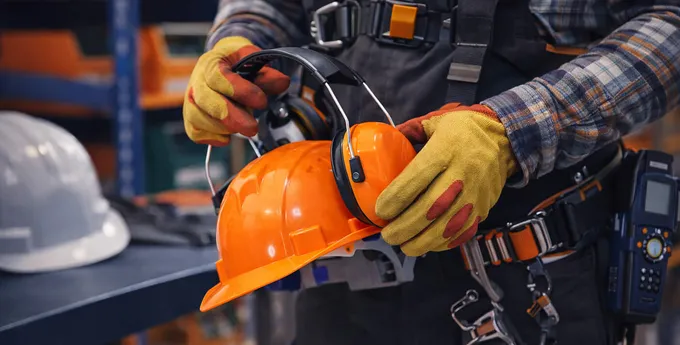
In our shop you will find trusted workwear, PPE and accessories you need for safe work. We offer products chosen by professionals from construction, logistics and industry.