User Panel


Trainings / Courses
Search

Cezary
Departamentul IPAF / SOG

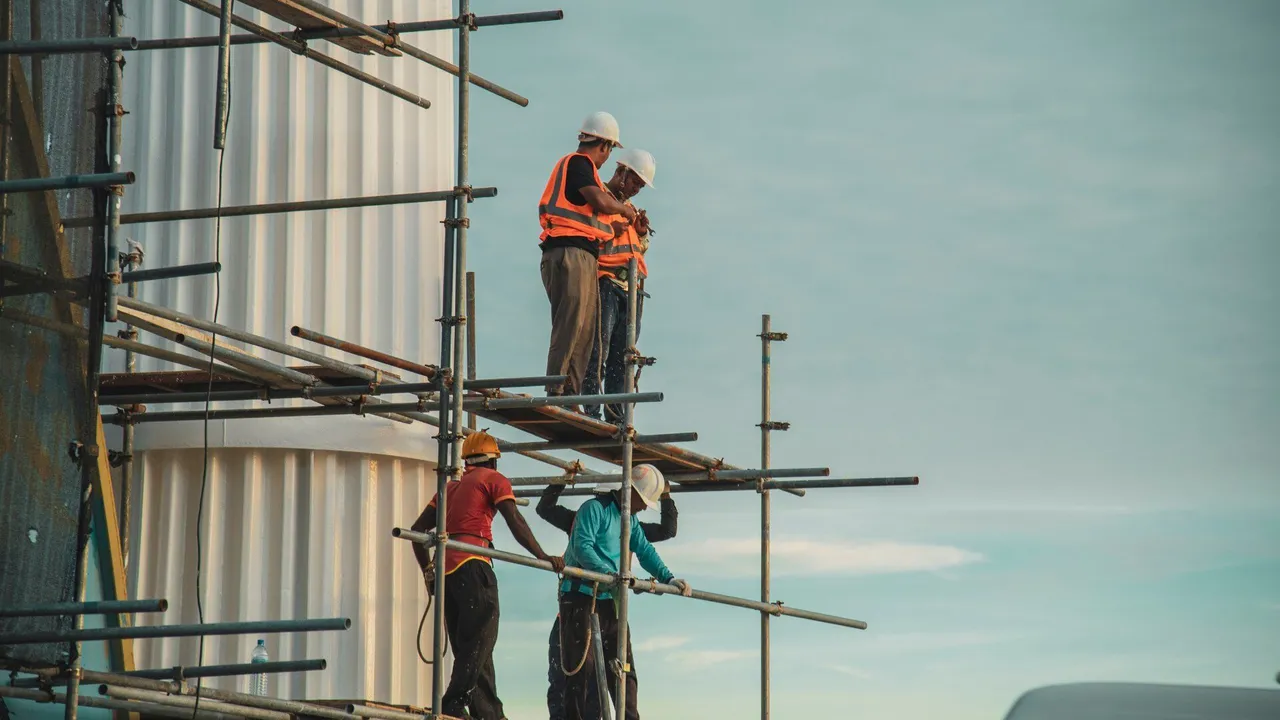
Just a few years ago, getting into the scaffolding industry seemed straightforward. Someone knew someone, a company needed extra hands, you were given a helmet and a safety harness, and within a week you were already carrying materials on site. However, the Netherlands has stopped treating scaffolding as ‘manual labour for anyone’. Today, it is a technical profession. With rules. Procedures. Responsibility.
And that is precisely why the Hulpmonteur 2.0 system was created – a new pathway for those who want to enter the scaffolding industry in the Netherlands legally and professionally.
It is no longer just about “handing out pipes”. The industry is looking for people who understand safety, can work as a team and know what they are doing several metres above the ground.
And there’s still a shortage of staff. A serious one.

This is one of the things that raises the most questions, as many people still believe that enrolment takes place directly through the training centre. In the case of Hulpmonteur 2.0, things work a little differently. Registration takes place via the official SVWOH system. The candidate or employer enrols the participant online, selecting the dates for the training and the exam.
Once registered, candidates receive information about the training and the exam. They then report to an accredited training centre, where both the theoretical and practical parts of the course are delivered.
In practice, the process is as follows:
1. Registration via the SVWOH system
2. Selecting a training date
3. Online theory course
4. Theory test
5. Practical training
6. Practical test
7. The certificate appears in the CDR system
The entire process has been designed to ensure that candidates undergo a comprehensive training programme from the outset, preparing them for a career in the scaffolding industry.
The new Hulpmonteur 2.0 system has been designed to ensure that, before starting a project, candidates are familiar with the basics of scaffolding work, are able to work safely as part of a team, and understand the rules governing the Dutch scaffolding industry. Gone are the days when people would turn up on site in the morning and learn everything ‘on the job’.
The training programme is divided into a theoretical and a practical component and is conducted in accordance with the official guidelines of SVWOH and SEWOH.
Registration for the course takes place via the official SVWOH website. The candidate or employer registers the participant online at: SVWOH, selecting the training and exam dates. This is an important change, as the entire system has been centralised. As a result, the course and exam are conducted according to the same standards throughout the Netherlands.
Once registered, the candidate receives a training date at an accredited training centre, such as the Bonapi Training Centre. The theoretical part then begins. The theoretical module is delivered online via the SVWOH platform and serves as preparation for the rest of the training.
It is a great help that both the theory manual and the exam are available in as many as 15 languages, including Polish, English, Romanian, Russian and Ukrainian. This allows candidates to focus on understanding the material rather than struggling with technical Dutch.
The theory section itself lasts around 30 minutes, followed immediately by the theory exam, which also lasts around 30 minutes. The exam is conducted under the supervision of SEWOH examination staff, using a bodycam system.
Only after passing the theory can the candidate proceed to the practical section. And this is where the most important stage of the entire training begins.
The practical training is conducted by an accredited training centre and lasts approximately 3 hours. Candidates work on real scaffolding components, learn to identify materials, use personal protective equipment correctly, and follow the rules for working safely at height.
The practical training has been designed to resemble real work on a project as closely as possible. Candidates work in pairs. One person is responsible for preparing and handing over materials, whilst the other carries out the assembly. The roles are then swapped.
During the practical training, participants learn, amongst other things:
• how to identify scaffolding components,
• how to assess materials for damage,
• how to handle materials correctly,
• the basics of assembly and dismantling,
• how to move components safely,
• teamwork and communication.
Great emphasis is also placed on safety. Candidates work wearing full protective gear, including, amongst other things, a helmet, safety goggles, gloves, a safety harness and S3 safety footwear.
The practical examination is conducted under the supervision of an SEWOH examiner and is assessed on the following criteria, amongst others:
• workplace safety,
• use of personal protective equipment,
• communication,
• workstation organisation,
• correctness of the tasks performed,
• workplace ergonomics.
Once the exam has been passed, the scaffolding assistant certificate appears in the CDR system, usually within 24 hours.
And this is precisely what best illustrates just how much the scaffolding industry in the Netherlands has changed today. Companies are no longer looking solely for people to carry materials. Increasingly, they are looking for people who understand safety rules from day one and are able to work effectively as part of a team on a project.
There are different qualification levels in the scaffolding industry, so the requirements depend on the tasks you perform. If you want to understand the full career path from scaffolding assistant to more independent roles, find out who can work on scaffolding and what courses are required.

This is one of the most frequently asked questions by people who want to start working in the Netherlands but are worried about the language barrier. And the good news is that the exam and the theory materials are available in as many as 15 languages.
This allows candidates to focus on learning the trade and safety rules, rather than struggling to translate technical terms.
The scaffolding assistant course is available in the following languages:
At Bonapi, training is delivered in a straightforward and practical way, without unnecessary theory that is detached from reality. Trainees prepare not only for the exam, but above all for real-world work on projects in the Netherlands.
A scaffolding assistant is not immediately expected to erect entire structures on their own. Initially, the role mainly involves supporting the team of erectors in their day-to-day work.
The assistant’s duties include, amongst other things:
• preparing materials,
• passing up components,
• sorting scaffolding parts,
• assisting with assembly and dismantling,
• checking basic components for damage,
• ensuring workplace safety.
Over time, the candidate gains experience and can progress further towards becoming a scaffolder, a senior scaffolder or an inspector.
And that is precisely why many people view the role of assistant as the start of a specific trade, rather than just a temporary job.

Very high. Particularly in the industrial and petrochemical sectors.
Dutch companies are regularly looking for new staff to work at:
• refineries,
• industrial terminals,
• chemical plants,
• shipyards,
• major construction projects.
The problem is that the number of people willing to do manual labour is steadily declining. Furthermore, an increasing number of companies now require specific qualifications and knowledge of safety regulations.
That is why those holding a scaffolding assistant certificate have far greater opportunities to enter the industry today than they did just a few years ago.
In the Netherlands, the scaffolding industry is constantly in need of people who want to work, develop their skills and gain specific qualifications. The scaffolding assistant course is that first step – often the most important one.
At Bonapi, we prepare trainees for real-world work on projects in the Netherlands. Simple, straightforward and without unnecessary hassle. The training is available in 15 languages, and experienced instructors guide you through the entire process step by step.
If you want to start working as a scaffolding assistant or enter the industry with official qualifications – contact us and sign up for the next course date.
Do you already have experience assembling and dismantling scaffolding and want to obtain a higher level of qualification? Check the SVWOH Scaffolder Course to learn about the requirements and the scope of training that prepares you for the exam.
Before the exam, you can check your knowledge of safe scaffolding assembly, use and dismantling. Take a scaffolding practice test to assess your preparation and identify the topics you still need to review.


Author:

Arina
Dział VCA / SCC / BHV
Author:
Arina
Dział VCA / SCC / BHV
Author:
Arina
Dział VCA / SCC / BHV
Author:
Arina
Dział VCA / SCC / BHV


Author:

Cezary
Dział IPAF / SOG
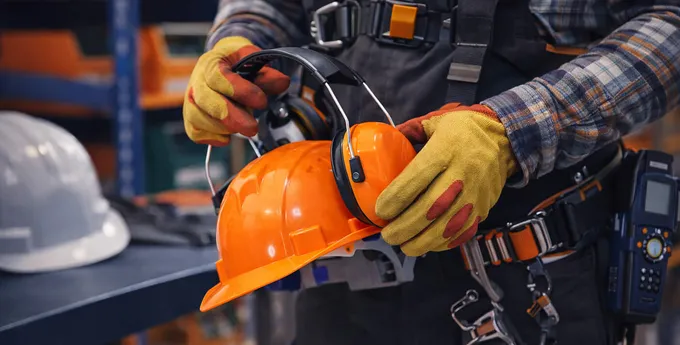
In our shop you will find trusted workwear, PPE and accessories you need for safe work. We offer products chosen by professionals from construction, logistics and industry.