User Panel


Trainings / Courses
Search

Arek
Forklift & IPAF Instructor
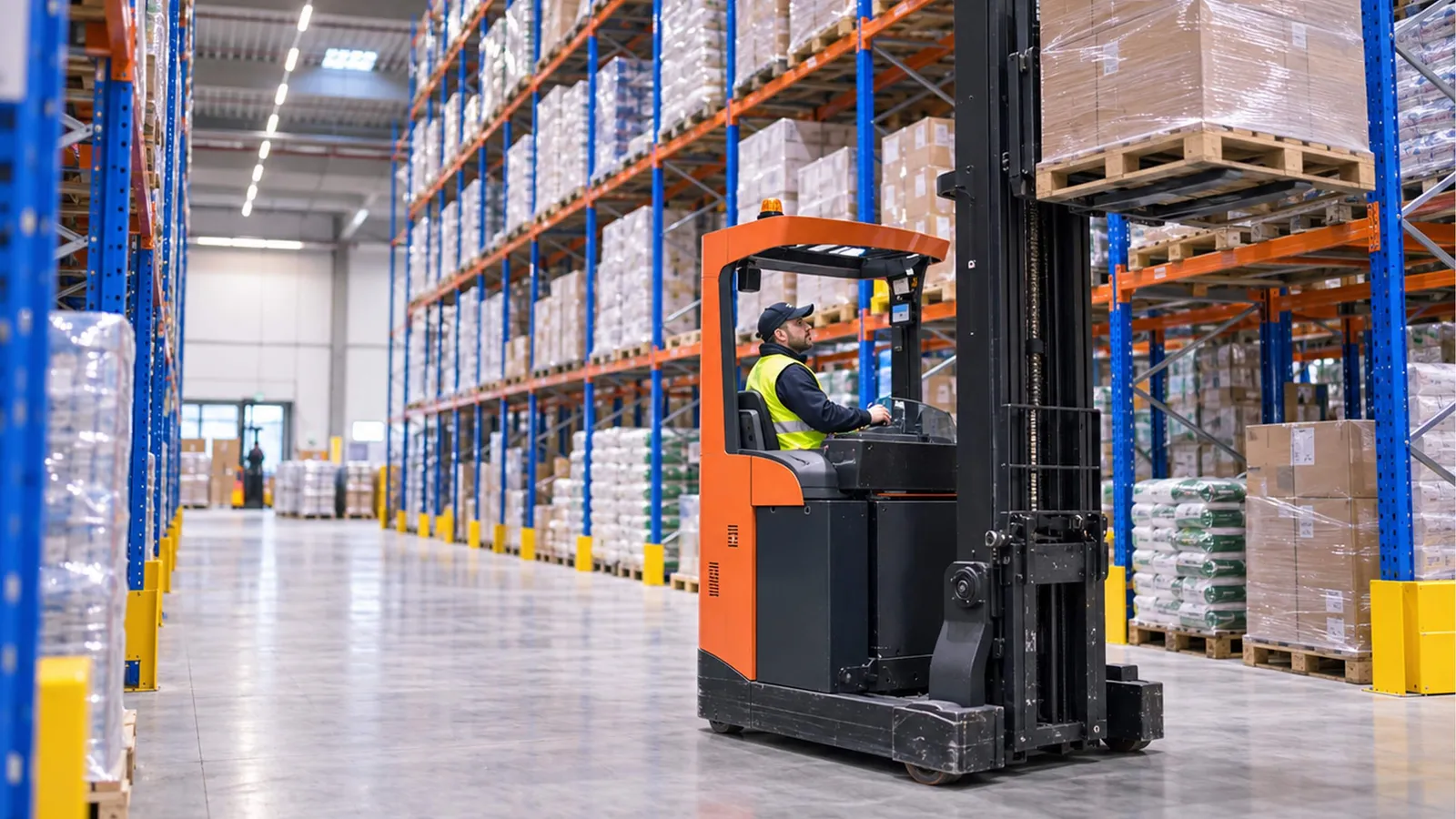
How old do you have to be to operate a forklift truck in the Netherlands? Many people looking for an answer to this question expect a single, specific figure. In practice, however, a distinction must be made between operating a forklift truck independently and a minor working under supervision.
The basic rule is simple: anyone under the age of 16 is not permitted to operate a forklift. A person aged 16-17 may carry out such work following appropriate training and under professional supervision. Working independently, on the other hand, is only possible from the age of 18 - but even then, age alone is not sufficient. The operator must possess the relevant skills, be familiar with the machine and have been properly prepared for work at the specific site.
That is why search terms such as ‘minimum age for forklift operators in the Netherlands’, ‘how old do you have to be to drive a forklift in the Netherlands’ or ‘working on a forklift in the Netherlands - age’ require a slightly more detailed answer than simply ‘18 years old’.
You may operate a forklift truck independently from the age of 18. However, reaching the age of majority does not automatically mean that an employee can immediately start operating any forklift truck.
The operator should have knowledge of, amongst other things, the machine’s stability, centre of gravity, maximum load capacity, mast operation, load handling and how the forklift behaves when manoeuvring. They should also be familiar with the company’s designated transport routes, speed limits, rules of right of way and safety procedures.
In practice, this means that reaching the age of 18 removes the age-related supervision requirement, but does not replace training and skills assessment. The employer must still be satisfied that the individual is capable of carrying out the tasks assigned to them safely.
A person aged 16 or 17 may operate a forklift if they have received appropriate training and are working under professional supervision. Under the age of 16, operating such a machine is not permitted.
However, this supervision cannot be merely ‘on paper’. The person responsible for the young operator must have a genuine opportunity to observe their work, communicate with them and react should any manoeuvre become dangerous.
Therefore, a search for ‘forklift truck 16 years old Netherlands supervision’ does not simply mean that a senior member of staff must be present somewhere in the warehouse. The way supervision is organised must actually serve to minimise the risk.
Regardless of age, an employee should be prepared to operate a specific piece of machinery and cope with the conditions prevailing at a given workplace.
Factors such as experience, familiarity with a particular type of forklift, the ability to assess risks, knowledge of traffic routes and the company’s operating procedures are all important.
This also applies to adult operators. Simply holding a certificate obtained several years earlier does not automatically mean that an employee is prepared to operate every type of forklift, handle non-standard attachments or work in a warehouse with a completely different traffic organisation.
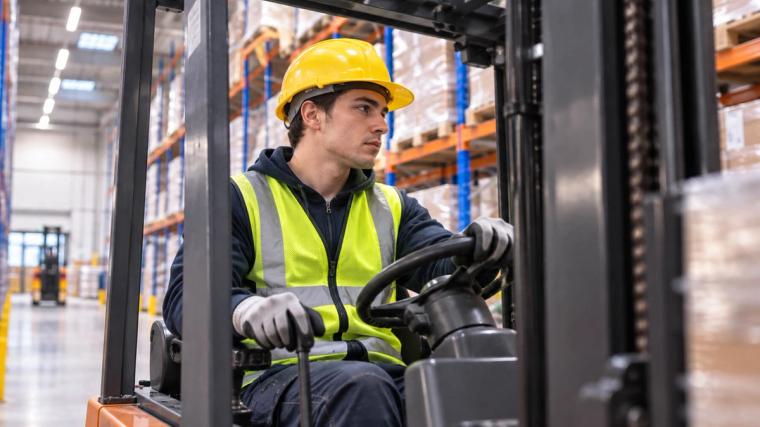
The mere presence of a manager or foreman in the building does not in itself constitute properly organised supervision.
The person supervising should be familiar with the nature of the work being carried out, the risks associated with operating the equipment, and the tasks assigned to the young operator. They must be close enough to observe the situation, maintain contact with the employee and react promptly.
If it is not possible to organise the work in such a way that supervision effectively minimises the risk, the task in question should not be entrusted to a person aged 16-17.
Ideally, the rules should be clearly set out in the company’s procedures. There should be no doubt as to who is responsible for supervision and where the scope of a young operator’s autonomy ends.
The procedure may specify, amongst other things:
For example, the company may prohibit a minor operator from driving onto the loading bay unaided, working in areas with heavy foot traffic, or placing loads on the top levels of racking.
The regulations do not prescribe a single mandatory form. From the employer’s point of view, however, it is sensible to keep records showing that the required measures have actually been carried out.
This may include the date and scope of the training, on-the-job instruction, the result of a practical test, the types of equipment on which the employee is authorised to carry out tasks, and details of the person responsible for supervision.
In the case of a minor, it is particularly important to specify who is responsible for them during a particular shift. Following a potential incident, it is much easier to demonstrate how work was organised on the basis of documentation than by a general statement that ‘everyone knew who was supervising’.
Before authorising an operator to work, the employer should assess their knowledge and practical skills. The company’s RI&E risk assessment is of particular importance, especially where the tasks are to be carried out by a minor.
Consideration must be given not only to the equipment itself, but also to the conditions in which it will be used: pedestrian traffic, restricted visibility, ramps, loading bays, the type of loads being handled, storage methods and the employee’s experience.
A certificate is an important confirmation of training, but it does not replace induction training specific to a particular warehouse and workstation.
An internal authorisation is not the same as a state-issued forklift licence. However, it may clearly specify which equipment an employee is authorised to use, where they may operate it, and what tasks they are permitted to carry out.
The company should also set out rules for movement within the premises: right of way at junctions, speed limits, pedestrian areas, parking rules and the procedure for reporting faults.
This is particularly important in warehouses, where forklift trucks, vehicles, pedestrians and other equipment are all moving around in the same space at the same time.
The minimum requirements laid down by law may not be the only rules that apply within a particular company.
An employment agency, warehouse or manufacturing plant may require candidates to be at least 18 years old, hold a valid certificate, have previous experience or pass an in-house practical test. Additional requirements may also arise from insurance conditions.
Therefore, someone comparing several job offers may notice that, for a seemingly similar role, one company allows younger employees to work under supervision, whilst another strictly requires candidates to be aged 18 or over.
Yes, if the nature of the role genuinely justifies such a requirement.
A good example is a role where an operator works independently for the entire shift and the company is unable to provide direct supervision for a 16- or 17-year-old. A similar situation may arise in the case of high-risk tasks or a work organisation that does not allow for the safe employment of a minor.
However, the age limit should not be applied entirely automatically. If a job advert specifies an ‘18+’ requirement, it is worth explaining the reasoning behind it.
It is best to ask for the specific reason. The problem may not be the fact that the candidate is 16 or 17 years old, but rather that the role in question requires operating a forklift truck independently, working without adequate supervision, or carrying out tasks that the company does not wish to entrust to minors.
In such a situation, it is also worth asking whether there are any support roles, work experience placements or other warehouse tasks available that do not require the independent operation of a forklift.
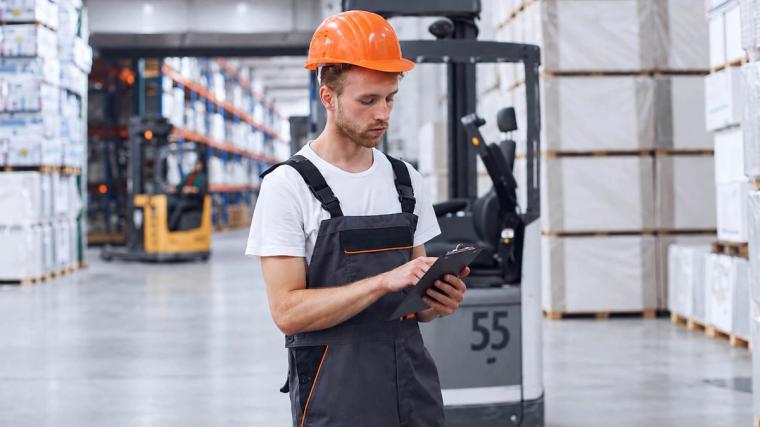
In the Netherlands, there is no single state-issued ‘forklift licence’ granted by the authorities following a centralised examination. The regulations focus primarily on whether the operator possesses the necessary knowledge and skills.
A certificate is one of the most common ways of confirming such competence.
People aged 16–17 may take part in training courses if the organiser’s rules permit it. Many training centres allow people aged 16 and over to undertake both theoretical and practical training.
Obtaining a certificate does not remove age-related restrictions.
A 17-year-old who has completed the training should still not be allowed to work entirely independently as an operator. The employer must provide appropriate supervision, include the young employee in the risk assessment and determine the scope of tasks they can perform safely.
This is why job adverts sometimes state that a certificate is ‘welcome’ or ‘required’, whilst at the same time the position remains open only to adults.
Yes, but having a certificate does not mean you are allowed to work unaided.
A 16- or 17-year-old must still work under appropriate professional supervision. The employer should also specify which tasks they may carry out, on what equipment and in which areas of the premises.
This is one of the most important differences between obtaining a certificate and actually being authorised to work.
In the case of work experience placements, summer jobs or young staff assisting in the warehouse, the safest approach is to limit the scope of duties and provide a designated supervisor.
Simply moving a pallet within a designated area involves a completely different level of risk to loading lorries unaided, working in heavy traffic or manoeuvring through very narrow aisles.
Furthermore, 16- and 17-year-olds are subject to specific rules regarding working hours. Time spent at school is also taken into account when calculating the permissible working hours.
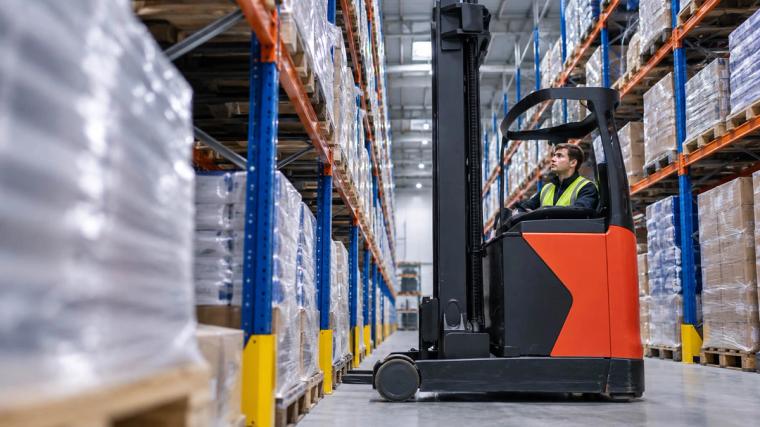
There is no single, universal list of tasks that are always permitted or prohibited for 16- and 17-year-old operators. The actual level of risk at a specific workplace is of great importance.
If the risks cannot be adequately controlled through the organisation of work and professional supervision, the task should not be carried out by a minor.
Particular caution is required, amongst other things, in loading areas, at the edges of docks, on slopes, at junctions of transport routes, in areas with restricted visibility, and in spaces where pedestrians and machinery are moving at the same time.
The more complex the environment, the greater the importance of the operator’s experience and the ability of the supervisor to react quickly.
Manoeuvring near the open edge of a ramp, driving into a semi-trailer, reversing in an area with restricted visibility, or driving amongst pedestrians require a great deal of attention and good situational awareness.
The company may decide that such tasks are to be carried out exclusively by adult operators, or that a young worker may only perform them following an additional assessment and under appropriate supervision.
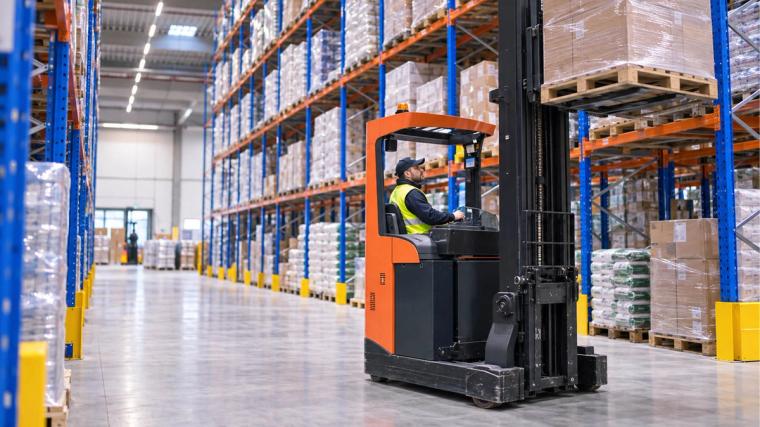
Long or wide loads, damaged pallets, goods with an unstable centre of gravity and materials that obstruct visibility require greater experience.
The same applies to stacking pallets at great heights and working with additional attachments. For such tasks, it is not enough simply to know that the operator has completed a training course. Practical experience and the actual ability to carry out the task safely are also crucial.
There is no automatic requirement to undergo a separate state-mandated ‘forklift medical examination’ simply because a person operates a forklift.
However, the employee must be capable of carrying out their duties safely. In practice, factors such as eyesight, hearing, concentration, coordination and reaction time are important.
The operator should not carry out their work whilst under the influence of alcohol, drugs or any other substances that affect their ability to operate the machine safely. This also applies to medicines that may impair concentration or cause drowsiness.
Personal protective equipment - such as safety footwear, high-visibility clothing, a helmet or hearing protection - should be selected to suit the actual hazards present on site.
Even an experienced, certified operator should be familiarised with the specific equipment and the rules applicable at their new workplace.
Training may cover daily checks on the forklift, the attachments used, battery charging or the replacement of LPG cylinders, transport routes, emergency procedures and how to report faults.
A certificate should therefore not replace proper induction of the employee.
When operating a forklift truck on the enclosed premises of a site, a standard Category B driving licence is not required simply to drive the forklift.
The situation changes if the vehicle is driven on a public road. In that case, regulations concerning vehicle registration and a Category T driving licence may apply. For some forklift trucks, there are exceptions, depending, amongst other things, on the design, width of the vehicle and how it is used.
Therefore, driving on a public road should be treated as a separate situation, rather than an extension of the normal work carried out inside a warehouse.
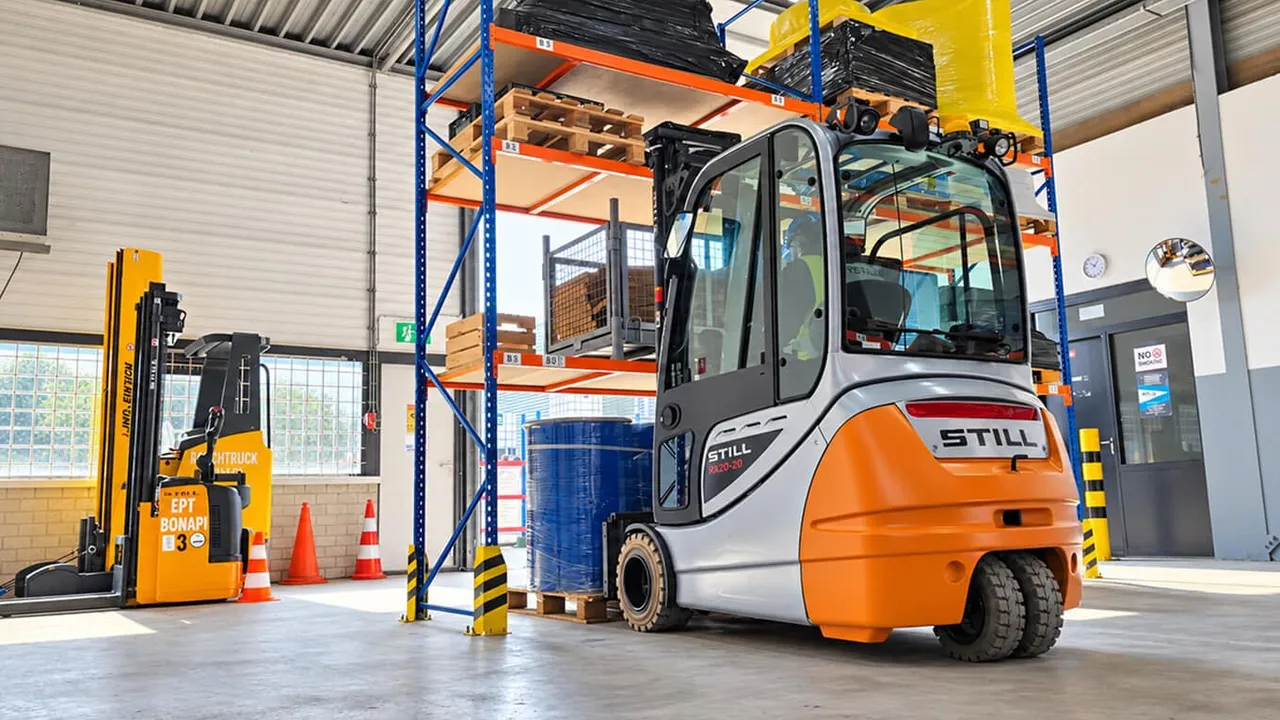
In the case of forklift trucks and reach trucks, the basic age requirements are similar: a person aged 16-17 requires appropriate training and professional supervision.
With EPTs, additional attention must be paid to the design of the equipment. A simple machine operated by an operator walking alongside it is different from a model with a platform or an operator’s seat.
Nor should it be automatically assumed that a person trained to operate a standard forklift truck has sufficient competence to operate a reach truck or any type of EPT. Each machine has its own characteristics and hazards.
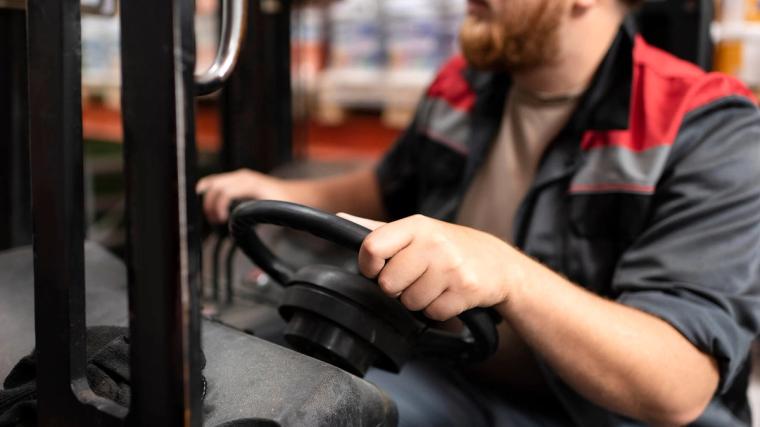
An employee who does not meet the requirements for the safe operation of a forklift may be immediately suspended from this work. If they knowingly breach the applicable rules, there may also be consequences under the company’s regulations.
However, the most serious risk remains an accident. Striking a pedestrian, overturning the machine, a load falling, or driving off a ramp can lead to very serious injuries.
That is why the requirements regarding training, age and supervision are not merely a formality.
Following an accident or during an inspection, it is not only the operator’s behaviour that is examined, but also the way in which the employer organises the work.
The Nederlandse Arbeidsinspectie may check, amongst other things, the RI&E, training records, the manner in which supervision is carried out, the technical condition of the equipment and the traffic regulations in force on the premises.
In the event of breaches, the employer may be required to rectify the irregularities, and in more serious cases, penalties may be imposed or certain work may be suspended.
Following an incident, the inspector may check, amongst other things:
The absence of a specific certificate does not always automatically constitute a breach, but the employer should be able to demonstrate that the operator possessed the required competences and had been properly prepared to carry out the work.
A company’s internal procedure may include a simple provision:
Employees aged 18 or over who possess the relevant skills, have completed the required on-the-job training and have been authorised by their employer to operate the equipment are permitted to operate forklift trucks and reach trucks independently. Employees aged 16–17 may only carry out tasks permitted in the risk assessment and must work under the direct professional supervision of a designated person.
If the job advertisement also stipulates that applicants must be aged 18 or over, it is advisable to state the reason immediately:
The role involves operating the forklift truck independently throughout the entire shift and does not allow for constant professional supervision. For this reason, candidates must be aged 18 or over and have the appropriate training to operate a forklift truck.
Such a statement is much more precise than simply stating ‘18+ required’.
In documents and notices, it is worth distinguishing between three different concepts.
A certificate is proof of having completed a training course or passed an examination.
An internal authorisation refers to the employer’s permission to operate a specific piece of machinery and carry out specific tasks on the company’s premises.
A Category T driving licence applies to specific situations involving the operation of machinery on public roads.
The term ‘forklift licence’ can therefore be misleading. In the Netherlands, for standard warehouse work, there is no single national forklift driving licence which, in itself, would determine whether someone can start work.
Before starting work, the operator should, first and foremost, have the following ready:
It is also worth finding out in advance what type of equipment will be used, whether the company has its own authorisations, and what traffic rules apply on the premises.
The most important thing, therefore, is to distinguish between age, certification and actual authorisation to work. In the Netherlands, 16- and 17-year-olds may operate a forklift truck following appropriate training and under professional supervision. From the age of 18, they may work independently, but appropriate skills, training and a safe working environment are still required. The certificate alone does not replace any of these elements.
And if you’d like to obtain a forklift certificate in the Netherlands, come to Bonapi. With us, you can complete training on forklift trucks, reach trucks or EPTs and prepare to operate the equipment safely in practice. Check the available dates and sign up for the course!


Author:

Arina
Dział VCA / SCC / BHV
Author:
Arina
Dział VCA / SCC / BHV
Author:
Arina
Dział VCA / SCC / BHV
Author:
Arina
Dział VCA / SCC / BHV

Author:

Cezary
Dział IPAF / SOG
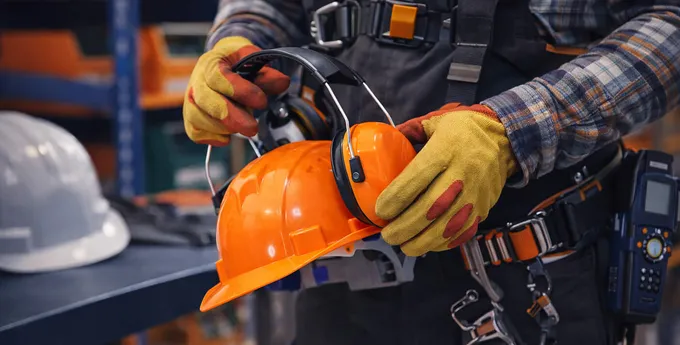
In our shop you will find trusted workwear, PPE and accessories you need for safe work. We offer products chosen by professionals from construction, logistics and industry.