User Panel



Trainings / Courses
Search

Maciej
Planner / Administration
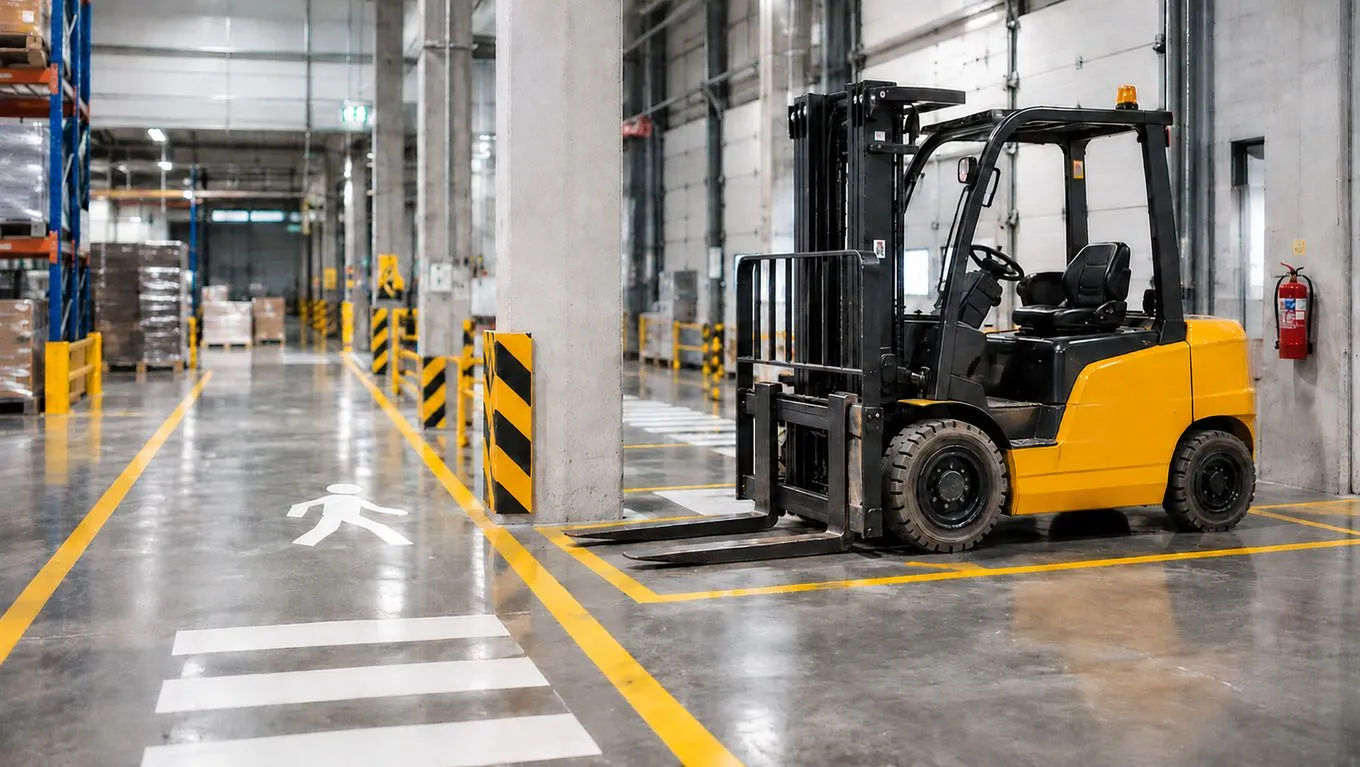
Can you operate a forklift in the Netherlands without a certificate in 2027? This is a question asked by warehouse and manufacturing employees, as well as employers responsible for the safety of their teams. Dutch legislation does not require every operator to hold a specific certificate, but it establishes clear obligations regarding qualifications, training and the safe operation of equipment. What exactly does the law say, when can an employer require a forklift certificate, and how can employees be trained in accordance with the applicable regulations?
The most important thing to understand is that Dutch law does not impose a universal requirement to hold a specific forklift operator certificate, known in Dutch as a heftruckcertificaat. However, this does not mean that anyone can start operating a forklift without proper training.
Under Dutch regulations, anyone operating a forklift must have the appropriate competencies to carry out their work safely. Employers, in turn, are responsible for providing adequate employee training and ensuring safe working conditions.
In practice, there are two distinct requirements:
A certificate is one of the simplest ways to document an operator’s training. This is why it is frequently listed as a condition of employment in Dutch warehouses, logistics centres and manufacturing facilities.
Will anything change in 2027? Based on the legal framework reviewed in November 2026, there is no basis for claiming that a new universal requirement to hold a forklift certificate will come into force on 1 January 2027. However, before starting work in 2027, it is advisable to check whether the regulations have changed.
The legal framework is primarily based on two legislative acts: the Arbeidsomstandighedenwet (Arbowet), the Dutch Working Conditions Act, and the Arbeidsomstandighedenbesluit (Arbobesluit), the Working Conditions Decree, which sets out detailed occupational health and safety requirements.
Article 7.17c(1) of the Arbobesluit stipulates that self-propelled work equipment may be operated by employees who possess the appropriate specialist knowledge and skills. This provision covers, among other things, forklifts used for moving and lifting loads.
This means that employees should be able to:
The provision itself does not specify a particular training school, course provider or mandatory type of documentation. What matters is whether the operator is adequately prepared to carry out the work.
Another important provision is Article 8 of the Arbowet, which requires employers to provide employees with appropriate information and instruction regarding their work and the associated risks.
For forklift operators, this means ensuring that employees are properly trained to operate the equipment used within the company safely.
Employers should ensure that operators understand workplace traffic rules, are familiar with equipment limitations and can carry out their duties without creating unnecessary risks.
Simply handing a new employee the keys to a forklift and assuming that their previous experience guarantees safe operation is therefore not sufficient.
Employers in the Netherlands are also required to carry out an occupational risk assessment, known as an RI&E (Risico-Inventarisatie en -Evaluatie), or Risk Inventory and Evaluation.
In workplaces where forklifts are used, the assessment should take into account the hazards associated with their operation. These may include collisions with pedestrians, forklift overturning, falling goods or restricted visibility during manoeuvres.
Based on this assessment, the company should establish appropriate safety measures. These may include designated transport routes, the separation of pedestrian and vehicle traffic, speed limits and additional safety instruction.
Yes, under certain circumstances, this is possible. Not holding a certificate does not automatically constitute a violation of Dutch law. However, operators must possess the appropriate competencies and comply with the applicable safety requirements.
Imagine an employee who has been operating forklifts for several years, has completed documented in-house training, understands workplace procedures and can carry out their duties safely. Dutch regulations do not rule out this method of operator training simply because the employee does not hold a certificate issued by an external training provider.
Problems arise when employers cannot adequately demonstrate that an employee possesses the required skills.
For this reason, companies often opt for training courses that conclude with an examination and the issuing of a certificate. This document makes it easier to demonstrate that an operator has completed a specific training programme.
However, it is important to remember that a certificate alone does not exempt employers from their obligation to provide workplace-specific instruction. Employees must also be familiar with the actual equipment, technical conditions and rules applicable at their particular workplace.
There is demand for forklift operators across many sectors of the Dutch economy. Requirements vary depending on the type of equipment, the organisation of work and the rules established by individual employers.
Forklift or reach truck certificates are most frequently listed as employment requirements in the following industries:
However, not all operators perform the same tasks. A high-bay warehouse may require reach truck operating skills, whereas a manufacturing facility may primarily use conventional counterbalance forklifts.
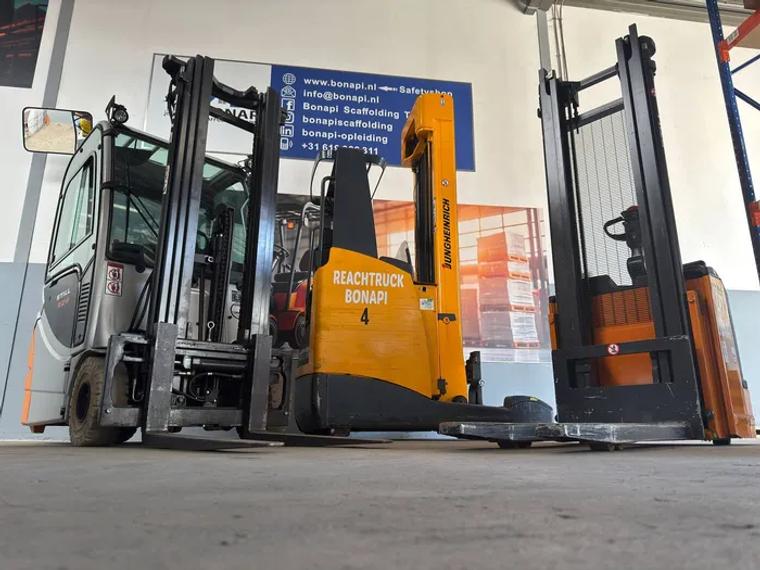
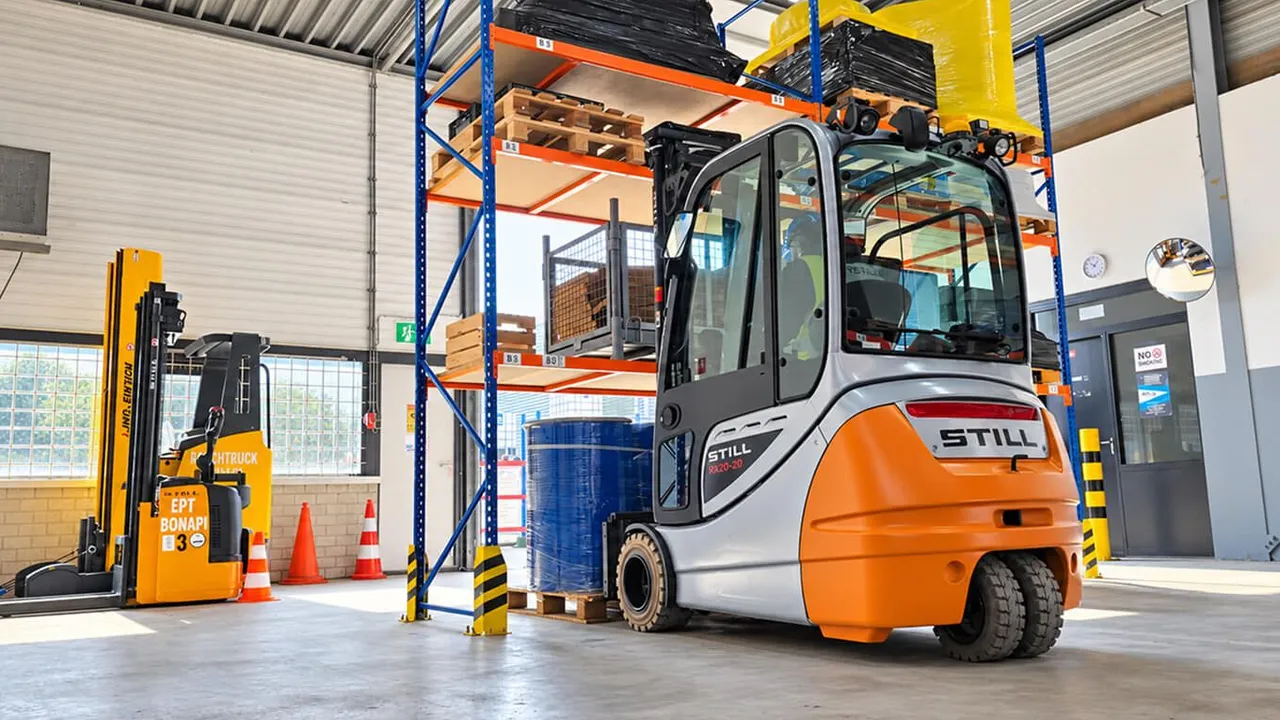
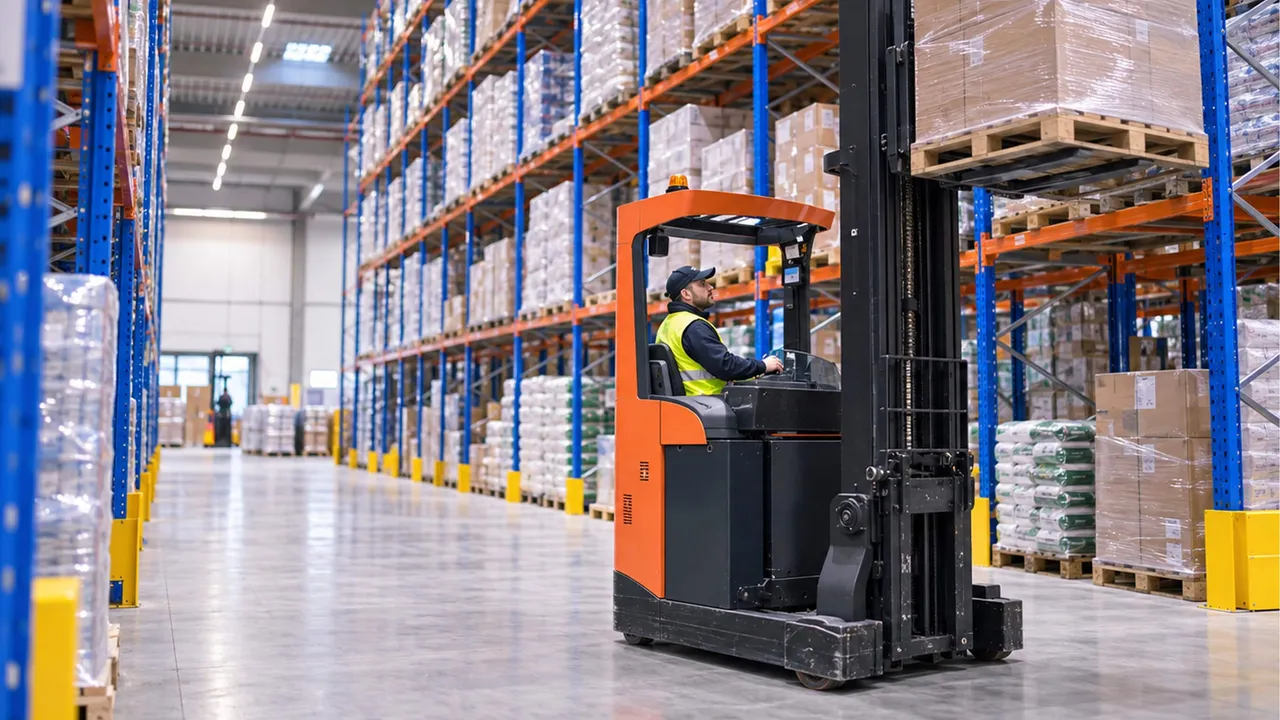
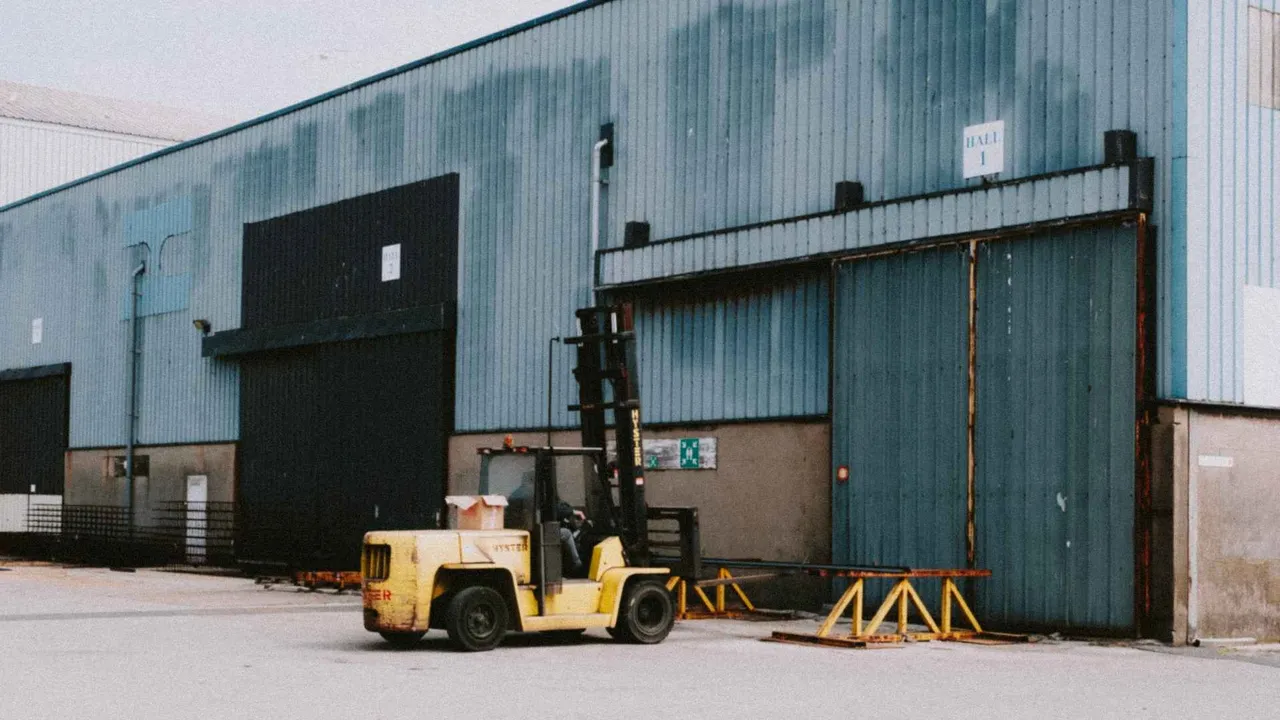
A heftruck is a conventional counterbalance forklift used for tasks such as loading, unloading and transporting pallets. A reach truck is designed primarily for use in high-bay warehouses, where precise manoeuvring and lifting loads to significant heights are essential. An EPT (elektrische pallettruck) is an electric pallet truck used to move goods, typically over shorter distances.
Holding a forklift certificate does not automatically mean that an operator has been trained to operate every other type of industrial truck.
If previous training did not cover a particular type of equipment, additional training may be necessary. This is especially relevant for equipment with a different design, control system or operating characteristics.
For companies using several types of equipment, combined training courses are a practical solution, allowing employees to develop the skills needed to operate forklifts, reach trucks and EPTs.
In practice, many forklift operator certificates are issued with a validity period of five years. However, this does not mean that Dutch law requires every operator to renew their certificate exactly every five years. The validity period is generally determined by the rules established by the training provider or a particular certification scheme.
Employers may also establish their own requirements regarding the frequency of refresher training.
Refresher training is particularly advisable when:
Employees who hold a certificate should check its expiry date and the requirements of their current employer. Companies, in turn, should regularly assess whether their operators’ competencies remain sufficient for the tasks they perform.
The primary responsibility for ensuring safe working conditions rests with the employer. This applies to both large distribution centres and small manufacturing facilities operating one or several forklifts. A company’s responsibilities include providing suitable equipment, appropriate instruction, risk assessments and supervision to ensure compliance with safety rules.
Employees also have specific responsibilities. They should use equipment in accordance with instructions, use the required safety measures, follow procedures and report any hazards they identify.
In the event of a workplace accident, the Dutch Labour Inspectorate (Nederlandse Arbeidsinspectie) may investigate the circumstances of the incident and whether the employer has fulfilled its legal obligations.
Holding a certificate alone does not establish that a workplace has been properly prepared for safe operation. The operator’s actual competencies, the technical condition of the equipment and the way work is organised are all important factors.
For employers using forklifts, the main priority is to establish a structured training process and maintain appropriate documentation of employee competencies. A good starting point is to determine how many employees operate material handling equipment and what qualifications they hold.
The next step is to review the equipment in use, individual workstations and the hazards identified in the company’s RI&E.
A practical action plan could include the following steps:
This approach makes safety management easier and reduces the risk of allowing inadequately trained employees to operate equipment.
Group training is a practical solution for companies employing several or a dozen or more operators. It helps establish consistent qualification standards across the team and prepares employees to operate equipment in accordance with established rules.
Employers can arrange training for new employees or organise refresher courses for experienced staff. One advantage of this approach is the ability to tailor the training programme to the types of equipment used within the company.
For a logistics company, this may involve combined forklift and reach truck training, while in an order-picking warehouse, electric pallet truck (EPT) operating skills may be particularly useful.
A well-planned training course should cover both theoretical knowledge and practical exercises. Operators must understand safety principles and be able to apply them in their day-to-day work.
For employers, this means greater control over team competencies, while employees have the opportunity to gain qualifications that are valuable in the Dutch labour market.
Do you want to prepare your employees to operate forklifts safely in the Netherlands? Or perhaps you are hiring new operators and need training for an entire group?
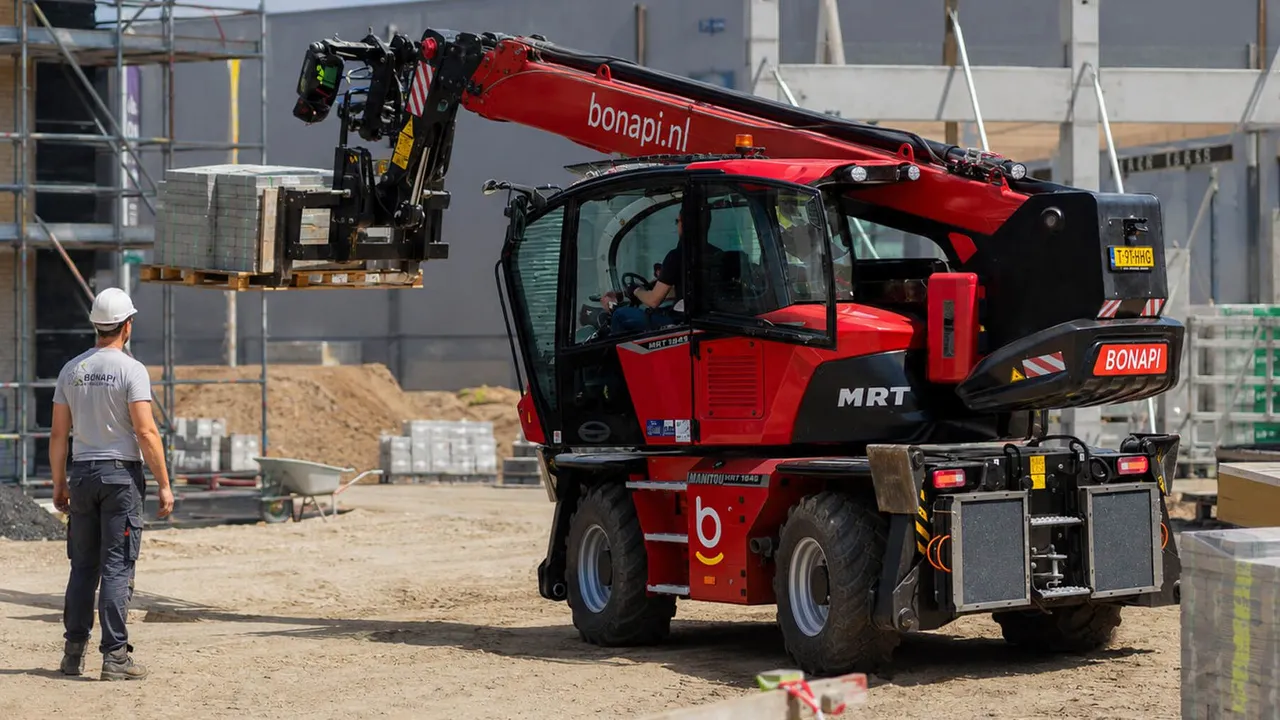
Bonapi Training Center offers practical forklift, reach truck and EPT training courses designed for both beginners and experienced employees. The courses include theoretical training, practical exercises and an examination to assess and confirm the skills acquired.
Explore forklift training courses at Bonapi and enquire about group training for your company.
We will train your employees and help you choose the appropriate course content based on the equipment used and the experience of your participants. Training courses are also available in Polish, making it easier for employees to understand safety rules and procedures.
Make sure your team has the right qualifications before starting new projects in 2027. Follow Bonapi on social media to stay informed about new training courses and receive practical advice on working safely in the Netherlands.


Author:

Arina
Dział VCA / SCC / BHV
Author:
Arina
Dział VCA / SCC / BHV
Author:
Arina
Dział VCA / SCC / BHV
Author:
Arina
Dział VCA / SCC / BHV
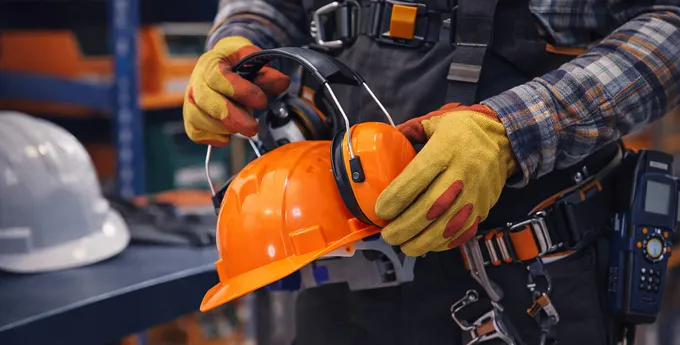
In our shop you will find trusted workwear, PPE and accessories you need for safe work. We offer products chosen by professionals from construction, logistics and industry.