User Panel


News
Search

A VCA or SCC certificate often determines whether you will be allowed to work on a construction site, in industry or on technical projects in the Netherlands, Belgium or Germany. Problems arise when an employer wants to verify the document and the course participant does not know where to check its validity, or it turns out that the training was provided by an unauthorised company. In recent years, the training market has grown significantly, and alongside legitimate training centres, there are also providers offering “certificates” without real accreditation.
If you work abroad or are only just planning to move, it is worth knowing what a valid VCA/SCC diploma looks like, where it can be verified and what employers pay attention to. This will help you avoid problems with employment, site inspections or having to retake the exam.
VCA (Veiligheid, Gezondheid en Milieu Checklist Aannemers) is a safety certification system used mainly in the Netherlands, Belgium and the industrial sector. In Germany, its equivalent operates under the name SCC (Safety Certificate Contractors).
The diploma itself confirms that an employee understands the basic health and safety rules for working in a higher-risk environment. This includes, among other things:
The two most common types of certificates are:
In practice, many Dutch and Belgian employers treat VCA as a basic document required for access to work. Without it, it is difficult to enter refineries, chemical plants, large construction sites or infrastructure projects.
Find out how VCA Basis, VOL VCA, and VIL VCU differ.
Not every document with “VCA” written on it is recognised by employers. A valid diploma must come from an exam carried out in accordance with the rules of the VCA system and by an authorised examination centre.
This is important for several reasons.
Firstly, employers increasingly check candidates’ certificates themselves. This applies in particular to large industrial companies and employment agencies working with international clients.
Secondly, being unable to confirm a diploma may mean:
Thirdly, in high-risk sectors, safety is taken very seriously. Companies want to be sure that a worker has actually completed training and knows the procedures that apply in the workplace.
A valid VCA or SCC certificate should contain several basic elements:
In the Netherlands, a VCA certificate is usually valid for 10 years. After that, the exam must be taken again.
It is worth knowing that the appearance of the document alone does not guarantee that it is valid. Printouts styled to look like official diplomas are becoming increasingly common, even though they do not exist in any database. That is why the most important factor is whether the diploma can be verified in an official system.
The most important database for verifying VCA certificates is the central register maintained by Stichting Samenwerken voor Veiligheid, the organisation responsible for managing the VCA system.
In practice, verification is done online by checking the certificate details in the official diploma registration system. An employer or employee can confirm:
Authorised examination centres submit results to the official database after the exam has been completed. If your certificate cannot be found, this may indicate:
In Germany, the SCC system works in a similar way, although the registers and certification bodies may differ from the Dutch VCA system. The certificate should be possible to confirm through the examination body or certification organisation.
Employers mainly pay attention to:
If you plan to work in Germany, it is worth checking in advance whether a given company requires SCC only, or also accepts VCA. In many sectors, both systems are recognised, but this is not always exactly the same.
Most problems begin before the exam - at the stage of choosing a training provider. A low price or a “stress-free exam” often means the training does not meet the standards required by the market.
Before signing up for a course, check:
It is also worth paying attention to how the exam is organised. Valid exams have specific procedures:
If someone offers a “certificate without an exam”, treat it as a warning sign.
In many cases, yes - especially in industrial, petrochemical and construction sectors. Large companies increasingly require documents to be submitted before a project begins.
Sometimes the check only takes place at the entrance to the site. In practice, this means that you may have signed a contract and still not be allowed onto the site because of a problem with your documentation.
The most commonly verified details are:
For the employer, this is a matter of responsibility and safety. Companies operating under VCA systems must be able to demonstrate that they employ properly trained people.
First, contact the training provider or examination centre. Sometimes the problem is caused by a misspelt surname or a delay in updating the database.
If the training organiser cannot point you to an official register or avoids answering questions about certification, you should be cautious. In such a situation, it may turn out that you need to take a valid exam again.
That is exactly why it is better to choose reliable training centres from the start - ones that clearly explain:
In the Netherlands, Belgium and Germany, a VCA/SCC certificate is often a basic requirement for technical and industrial work. A valid, verifiable diploma increases an employee’s credibility and makes it easier to access better projects.
For the employer, it confirms that you know the safety rules and can work according to the procedures that apply in the workplace. For you, it means a better chance of stable employment and fewer formal problems when going abroad.
If you want to work in the Netherlands or Belgium and be sure that your diploma will be recognised by employers, choose reliable training that ends with an official exam.
👉 Check the VCA courses and find out how to prepare employees or an entire group for a valid VCA/SCC exam.
Bonapi organises training for individuals, companies and groups of employees travelling abroad for work. With the right preparation, you can start work sooner and avoid documentation problems on site.
Stay up to date with Bonapi and keep your knowledge of work requirements in the Netherlands current.

Author:

Arina
Dział VCA / SCC / BHV


Author:
Arina
Dział VCA / SCC / BHV
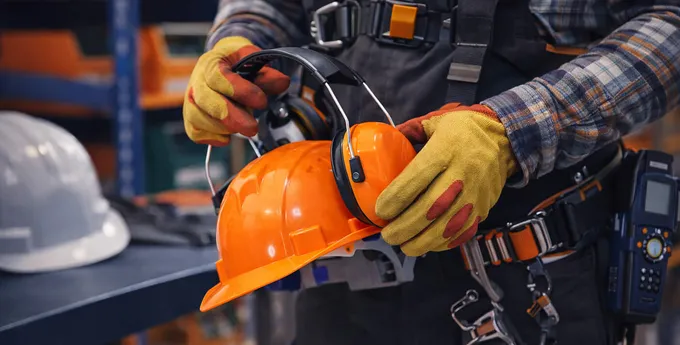
In our shop you will find trusted workwear, PPE and accessories you need for safe work. We offer products chosen by professionals from construction, logistics and industry.