User Panel


News
Search

Arina
Dział VCA / SCC / BHV
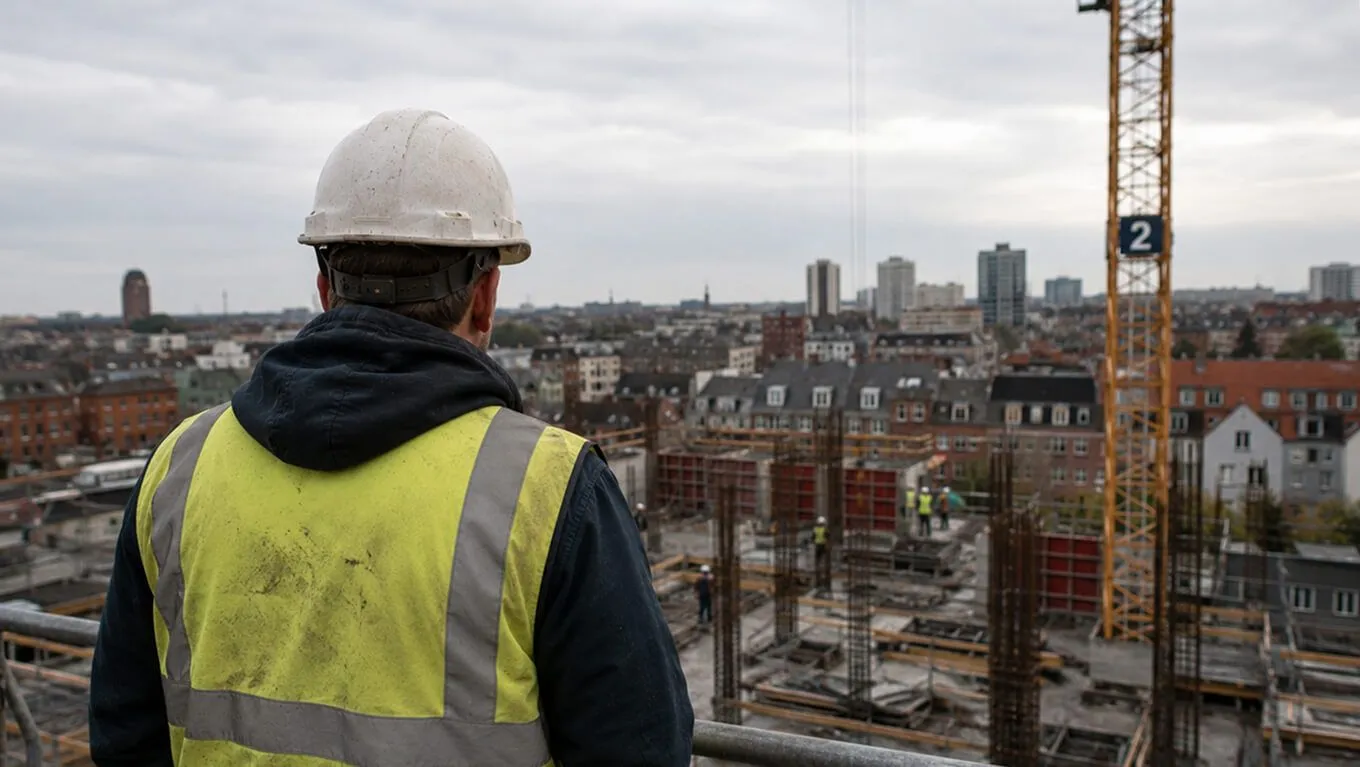
For years, Europe has been grappling with a problem that is being discussed with increasing urgency – there is a shortage of workers: operators, fitters, technicians, welders, electricians, and staff in logistics, industry and infrastructure.
Societies are ageing. Younger generations are increasingly less likely to choose technical and manual trades. For years, everyone was led to believe that success only begins after university and behind a desk. The result? Europe now has thousands of vacancies that simply cannot be filled.
Companies are competing for specialists more fiercely than ever before. Some sectors are already functioning solely thanks to workers from abroad. Without them, warehouses would grind to a halt, construction sites would be deserted, and industry would start to run out of steam faster than politicians can find new taxes.
And this is where things get interesting. Because over time, it has become apparent that specific nationalities have come to dominate specific sectors. Poles have taken over a significant portion of the technical and construction sectors. Romanians have become a mainstay of manufacturing and logistics. The Dutch reign supreme in organisation, automation and process management. For decades, Germans have been synonymous with technical precision.
Europe has created an informal map of national specialisations. And although it sounds a bit like a stereotype, the labour market shows that in many cases these patterns simply do exist.

The Netherlands likes to present itself as a modern, highly organised and technologically advanced country. And rightly so. The problem is that beneath this perfectly polished surface lies a mechanism that is becoming increasingly impossible to ignore – a huge part of the economy now relies on foreign workers.
You only need to pause for a moment at the ports, logistics centres or construction sites to see the scale of the phenomenon. Rotterdam, Europe’s largest port. Hundreds of warehouses scattered across the country. Greenhouses operating practically all year round. Refineries, petrochemicals, infrastructure. There, for a long time now, you’ve heard more Eastern European languages than standard Dutch.
Poles, Romanians, Bulgarians, Lithuanians and Portuguese have become part of the very foundation of the labour market, not just an add-on.
According to data from the Dutch CBS and labour market reports, in some sectors the proportion of foreign workers is no longer measured in percentages, but rather as a matter of ‘to be or not to be’ for the entire industry. Particularly in:
- logistics,
- construction,
- warehousing,
- greenhouse horticulture,
- the engineering industry,
- petrochemicals,
- the transport sector.
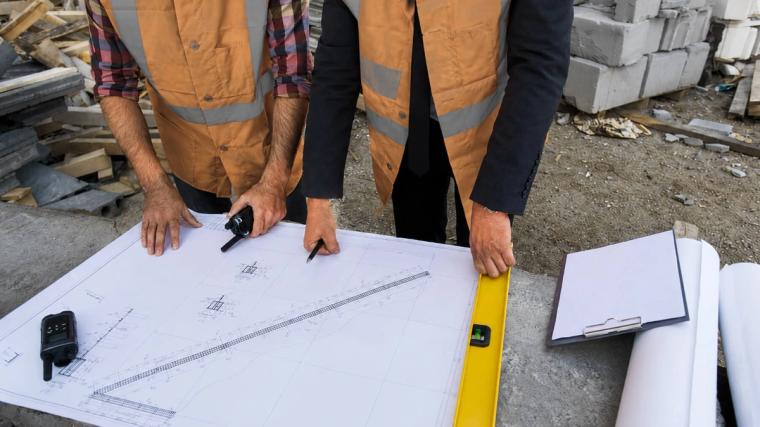
Dutch companies have been trying to automate their processes for years, but reality quickly brings everyone back down to earth. A robot won’t put up scaffolding. An algorithm won’t turn up to fix a system failure at three in the morning. And ChatGPT, despite knowing a great deal about forklift trucks, won’t climb onto a reach truck.
We are also increasingly hearing employers themselves say that the biggest problem today is not orders, taxes or energy prices. The biggest problem is finding people who are truly capable of technical work and who want to do jobs requiring responsibility, experience and physical resilience.
Interestingly, the Dutch themselves are increasingly less likely to choose heavy manual trades. Younger generations are far more likely to gravitate towards office work, IT, marketing or finance. The result? A gap has emerged, which workers from other European countries have very quickly begun to fill.
And this raises a question that many politicians prefer not to ask out loud: what would happen to the Dutch economy if all foreign specialists were to disappear for a month?
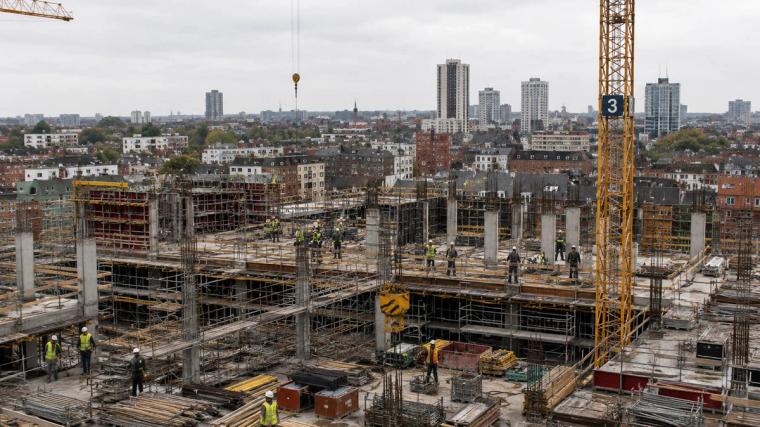
Just a dozen or so years ago, many Poles came to the Netherlands mainly for seasonal work – in greenhouses, warehouses or doing simple manual labour. Today, the picture is completely different.
According to data from the Dutch CBS, Poles remain the largest group of EU citizens living in the Netherlands. At the start of 2024, there were around 194,000 registered residents, but the actual number of people working and staying temporarily is significantly higher. In practice, estimates suggest as many as 250–300,000 Poles are linked to the Dutch labour market.
And it is no longer just about simple manual labour.
Today, Poles are particularly prominent in sectors where specific skills, experience and resilience to demanding working conditions are key. They are most commonly found in:
In many companies, Poles are simply very much present in technical and manual trades. For years, a large proportion worked where the market had the greatest staff shortages – on construction sites, at terminals, refineries, warehouses or production halls. Over time, some gained experience and qualifications and moved on to more specialised roles.
Interestingly, employers’ attitudes have also changed. Increasingly, they are no longer simply looking for ‘workers from Eastern Europe’, but for specific specialists with qualifications, experience and industry knowledge.
Particularly in sectors such as:
The Dutch market today strongly favours people who can work independently and hold European qualifications – VCA, SOG, IPAF or operator certificates. Qualifications are no longer just a bonus. In many industries, they have become the key to better pay and stable employment.
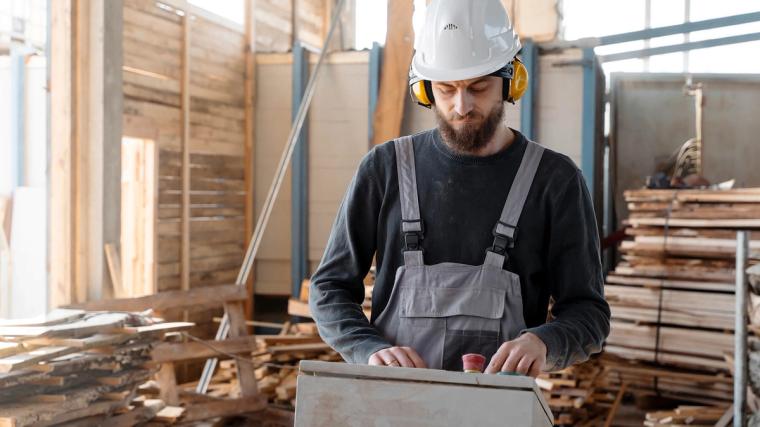
The European economy is becoming increasingly reliant on technology, automation and artificial intelligence. Companies are implementing new systems, cutting costs and reducing the number of traditional office roles. In many industries, a single person with the right tools can now do a job that, just a few years ago, required an entire team. This is particularly evident in sectors involving computer-based work. The IT, marketing and administration sectors are increasingly talking about job cuts, greater competition and a shrinking number of vacancies. Companies still need specialists, but not in the same numbers as before.
Meanwhile, on the other side of the market, the opposite is happening.
Because no matter how much the world moves towards digitalisation, someone still has to:
- build halls, install systems, weld structures, repair machinery, operate equipment, erect scaffolding, service industrial facilities, and carry out technical work at height. That is precisely why technical professions are not disappearing.
A good welder, mechanic, operator or electrician is still difficult to replace with machines. A robot can assist the process, but a person is still needed who: understands the situation on site, makes decisions, is able to react to a problem or knows the safety procedures.
Particularly in industrial and technical sectors, it is not just the workforce itself that counts today, but specific skills. Companies are increasingly looking for people with experience and international qualifications, whether we like it or not. In many cases, a technical specialist working abroad can earn more than graduates working in office-based roles. Especially if:
- they speak foreign languages, have industrial experience, hold valid certifications, can work independently, or are ready to work on large-scale technical projects.

The European labour market is increasingly reliant on certificates and qualifications that are recognised regardless of the country or company. This is particularly true in sectors where work involves:
For employers, this is not merely a formality. It is a sign that the employee knows the safety rules, understands the procedures and can cope in an environment where mistakes can cost thousands of euros or someone’s health.
In practice, this is precisely why qualifications such as the following are so important today:
In many companies, a lack of the relevant documents simply means you won’t be allowed on a project. Even if you have experience. Particularly in the Netherlands and Belgium, more and more sectors are operating according to very specific safety and qualification standards.
This is also one of the biggest changes in recent years. In the past, a course was just a bonus. Today, it often becomes the gateway to a better-paid part of the market.
A good operator with valid qualifications can work practically anywhere in Europe. A fitter with certificates has a wider choice of projects. An electrician with experience and the right qualifications can negotiate completely different rates than someone without internationally recognised qualifications.
And that is precisely why more and more people are beginning to view training not as an obligation, but as an investment. This is particularly true in technical sectors, where experience combined with a certificate provides a real advantage in the job market.
To sum up: an experienced professional is still in demand. But an experienced professional with recognised qualifications simply has far more opportunities.
If you are planning to work in the Netherlands, Belgium or other Western European countries, it is worth checking in advance what qualifications are required in your sector. Often, a single course or certificate can open the door to projects that were previously out of reach.
At Bonapi Training Centre, we have been helping operators, scaffolders, technical staff and specialists to gain the qualifications required by European employers for many years.
Training courses such as VCA, SOG, IPAF, forklift, aerial work platform and scaffolding courses are, for many people, the first step towards a better job, higher pay and greater career opportunities.


Author:

Arina
Dział VCA / SCC / BHV
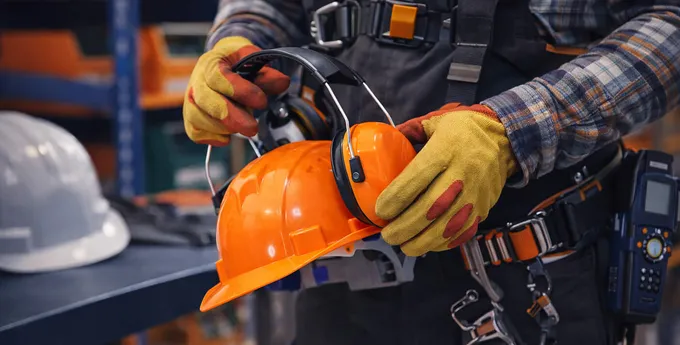
In our shop you will find trusted workwear, PPE and accessories you need for safe work. We offer products chosen by professionals from construction, logistics and industry.