User Panel


News
Search

Maciej
Planner / Administration
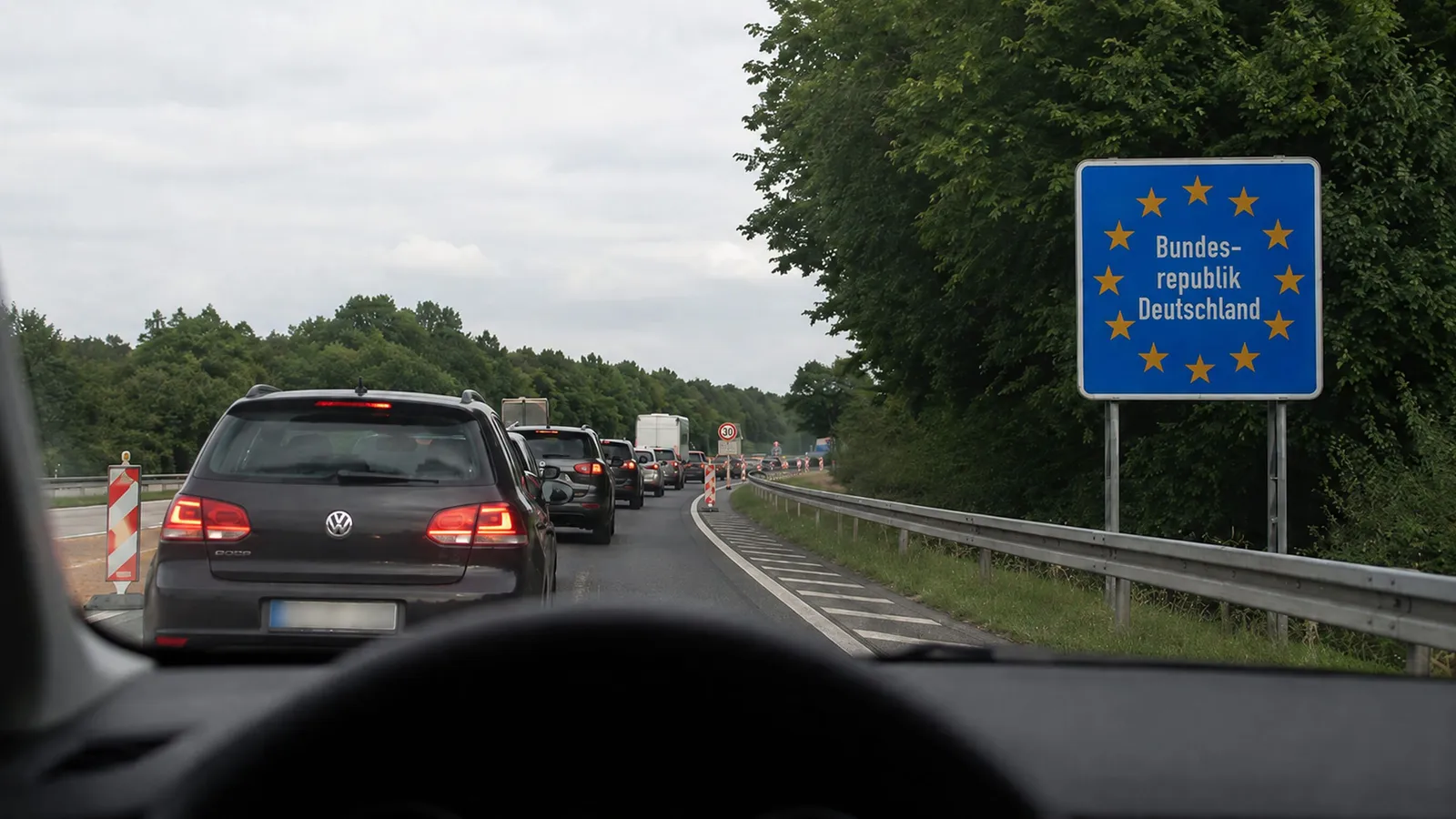
Traffic jams, delays and growing criticism from Dutch border regions. Germany has decided to extend controls at its land borders for another six months. For people living and working in the Netherlands, transport companies and employees who regularly cross the German border, this means that extra travel time should continue to be taken into account.
The current period of temporary German border controls runs until 15 September 2026. A new period has been announced from 16 September 2026 until 15 March 2027.
The controls also apply to the border between Germany and the Netherlands, so their extension has a direct impact on traffic between the two countries.
On the Dutch side, the effects are most noticeable on major routes leading towards Germany. During busy periods, traffic jams may form before the border and travel times can increase significantly.
At the same time, the Netherlands is also carrying out temporary border controls. According to current plans, controls at the borders with Germany and Belgium will remain in place until 30 September 2026.
In the Netherlands, the discussion is increasingly focused not only on the existence of border checks, but also on their impact on traffic flow and road safety.
NOS reported serious accidents on roads leading towards the German border, in locations where congestion had developed in connection with the controls. According to the Dutch broadcaster, at least four people were killed and more than ten injured in such incidents on the Dutch side.
Not all cases confirmed that the border controls themselves were the direct cause of the accidents. Nevertheless, the situation shows that the issue goes beyond a few extra minutes of waiting at the border. During heavy traffic, sudden braking and congestion on motorways can also create safety risks.
Local authorities have also expressed criticism.
Doetinchem mayor Mark Boumans called for an end to the controls following a serious accident on the A12 near Babberich. Nijmegen mayor Hubert Bruls described the situation caused by the controls as “complete chaos”.
Local authorities are particularly concerned about residents of border regions, cross-border commuters, businesses and transport companies.
Thousands of people cross the border between the Netherlands and Germany every day in these regions. Even relatively short checks on only a portion of vehicles can quickly result in long traffic jams when traffic volumes are high.
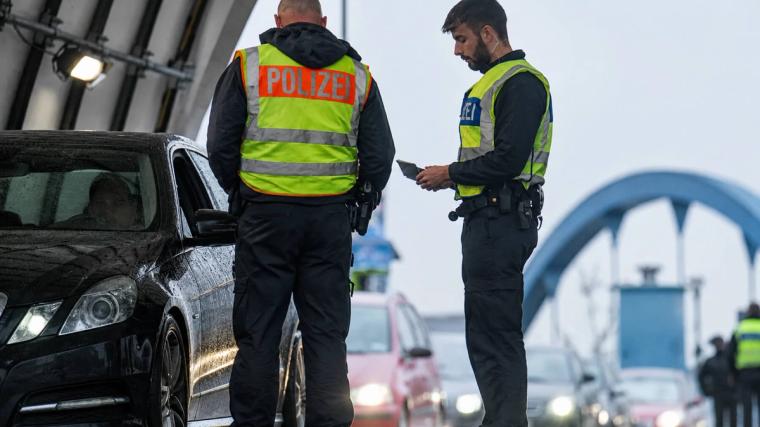
Germany is one of the Netherlands’ most important transit countries. This applies to business travel and freight transport as well as to people travelling further towards Central and Eastern Europe.
This is particularly relevant for people travelling from the Netherlands to Poland. In most cases, the journey by car passes through Germany. This means travellers may face delays not only at the Dutch-German border, but also at the German-Polish border.
For through traffic, four major border crossings are particularly important.
One of the main routes towards central Poland. The Polish A2 motorway connects here with the German A12 towards Berlin.
It is also one of the border crossings where major traffic jams can develop quickly. On 26 May 2026, the queue near Świecko reached approximately 20 kilometres, with drivers facing waiting times of several hours.
The delays were caused by a combination of border controls, heavy traffic and roadworks.
The connection between the German and Polish A4 motorways. This route is particularly important for travellers heading towards southern Poland.
The German Federal Police, Bundespolizei, continues to carry out controls there in 2026.
The connection between the German A11 and Polish A6, particularly important for traffic heading towards Szczecin and north-western Poland.
In April 2026, traffic queues before the border reached approximately six kilometres.
The connection between the German A15 and Polish A18. Queues also developed here in 2026 as a result of border controls and increased traffic.
ADAC lists Frankfurt (Oder)/Świecko, Ludwigsdorf/Jędrzychowice, Forst/Olszyna and Pomellen/Kołbaskowo as key crossings on the German-Polish border where controls may cause congestion and longer waiting times.
Anyone travelling from the Netherlands through Germany should therefore check not only the situation at the Dutch-German border, but also traffic conditions further along the route.
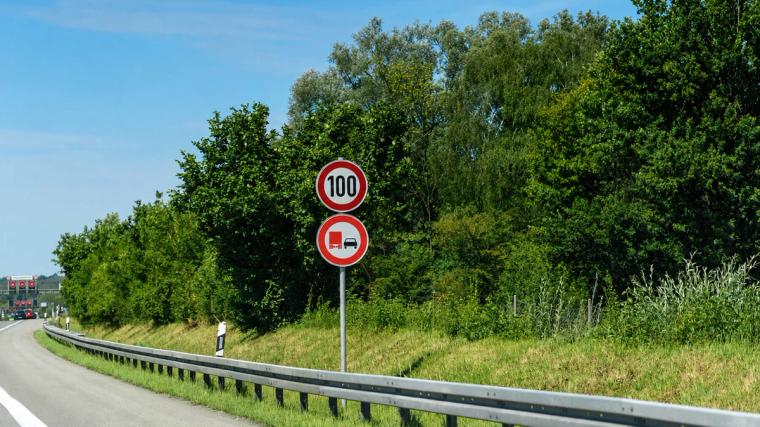
Controls at internal borders within the Schengen Area are permitted, although under European Union rules they should remain an exceptional measure.
A country may temporarily reintroduce border controls in the event of a serious threat to public order or internal security.
However, such measures should be necessary, proportionate to the threat and limited in duration. The European Commission stresses that reintroducing controls at internal borders should be used only as a last resort.
In June 2026, the European Commission reviewed the border controls being carried out by Germany and eight other Schengen countries.
Its opinions included recommendations to gradually reduce and phase out the controls while making greater use of other security measures.
At the same time, the European Union is strengthening the management of its external borders.
Since 10 April 2026, the Entry/Exit System, or EES, has been fully operational. This digital system records the entry and exit of non-EU citizens travelling to the Schengen Area for short stays.
EES is not intended to control EU citizens travelling between the Netherlands, Germany or Poland. However, it forms part of broader changes to the European border management system.
The German government argues that continued controls are necessary for security reasons.
In its official notification covering the period from 16 September 2026 to 15 March 2027, Berlin refers primarily to persistently high levels of irregular migration and migrant smuggling, pressure on the asylum reception system and the security situation in Europe and its surrounding regions.
Germany also emphasises the importance of stronger protection of the European Union’s external borders and the effective functioning of the European migration system.
For the time being, however, Berlin has not decided to end the controls. They have instead been extended for another six months.
Germany is not the only Schengen country using temporary controls at internal borders.
The Netherlands is currently conducting controls at its borders with Germany and Belgium. According to current plans, these will remain in place until no later than 30 September 2026.
However, the Dutch government has announced a change in approach.
After the summer of 2026, the Royal Netherlands Marechaussee is expected to receive greater flexibility to carry out risk-based checks, including within a zone of up to 20 kilometres from the border.
In practice, this would mean a gradual shift away from temporary checks directly at the border towards more mobile controls throughout border regions.
Poland is also carrying out its own controls at the border with Germany. Their further extension has been announced until 30 March 2027.
For people travelling from the Netherlands to Poland, this means that checks may occur both at the Dutch-German border and at the German-Polish border.
For most travellers, the basic rules of travel remain unchanged. Borders within the Schengen Area remain open and free movement between member states is still possible.
In practice, however, the amount of time needed for a journey may change.
This is particularly relevant for people who regularly travel between the Netherlands and Germany, cross-border workers, transport companies, businesses and travellers continuing through Germany to other parts of Europe.
Before a longer journey, it is therefore advisable to check current traffic conditions and allow for possible additional delays.
Especially during holiday periods, public holidays, busy weekends and peak traffic hours, it is wise to leave enough extra time before an important appointment, the start of a work shift, a training course or an examination.
Bonapi provides training for people working in sectors including construction, industry, logistics and petrochemicals. This includes participants attending VCA training, forklift courses, mobile elevating work platform training, IPAF courses and scaffolding training.
Many participants travel to their training or examination from other parts of the Netherlands, Belgium, Germany or Poland.
Arriving on time is important when attending a training course or examination. Anyone travelling through border regions should therefore allow additional travel time rather than planning to arrive exactly at the scheduled starting time.
Bonapi provides training both in the Netherlands and at its training centre in Gliwice. Depending on the type of course and the participant’s place of work, it may therefore be possible to choose a location that reduces unnecessary international travel.
The extension of German border controls does not mean that borders are being closed or that freedom of movement within the Schengen Area is ending.
It does mean, however, that travelling from the Netherlands into Germany may not always be possible without delays or checks.
For people who regularly cross the border, one simple rule remains important: check traffic conditions before departure, allow sufficient extra time and do not automatically assume that crossing the border will be as smooth as it was a few years ago.
German border controls will remain something travellers need to take into account until at least 15 March 2027.

Author:

Arina
Dział VCA / SCC / BHV


Author:
Arina
Dział VCA / SCC / BHV
In our shop you will find trusted workwear, PPE and accessories you need for safe work. We offer products chosen by professionals from construction, logistics and industry.