User Panel



News
Search
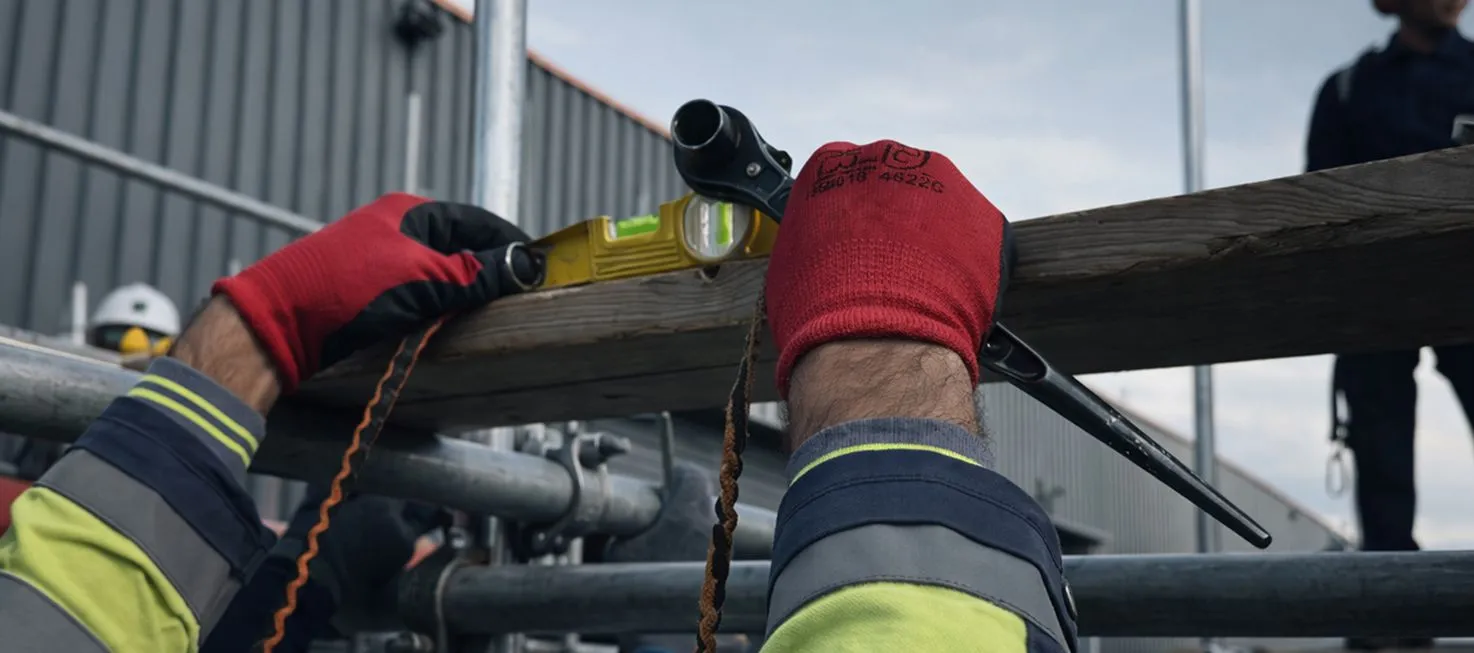
In scaffolding work, everything carries weight. Not only the steel, the couplers, and the height. Decisions as well. Pace. The way people are trained. The line between “it can be done” and “it must be done.”From the outside – for someone outside the industry – it all looks simple: the structure has to stand, the work has to move forward, deadlines do not shift. In practice, however, every construction site is the sum of small choices that determine the safety of people working several meters above the ground. And it is exactly there that you see whether the training truly prepared people for the job, or merely “took care of the paperwork.”That is why, in scaffolding training, one question is being asked more and more often: who takes responsibility for this?In this context, it cannot be overlooked that Bonapi Training Center has joined one of only four companies in the Netherlands and has been officially entered into the VSB register, obtaining the status of VSB Erkende Opleider. The decision was made following a positive audit, and on January 28 representatives of VSB were present at Bonapi, formally closing the entire process.
The VSB accreditation covers the full range of key scaffolding training programs:
The last one is particularly important. Bonapi has obtained direct authorization to conduct the Hulpmonteur Steigerbouw 2.0 training, without transitional periods or half-measures. What does this mean in practice? Examinations are conducted under the supervision of SVWOH, and certificates are entered into the central CDR register. Transparently and without shortcuts.
The status of VSB Erkende Opleider places Bonapi within the official circulation of the industry: on the VSB website and in the VSB and SVWOH registers.
And this matters. Because in scaffolding, it is not about how something sounds, but how it works in practice. Accreditation does not change our approach to training. It simply organizes it and places it in a clear context.
And the context is simple: training is meant to prepare people for work, not for a test. The rest is verified on the construction site.
Choosing a training provider without accreditation rarely stems from bad intentions. More often, the deciding factors are price, availability, or the belief that “training is training.” The problem begins later – when that choice has to be justified.
In the Dutch context, the employer is responsible for how employees are prepared for work, especially in high-risk tasks such as scaffolding work. During an inspection, audit, or after an accident, it is checked not only whether the training took place, but also where it was conducted, in what form, and according to which standards.
Training delivered by non-accredited entities may formally “exist,” but its value is often questioned. Outdated programs, a limited practical component, or the lack of real verification of instructors’ competencies often come to light only at a critical moment – when there is no longer room for explanations.
And this is where the difference of Bonapi begins.
As a VSB Erkende Opleider, we operate according to clearly defined guidelines, up-to-date programs, and principles that have been verified through an audit - not merely declared on a website. Each training course has a clear structure, logical framework, and a genuine practical component, and instructors work within industry requirements rather than “their own interpretations.”
This means that in the event of an inspection, audit, or post-incident analysis, training is not a weak point but a closed matter.
Accreditation does not guarantee that mistakes will never occur on a construction site. But it clearly demonstrates that the company has done everything that should be done at the stage of preparing people for work. In the Dutch legal context, this is a difference with very concrete consequences.
In a sea of training center offers, it is easy to get lost. In the Netherlands, there are many institutions offering scaffolding courses, VCA, SOG, and other safety certifications. However, not everything that looks like training has the same practical value and this can cost a company far more than just a few euros in price difference. That is why at Bonapi we decided to pursue accreditation. So what should you pay attention to when looking for training for your employees?
Not all courses train in the same way. The most valuable programs combine a theoretical part with a solid practical component, where participants actually practice scaffolding assembly, dismantling, and safety assessment. If a course is limited to lectures only, it may indicate a risk that employees will not be practically prepared for real working conditions.
In the Netherlands, many courses are conducted in Dutch or English, which on the one hand is natural, but on the other can be a barrier for employees for whom Dutch is not a working language. A good training center offers materials and lectures in a language the participant understands - something that significantly impacts learning effectiveness.
Not every instructor represents the same level of quality. It is worth checking whether the instructors have practical industry experience and whether they conduct courses supported by real examples from construction sites. Equally important is support in preparing for SVWOH exams, which are the formal conclusion of the training and a condition for obtaining certification.
Laws and standards in the Netherlands are constantly evolving, especially when it comes to safety in work at height. A course that was good a year ago may now be non-compliant with new guidelines or techniques. Good training centers regularly update their programs in line with current standards and practices.
Finally, do not underestimate the opinions of other companies and participants. Centers that have been training within the industry for years and have positive references usually stand behind the quality of their training. It is worth reviewing testimonials, asking about other companies’ experiences, or checking exam pass rates after training at a given center.
✓ A purely theoretical course without a practical component
✓ A certificate without a recognized institution (e.g. VSB / SVWOH / DNV)
✓ Materials and classes only in Dutch, without translation support
✓ “Cheap but incomplete” training (without a clearly defined program scope)
✓ No clear information about program validity and the standards it is based on
Bonapi has been active in the field of scaffolding training for many years. In response to changing industry requirements and the current guidelines in force in the Netherlands, we have completed the full accreditation procedure in accordance with applicable standards.
Today, we are listed in the VSB register as an accredited training center. We work with instructors who know the realities of scaffolding work from their own experience and are able to translate regulations into concrete, practical actions on the construction site.
Training is not a one-day course. It is a process spread over time, usually carried out on weekends over a period of approximately two to three weeks. We work both with people who are just starting in the industry and with experienced workers, offering refresher training or practical skills assessment. Because good training does not end with a certificate. It begins where safety matters.
If you are looking for a training center that treats training as a process rather than a one-time event, we invite you to get in touch with the Bonapi team. You can be sure that the knowledge you gain will be useful in real scaffolding work.👉 View all Bonapi courses
Stay up to date with what’s happening with us:
See behind the scenes of our courses, news, and promotions! Click below and follow us on our social media channels!

Author:

Arina
Dział VCA / SCC / BHV


Author:
Arina
Dział VCA / SCC / BHV
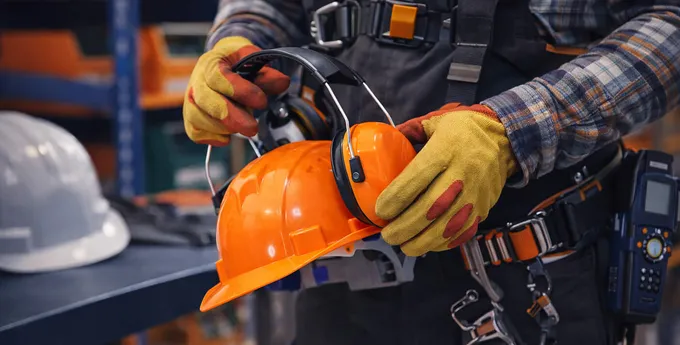
In our shop you will find trusted workwear, PPE and accessories you need for safe work. We offer products chosen by professionals from construction, logistics and industry.